

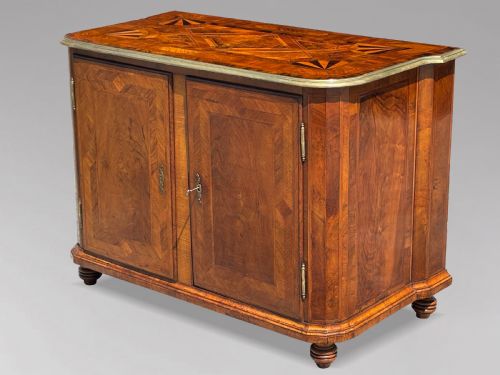
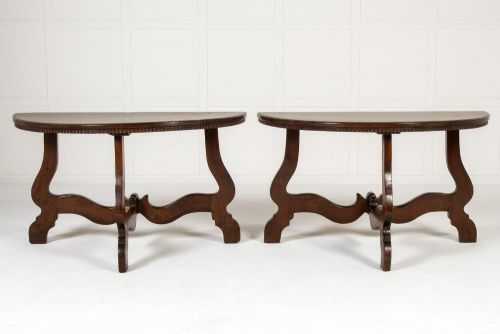
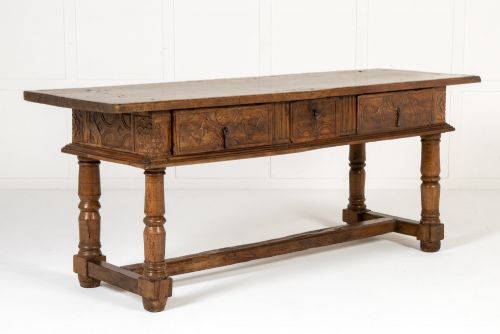
Baroque Walnut Furniture
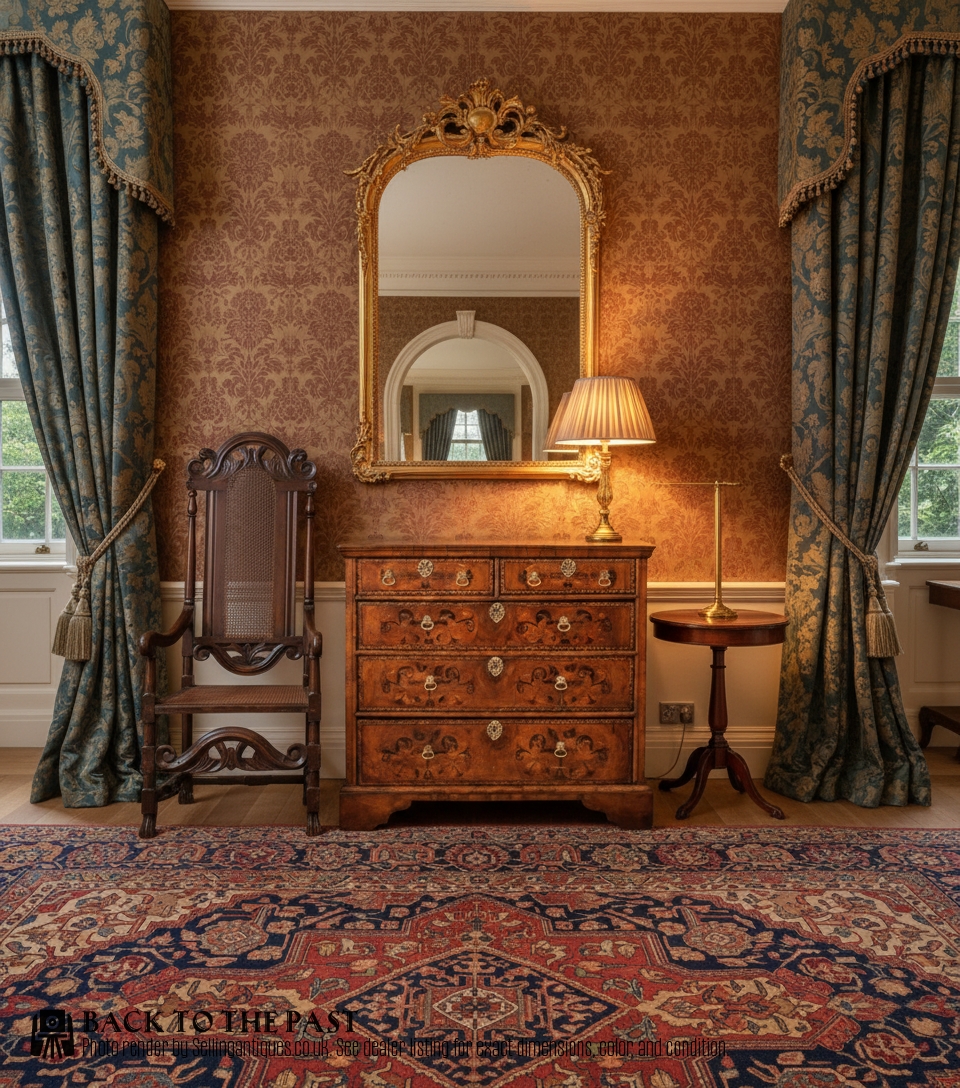
Baroque walnut furniture brings substantial presence and intricate marquetry into a room, spanning Spanish, Italian, Dutch, and German origins.
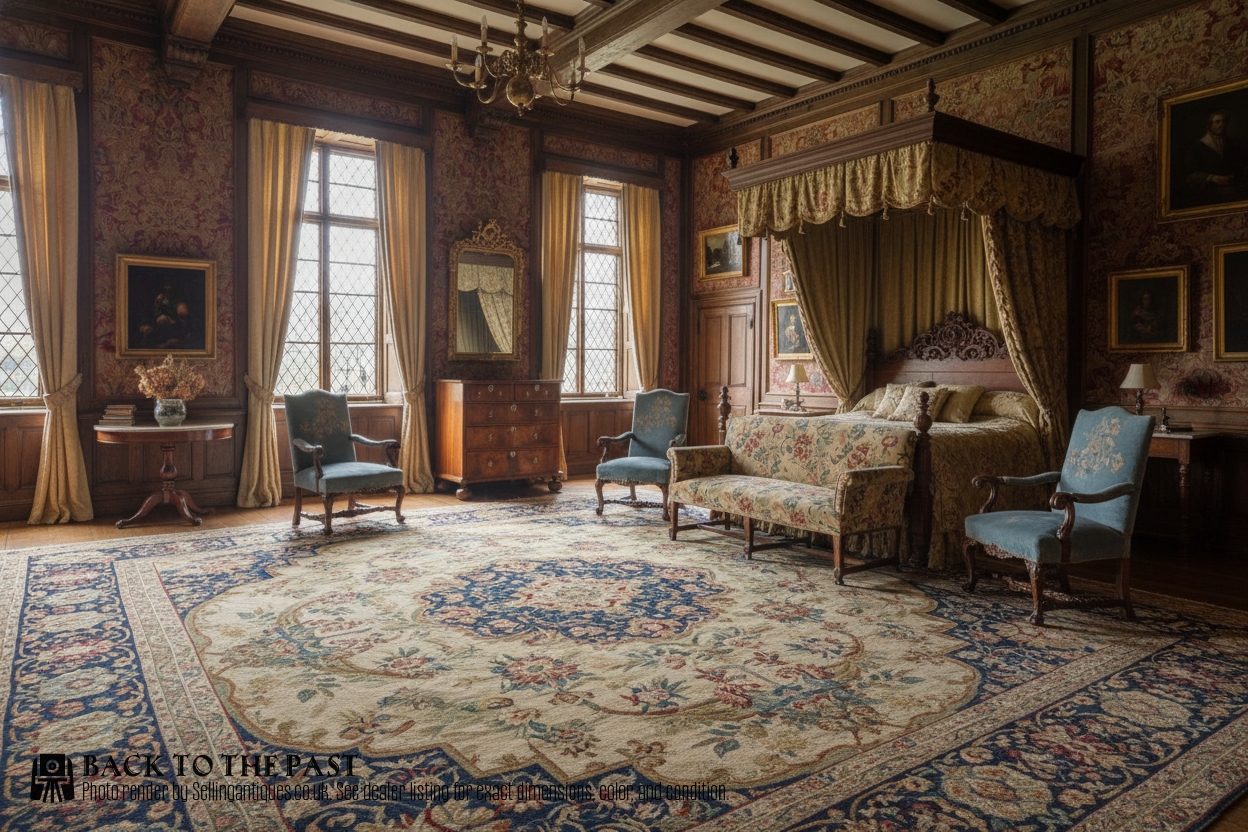
Baroque Walnut Furniture
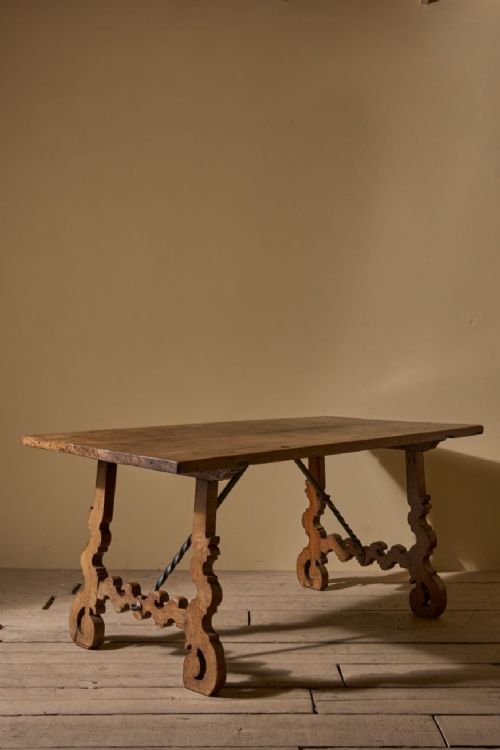
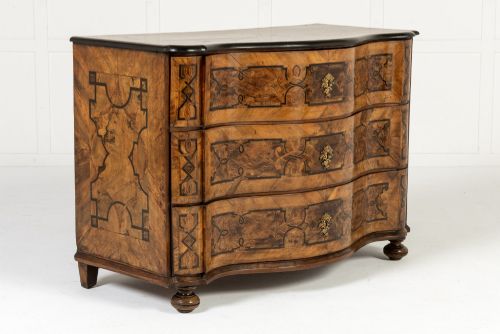
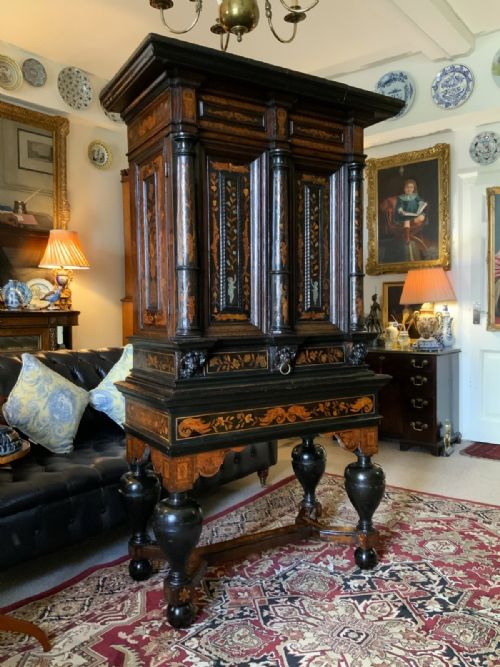
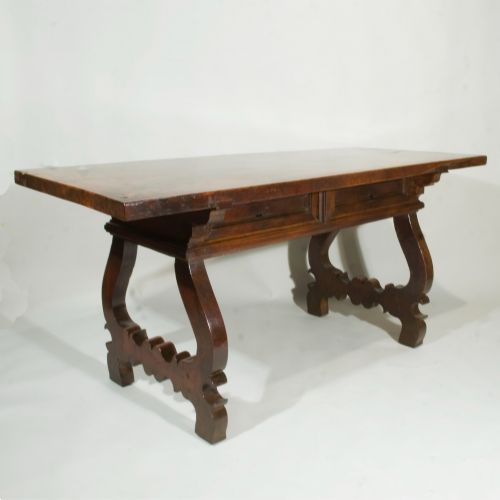
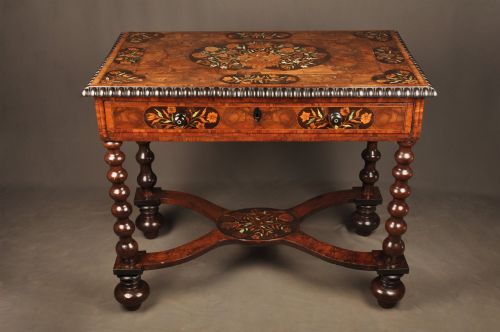
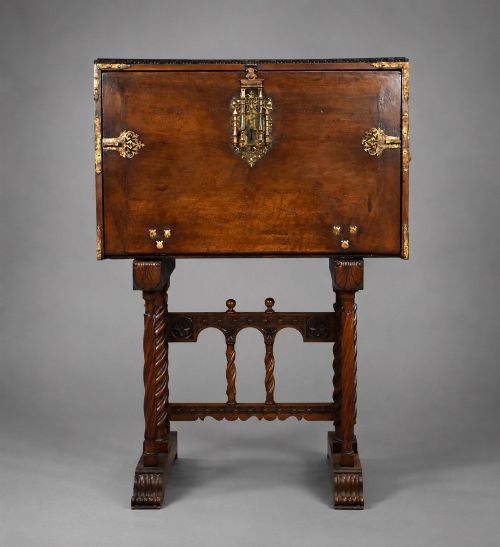
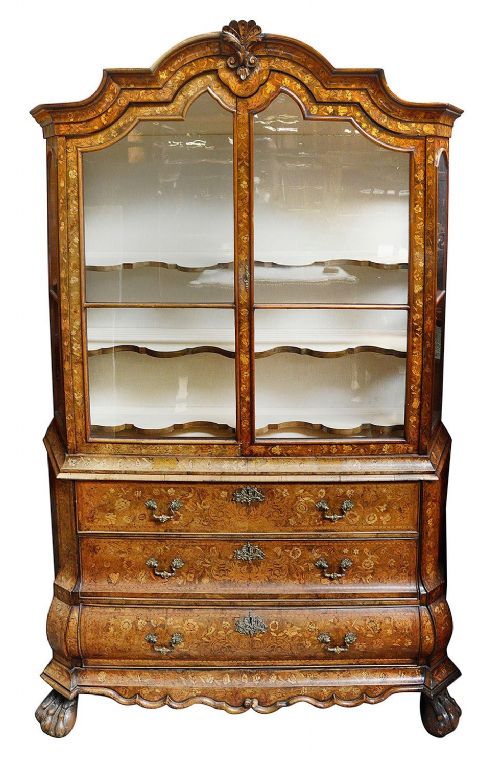
Baroque walnut furniture encompasses heavy tables, chests of drawers, commodes, and cabinets originating primarily from the seventeenth and eighteenth centuries. These pieces display strong regional characteristics, such as the austere solidity of Spanish tables alongside the elaborate floral and arabesque marquetry found on Dutch and German examples.
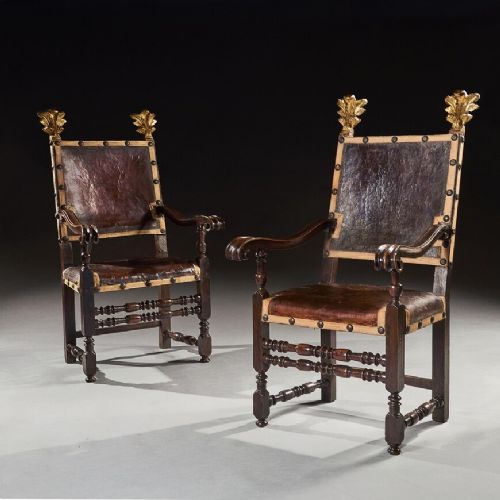
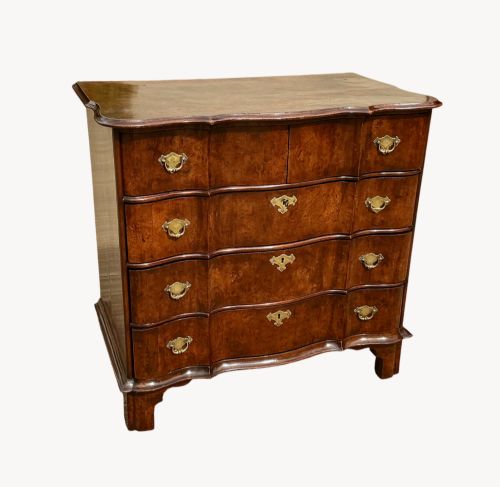
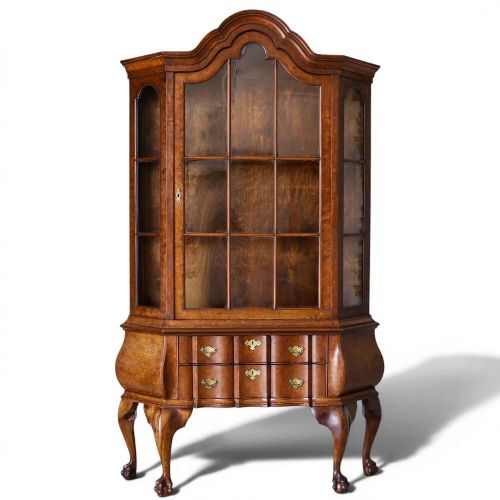
Buyers will encounter various forms on this page, ranging from grand Italian console tables and side chairs to intricate cabinets on stand and serpentine chests. While seventeenth-century forms lean towards architectural carvings and turned supports, eighteenth-century iterations frequently utilise burr walnut veneers and serpentine fronts.
Regional styles dictate the visual weight of these items, with Dutch and German workshops favouring dense marquetry panels of floral inlay, whereas Spanish and Italian pieces often rely on figured timber grain, parcel-gilding, and leather upholstery.
Materials and Construction
Cabinetmakers constructed these forms using solid walnut and fruitwood carcases, upon which they laid figured burr walnut veneers. Marquetry panels were assembled using contrasting timbers and pewter inlay to create complex floral and arabesque patterns across drawer fronts and cabinet doors.
Secondary supports and structural elements frequently incorporated oak, whilst hardware utilised cast brass drops and escutcheons. Tables and seating often relied on heavy turned members, wrought iron stretchers, and leather panels secured with decorative tacks.
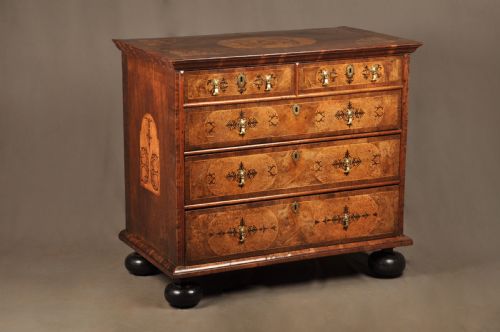
The inventory spans seventeenth-century William and Mary designs, Spanish Baroque tables, and later Dutch marquetry cabinets.
Evaluating Quality and Execution
Quality rests upon the depth of the carving and the precision of the marquetry inlay. Superior examples demonstrate tight, seamless integration of veneers and meticulous hand-cut floral patterns without lifting edges.
The choice of timber grain fundamentally alters the visual impact, with highly figured burr walnut commanding attention through its natural patterning. Furthermore, the integrity of original structural components, patination, and the complexity of regional joinery separate standard production from exceptional pieces.
The Baroque Walnut Furniture Glossary
- Marquetry
- Decorative veneer work forming pictures or geometric patterns by assembling thin pieces of wood. This technique defines the aesthetic of many Dutch and German cabinets.
- Bargueño
- A type of portable writing cabinet on a stand, originating in Spain. These pieces feature elaborate drop fronts and internal drawers.
- Commode
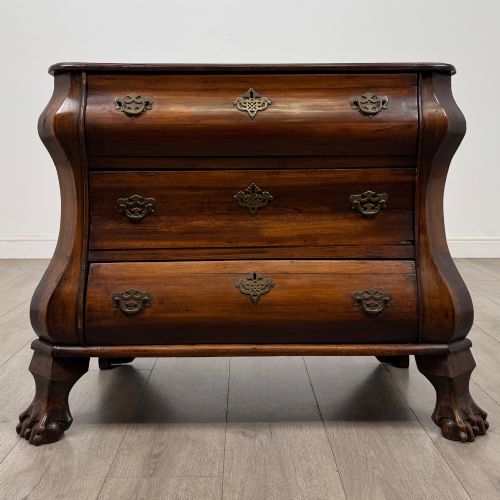
- A low chest of drawers introduced in the seventeenth century, often featuring serpentine fronts and rich veneer work. French and Italian examples frequently display this form.
- Parcel-Gilt
- Partially gilded with gold leaf or powder to highlight specific carved details. This treatment often accents sculptural elements on chairs and tables.
- Serpentine
- A curved line of furniture frontals that bends inward centrally and outward at the sides. This contour appears on eighteenth-century commodes and bedside chests.
Baroque Walnut Furniture: Frequently Asked Questions
How do I clean baroque walnut furniture?
Dust surfaces gently with a dry, soft cloth to prevent particulate accumulation. Avoid modern liquid polishes that can damage historic polishes and dry out the timber.
Feed the wood periodically with a quality wax to maintain the natural sheen and protect the antique surface from moisture.
Where were these pieces made?
The listings span several European regions, predominantly Italy, Spain, the Netherlands, and Germany. Each area developed distinct regional variations in timber selection and decorative motifs.
Dutch and German makers specialised in intricate floral marquetry, whereas Spanish and Italian workshops often emphasised solid timber construction and carved structural forms.
What is the difference between a commode and a chest of drawers?
A commode generally refers to a low, decorative chest of drawers introduced during the late seventeenth century on the Continent. They frequently feature serpentine or bombe shapes and elaborate veneer patterns.
Standard chests of drawers can encompass a broader range of upright storage forms spanning earlier seventeenth-century William and Mary styles through to later eighteenth-century designs.
Can I use these items in a modern interior?
These pieces provide strong focal points that anchor modern neutral spaces with rich texture and historical depth. Their dark timber tones and complex grain patterns contrast effectively against minimalist walls.
Practical forms such as side tables, commodes, and small chests integrate easily into contemporary hallways, living rooms, and bedrooms for functional storage.
How do I identify the period of the piece?
Dating relies on examining construction techniques, joinery methods, and the specific regional style markers present in the woodwork. Seventeenth-century examples often display heavier structural framing and simpler carcass forms.
Eighteenth-century items frequently introduce curved serpentine profiles, burr walnut veneers, and sophisticated marquetry panels reflecting prevailing Baroque and revival tastes.