



Early English Walnut Chest
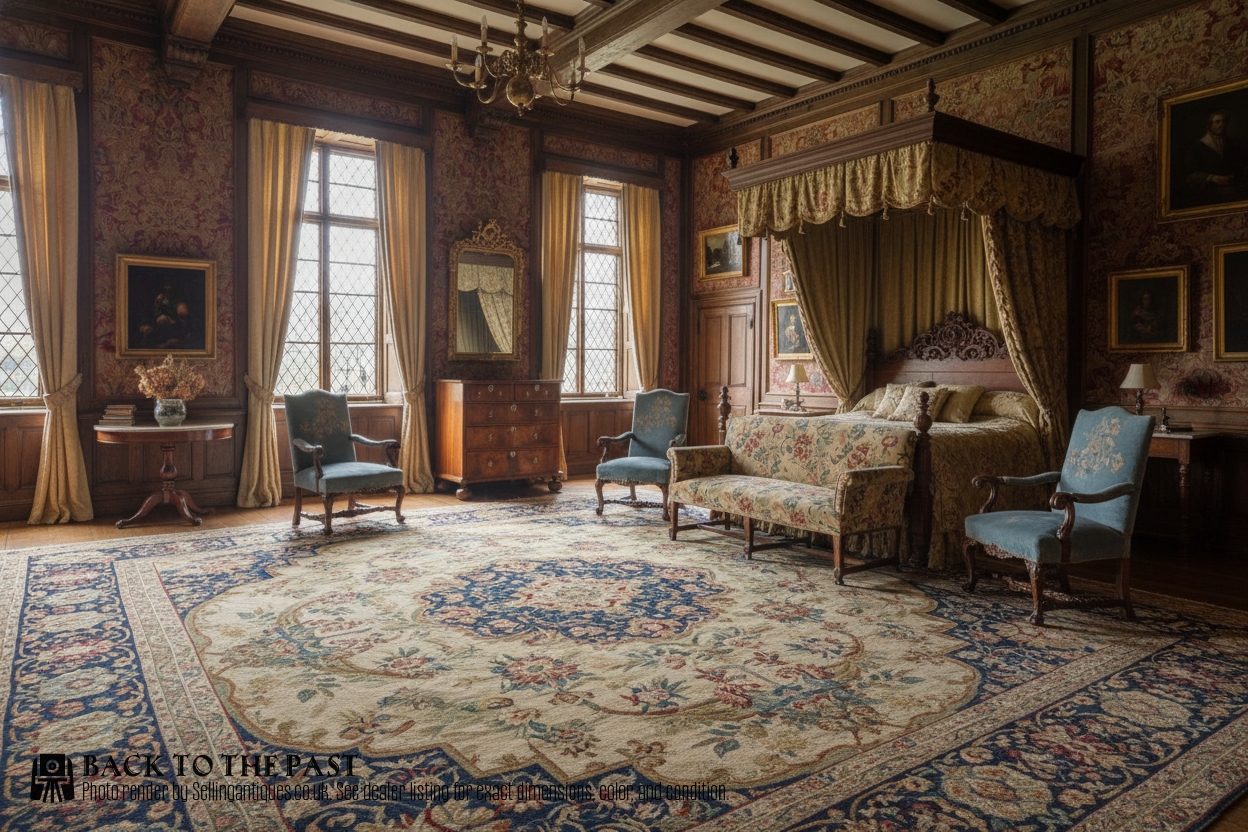
An early English walnut chest brings warm timber figures and refined proportions to a room.
Early English Walnut Chest
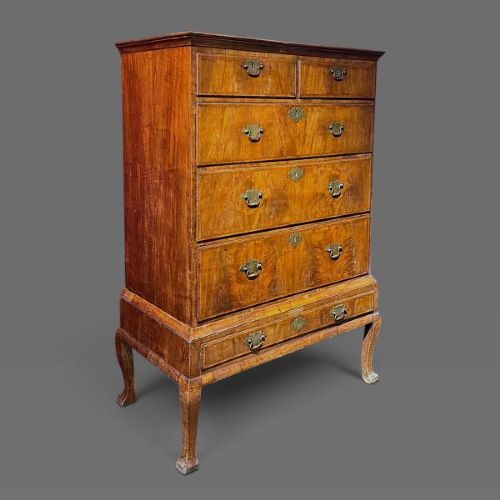
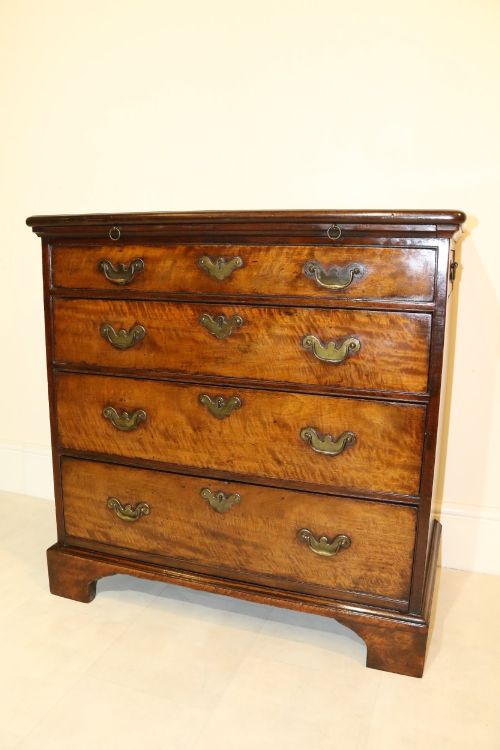
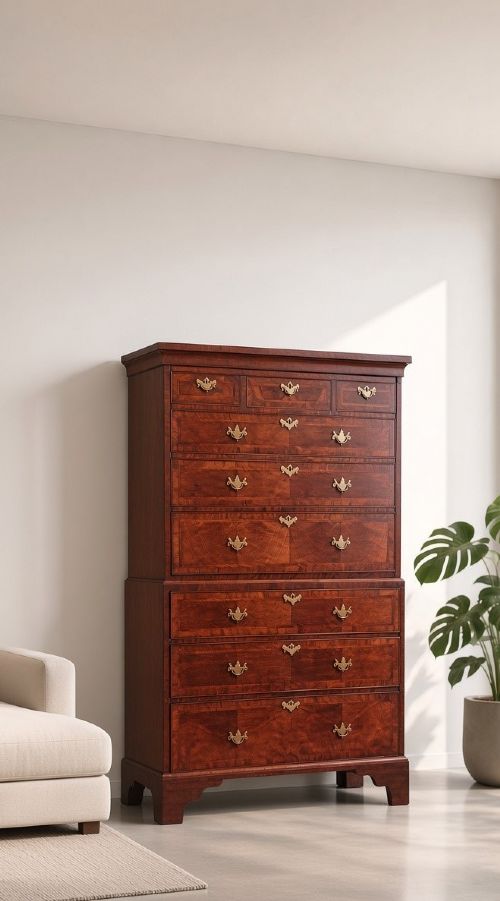
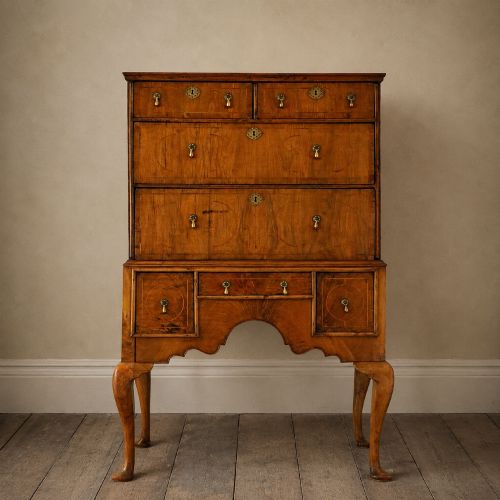
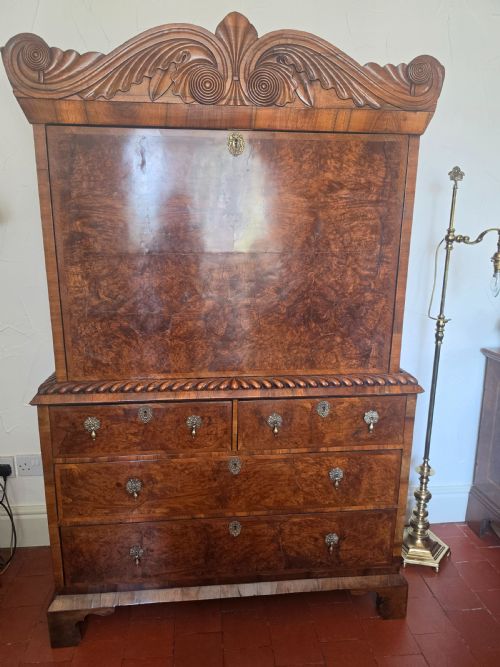
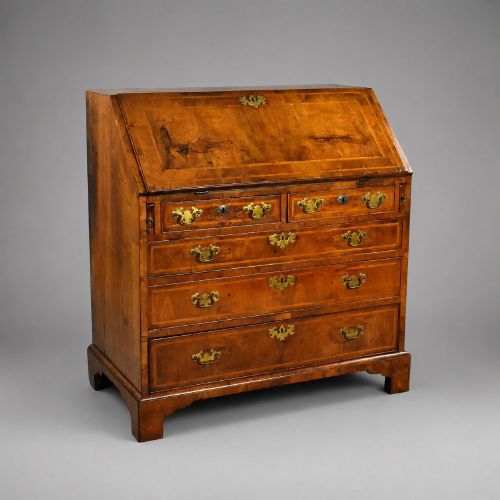
An early English walnut chest encompasses sturdy chests of drawers, elevated chests on stand, and fitted writing bureaux spanning the seventeenth and eighteenth centuries. These utilitarian and decorative storage pieces reflect the transition from solid oak furniture to sophisticated cabinet-making.
The versions most frequently met on this page date from the early eighteenth century, particularly the reigns of Queen Anne and George I. They survive as straightforward chests of drawers or more complex cabinets incorporating secretaire drawers and matching stands.
How they were made
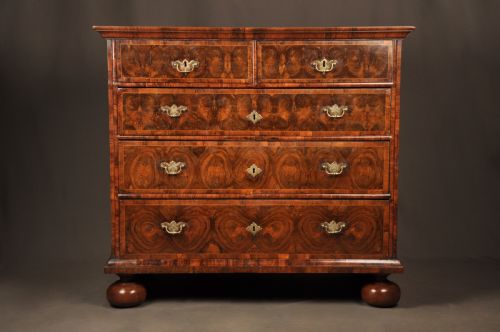
Cabinet-makers constructed these pieces using native walnut and oak, frequently applying finely figured walnut veneers and burr walnut onto primary carcases. Cross-banding, feather-banding, and oyster-cut olive veneers provided geometric surface decoration across drawer fronts and top panels.
Brass hardware including drop handles and escutcheons secured drawer operation, whilst glass sometimes glazed upper cabinet doors in related escritoires and storage cabinets.
Early English Walnut Chest Retail Price Guide 2026
Typical asking prices for early english walnut chest among the pieces listed under this phrase on Sellingantiques today, from the lower quarter to the upper quarter. They describe what is for sale here now, not the wider market.
Materials recorded across the inventory include solid walnut, burr walnut veneer, oak, olive, and brass hardware.
What varies in quality
The selection of timber grain largely dictates the visual merit of each piece, distinguishing plain surfaces from highly figured burr walnut or meticulously matched veneers. Crisp execution of cross-banded borders and feather-banding shows the maker's discipline.
Structural integrity relies upon the retention of original stands, bases, and brass furniture, alongside the harmonious ageing of the timber surfaces over centuries.
The Early English Walnut Chest Glossary
- Cross-banding
- A border technique where veneer strips are applied perpendicularly to the surrounding grain. This frames drawer fronts with a contrasting linear border.
- Feather-banding
- Two narrow strips of veneer laid diagonally to form a herringbone pattern resembling a feather. It outlines panels on many early eighteenth-century pieces.
- Oyster veneer
- Circular cross-sections sliced from small branches or roots, laid closely together to create an intricate oyster-shell pattern. Olive wood was particularly suited to this treatment.
- Escritoire
- A writing cabinet featuring a fall-front flap that opens to reveal internal compartments and small drawers. They combine upright storage with a compact desk surface.
- Chest on stand
- A tall chest raised upon a separate support frame with legs, lifting the storage capacity off the floor. These often date from the late seventeenth or early eighteenth centuries.
Early English Walnut Chest: Frequently Asked Questions
How do I date an early walnut chest?
Dating relies upon construction methods, timber choice, and stylistic details such as bracket feet, mouldings, and hardware. Earlier pieces often display oak drawer linings and simpler framing before walnut veneer techniques evolved.
Changes in leg design, from spiral turnings under William and Mary to cabriole legs in the Queen Anne and George I periods, offer further chronological clues.
Where should I place a walnut chest at home?
These chests suit living rooms, hallways, or bedrooms where their warm timber tones can be appreciated up close. Keep them away from direct sunlight and strong heat sources to protect the delicate veneers.
Pairing a chest on stand or bureau with minimal surrounding decor allows the figured grain and brass hardware to remain the focal point.
What is the difference between a bureau and a chest?
A standard chest provides horizontal drawer storage for clothing or linens. A bureau incorporates an angled or vertical fall-front writing flap hiding fitted interior pigeonholes.
Many bureaux also include drawers beneath the desk section, blending writing facilities with conventional chest storage.
Why is walnut preferred over oak on these pieces?
Walnut offered cabinet-makers a finer grain and richer figuring than traditional oak, suiting the sophisticated tastes of the late seventeenth and eighteenth centuries. Veneering techniques allowed craftsmen to cover large surfaces with striking patterns.
Cross-banding and burr walnut further enhanced this decorative potential, marking a shift toward lighter and more ornamental furniture.