

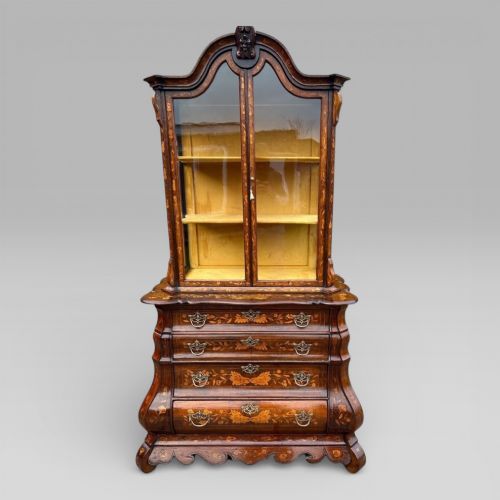

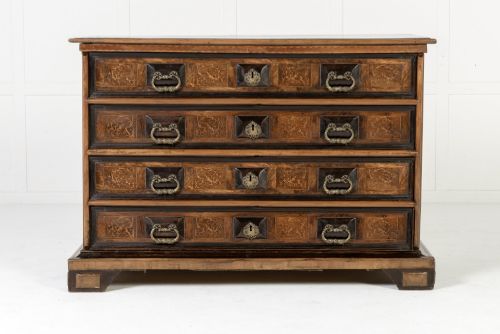

Baroque Walnut Chest Drawers
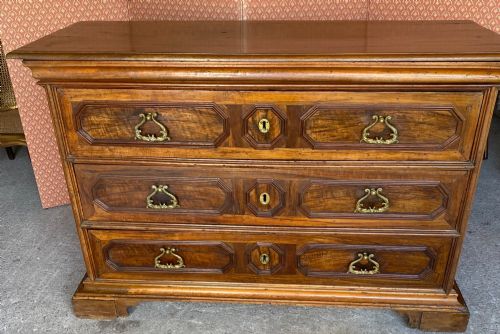
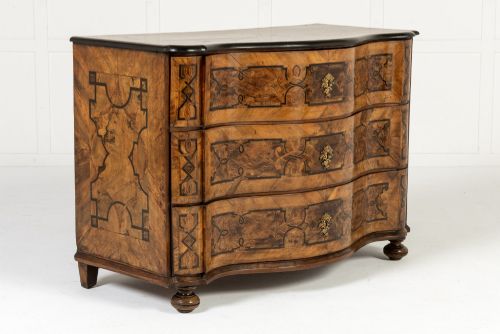
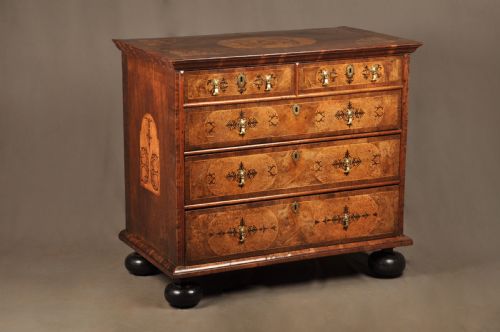
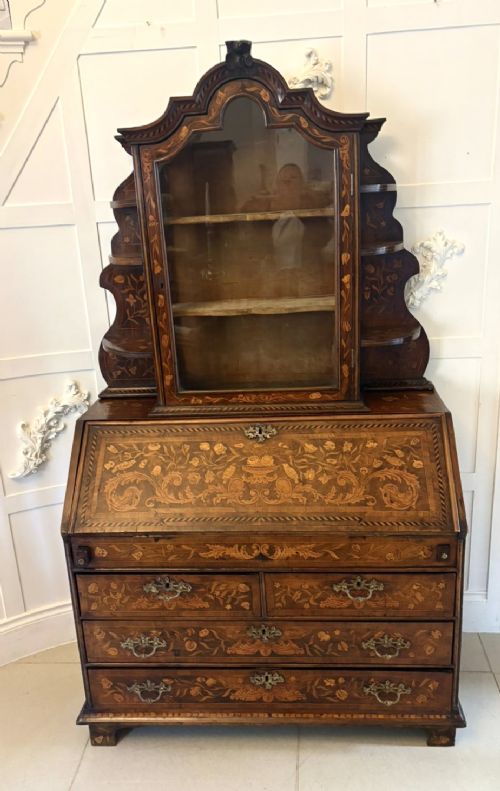
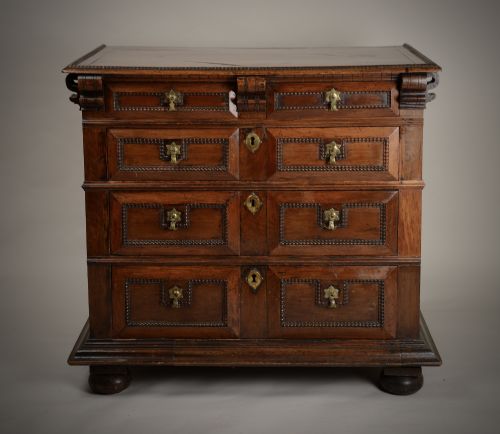
These baroque walnut chest drawers bring rich timber figure and confident continental form straight into a room.
Baroque Walnut Chest Drawers
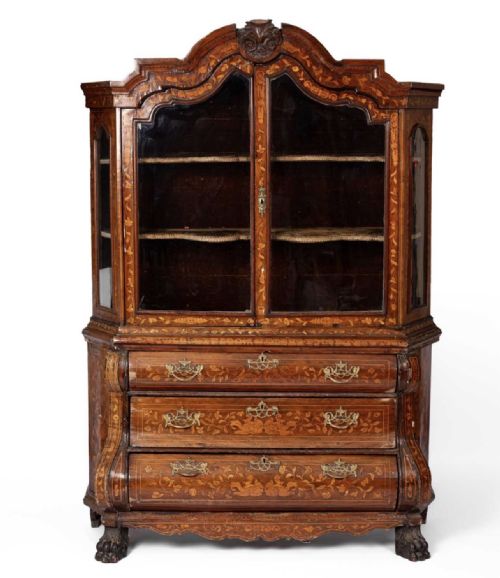
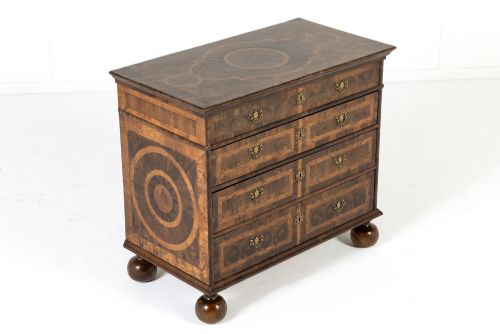
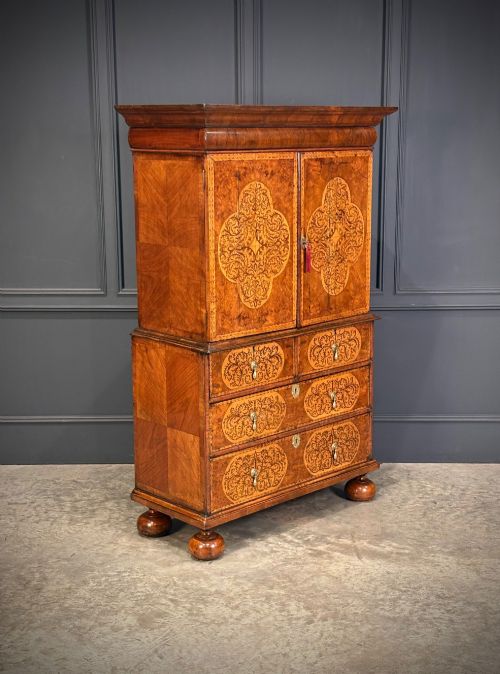
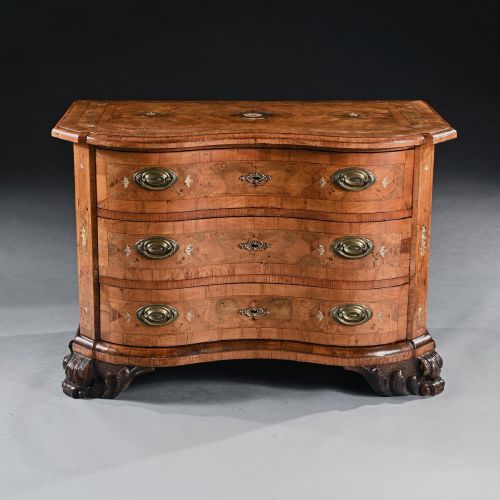
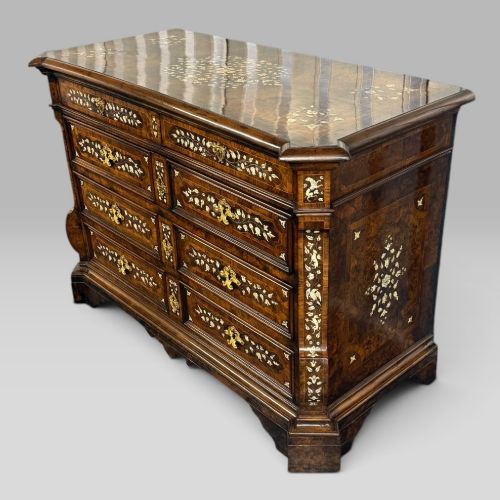
A baroque walnut chest drawers typically combines robust continental proportions with intricate surface decoration spanning the seventeenth and eighteenth centuries. Pieces on this page range from early William and Mary examples to mid eighteenth century German and Italian commodes.
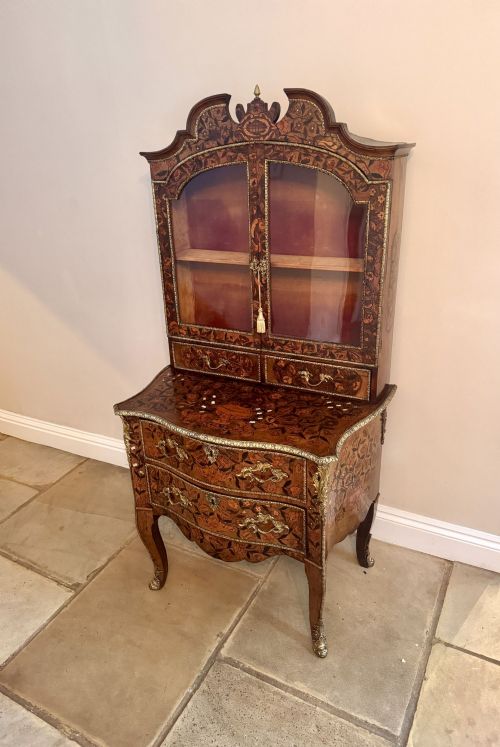
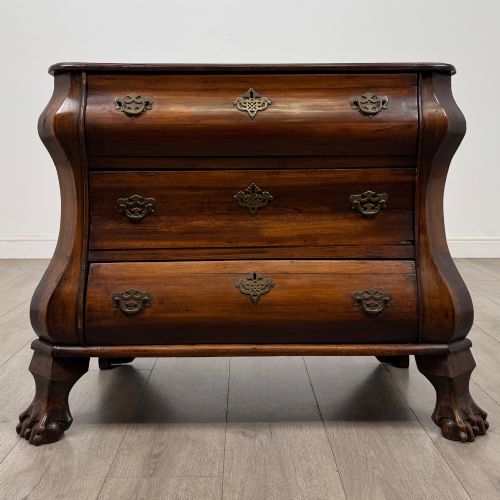
Forms vary from straight fronted chests of drawers to serpentine commodes and bombe shaped cabinets. Buyers encounter regional variants including Dutch marquetry work, German inlaid designs, and Italian commodes.
Origins stretch across Europe, with strong representation from Dutch, German, and Italian workshops. Makers often employed monumental scales alongside domestic storage formats.
Assessing quality
Quality rests upon the depth and vitality of the walnut figure and the precision of the marquetry inlay. Superior examples display crisp contouring on serpentine and bombe profiles without distortion in the timber.
The integrity of the original veneer and the subtlety of brass or iron hardware distinguish superior workshop output. Greater finesse in the carving and marquetry indicates higher tier continental production.
Baroque Walnut Chest Drawers Retail Price Guide 2026
Typical asking prices for baroque walnut chest drawers among the pieces listed under this phrase on Sellingantiques today, from the lower quarter to the upper quarter. They describe what is for sale here now, not the wider market.
Listings feature walnut, burr walnut, fruitwood, and ebonised wood across seventeenth and eighteenth century periods.
Grand Ducal Workshops·Edwards & Roberts
The Baroque Walnut Chest Drawers Glossary
- Bombe
- A bulging, outward curving chest profile characteristic of continental baroque furniture. This swelling shape requires advanced woodworking skill to maintain structural stability.
- Marquetry
- Decorative veneer work formed by fitting together small pieces of various woods, pewter, or ivory into pictorial designs. Craftsmen applied these patterns across drawer fronts and top panels.
- Oyster veneer
- Circular slices cut from small walnut branches and arranged closely to form a repeating pattern. The resulting surface resembles oyster shells across the timber.
- Serpentine
- A shaped furniture front featuring a convex centre flanked by concave curves. This undulating line demands precise carpentry.
- Commode
- A low chest of drawers or cabinet originating in France and adopted across Europe during the baroque period. These pieces often serve as focal points in reception rooms.
Baroque Walnut Chest Drawers: Frequently Asked Questions
How do I date a walnut chest?
Dating relies on examining the construction methods, secondary woods, and handle types used in the piece. Earlier seventeenth century pieces show different joinery compared to mid eighteenth century examples.
Stylistic shifts from William and Mary designs to full continental baroque curves also help establish the approximate decade of manufacture.
Where were these chests made?
The pieces originate from various European centres including Germany, Italy, the Netherlands, and Flanders. Each region developed distinct characteristics in outline and marquetry.
Local timber availability and prevailing court styles heavily influenced regional cabinet making traditions.
How should I care for walnut veneer?
Keep walnut furniture away from direct sunlight and sudden temperature changes to prevent veneer from lifting or cracking. Maintain stable indoor humidity levels.
Dust gently with a dry cloth and avoid harsh chemical polishes that can damage historic finishes.
What is the difference between a chest and a commode?
A commode generally refers to a more decorative, low continental chest of drawers often standing on prominent legs. Standard chests may follow simpler boxier forms.
European baroque commodes frequently exhibit serpentine or bombe shaping intended for formal reception spaces.