

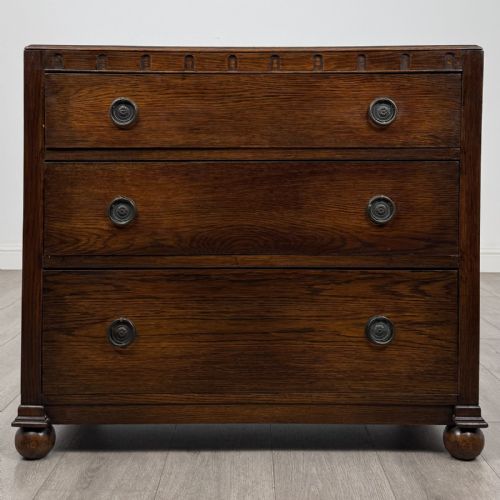
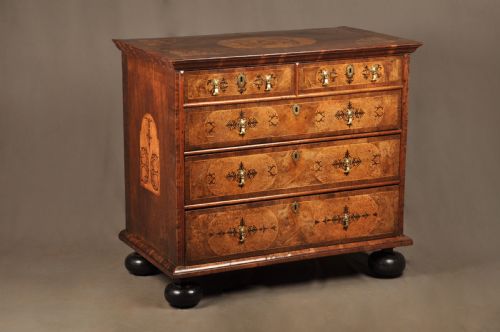


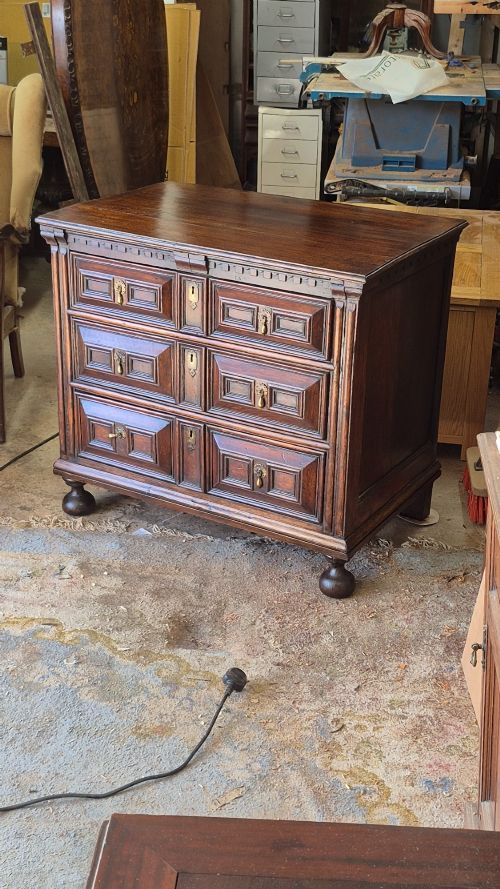


Carved Bun Feet Chest
A carved bun feet chest brings solid seventeenth and eighteenth century timber and sturdy foundational joinery straight into a room.
Carved Bun Feet Chest
When you search for a carved bun feet chest, you enter a field dominated by seventeenth and eighteenth century examples made from oak, walnut, and cedar wood. These substantial storage pieces include chests of drawers, blanket chests, and cabinet on chest forms, alongside smaller miniature furniture.
The versions you are most likely to meet on this page span Jacobean, William and Mary, and Georgian styles. They combine functional storage with period details like geometric block fronts and marquetry inlay.
How they were made
Cabinetmakers constructed these pieces primarily using solid oak and walnut, often applying burr walnut and burr amboyna veneer to visible surfaces. Marquetry inlay provided intricate surface decoration.
Metal components relied on brass and iron for hardware and fittings, while ebonised wood offered contrasting dark tones against the lighter timber grounds.
Carved Bun Feet Chest Retail Price Guide 2026
Typical asking prices for carved bun feet chest among the pieces listed under this phrase on Sellingantiques today, from the lower quarter to the upper quarter. They describe what is for sale here now, not the wider market.
Listings feature pieces from the 17th century and 18th century, utilising oak, walnut, cedar wood, brass, and iron.
What varies in quality
The standard of a piece rests on the precision of its decorative surface work, such as the execution of arabesque marquetry and geometric block front panelling. Subtle contrasts between walnut, ebonised wood, and burr veneers dictate visual depth.
Structural integrity depends on the original timber selection, from heavy oak frameworks to delicate cedar wood interiors, showing how thoroughly the maker mastered their materials.
The Carved Bun Feet Chest Glossary
- Bun foot
- A rounded, slightly flattened wooden foot shaped like a small bun, commonly supporting seventeenth and eighteenth century case furniture. It lifts the heavy timber frame cleanly off the floor.
- Marquetry inlay
- Decorative patterns formed by fitting contrasting veneers into prepared recesses in the wood surface. This technique creates elaborate floral or geometric designs across drawer fronts.
- Geometric block front
- A drawer front carved or applied with projecting geometric panels that create strong shadow and relief. It defines much of the William and Mary cabinetwork seen here.
- Cabinet on chest
- A tall case furniture form featuring an upper cabinet sitting upon a lower chest base. These multi-tiered pieces provide extensive vertical storage.
Carved Bun Feet Chest: Frequently Asked Questions
What periods do these chests come from?
The pieces here date primarily from the seventeenth and eighteenth centuries, covering Charles II, Jacobean, and William and Mary periods.
Materials range from sturdy oak to figured walnut and cedar wood.
How were different woods used?
Makers used solid oak and walnut for primary structural carcases and drawers, ensuring durability for daily storage.
Precious veneers like burr walnut and burr amboyna decorated the primary display surfaces alongside marquetry inlay.
What is a cabinet on chest?
A cabinet on chest combines an upper storage cabinet with a lower chest of drawers base to create a tall, imposing form.
These large pieces often feature elaborate walnut or amboyna veneers.
Are smaller versions available?
Miniature furniture pieces appear among the larger chests of drawers and blanket chests.
These smaller items display the exact same seventeenth century stylistic details as full sized examples.