

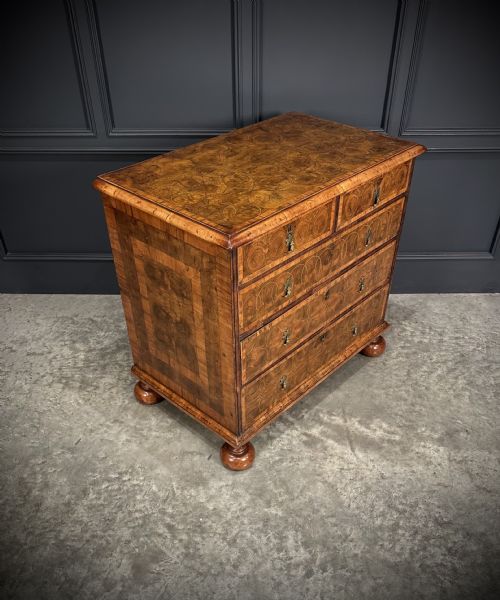


Oyster Veneer Furniture
Oyster veneer furniture groups striking circular timber patterns into harmonious surfaces, bringing rich texture and seventeenth-century craftsmanship into a modern interior.

Oyster Veneer Furniture
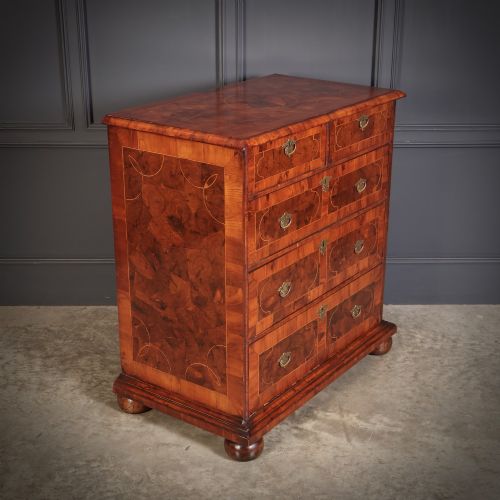
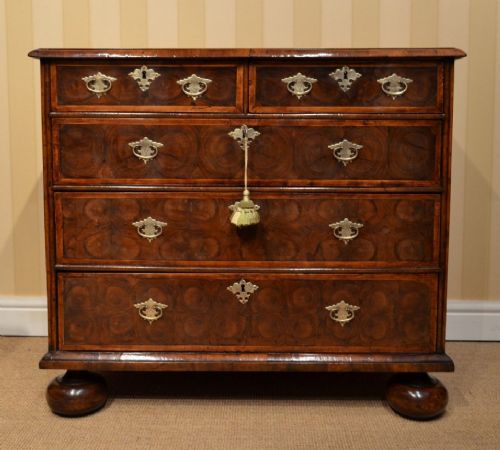
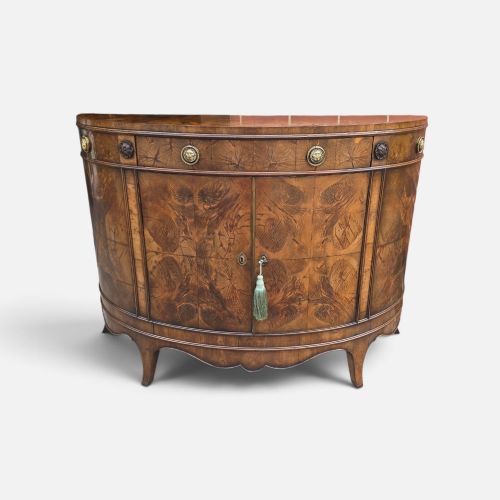
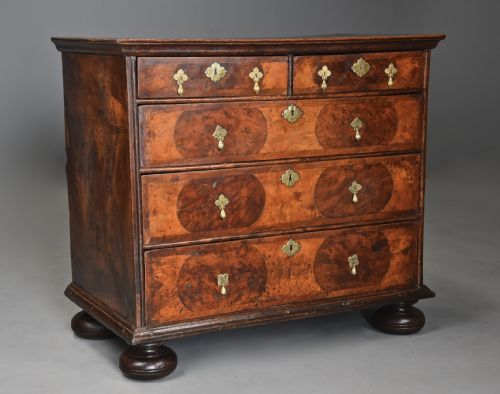
When you search for oyster veneer furniture, you encounter pieces surfaced with cross-sections of smaller branches sliced to reveal concentric growth rings. These concentric discs resemble oyster shells, creating swirling patterns across the primary surfaces of chests of drawers, cabinets on stand, and side tables.
The pieces on this page span several centuries, led by seventeenth-century examples from the William and Mary period alongside later revivals from the twentieth century. Chests of drawers and elevated cabinets on stand dominate the forms, offering practical storage alongside distinctive decorative surfaces.
Makers from the seventeenth century onward utilised native and exotic timbers to construct these items, applying intricate circular veneers to carcases built from secondary woods like oak and walnut. Later revival pieces from the early twentieth century continue this tradition of patterned woodwork using period techniques.
Materials and construction methods
The characteristic circular motifs are achieved by slicing branches diagonally or horizontally to produce small, elliptical discs of timber. Woods such as olive wood, laburnum, walnut, and yew are favoured for their contrasting grain structures, which produce dynamic visual movement when arranged across a drawer front or top.
Cabinet makers laid these individual slices closely together in geometric or herringbone arrangements, often framing the patterns with boxwood or holly stringing lines. The underlying carcase is typically constructed from solid oak or walnut, providing a stable foundation to prevent the thin veneers from warping or lifting over time.
Current listings feature seventeenth-century pieces alongside twentieth-century revivals, constructed in walnut, laburnum, olive wood, and oak.
Distinctions in quality
The standard of a piece depends heavily on the precision of the veneer cutting and the complexity of the timber layout. Finer examples display tightly packed, uniform oyster discs with minimal filler between the joints, whereas lesser pieces show wider gaps and less disciplined arrangements.
The choice of secondary woods and the presence of marquetry or inlay work also elevate a piece. Superior examples integrate contrasting timbers like boxwood or maple to accentuate the primary walnut, olive, or laburnum veneers, creating a more cohesive and sophisticated surface composition.
The Oyster Veneer Furniture Glossary
- Oyster veneer
- A method of cutting branches across the grain to produce small, circular or oval pieces of wood that resemble oyster shells. These pieces are laid side by side to create decorative patterns on furniture surfaces.
- Chest on stand
- A tall storage chest raised upon a separate base with legs, frequently seen in seventeenth-century formats. This form lifts the patterned drawer sections off the floor for easier access.
- Marquetry
- The art of forming decorative patterns by fitting together small pieces of wood veneer of different colours and grains. It often appears alongside oyster veneered panels on fine period drawer fronts.
- Stringing
- Thin, narrow strips of contrasting wood inlaid into grooves on a furniture surface to create borders and geometric outlines. It is frequently utilised to frame panels of oyster veneer.
- Carcase
- The main structural body or frame of a piece of furniture before drawers, doors, and surface veneers are applied. Oak and walnut are common carcase materials for these items.
Oyster Veneer Furniture: Frequently Asked Questions
What is oyster veneer furniture?
Oyster veneer furniture consists of wooden items decorated with thin, circular slices of tree branches arranged in repeating patterns. These pieces date predominantly from the late seventeenth century, with some later revivals.
The sliced timber creates distinct, eye-catching circular motifs across surfaces like tabletops and drawer fronts, making each piece visually unique.
How do I care for oyster veneer?
Care for these surfaces by keeping them away from direct sunlight and maintaining stable room humidity to prevent the thin veneers from drying out or lifting. Dust gently with a dry cloth and avoid harsh chemical polishes.
Applying a traditional beeswax occasionally helps nourish the historic timber and maintains the natural lustre of the polished grain.
How can I tell a seventeenth-century piece from a revival?
Seventeenth-century pieces typically show hand-cut dovetails, older secondary woods like oak, and natural wear consistent with age, such as softening of the timber edges. Revival pieces from the twentieth century often display machine-cut elements and more uniform internal construction.
Examining the underside and drawer linings often reveals the tool marks and ageing characteristics specific to the William and Mary period.
Where were these pieces used historically?
Historically, these decorative items were placed in prominent reception rooms and bedchambers of wealthy homes to display the owner's taste and the cabinet maker's skill. Their rich surfaces were designed to catch candlelight.
Today, their compact proportions make them versatile additions to hallways, living rooms, and studies as functional storage or side tables.