
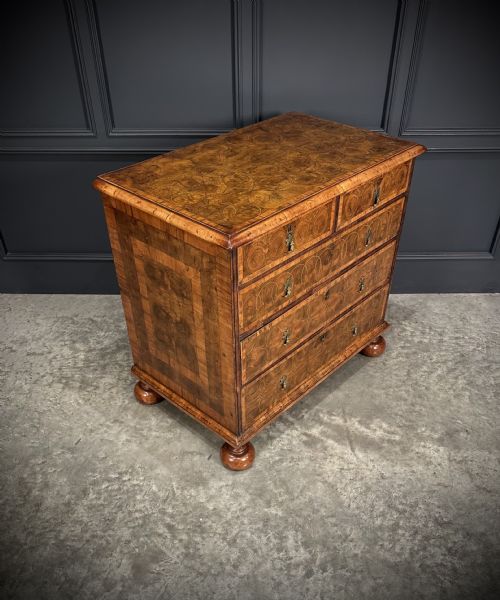


Oyster Veneered Walnut Chest
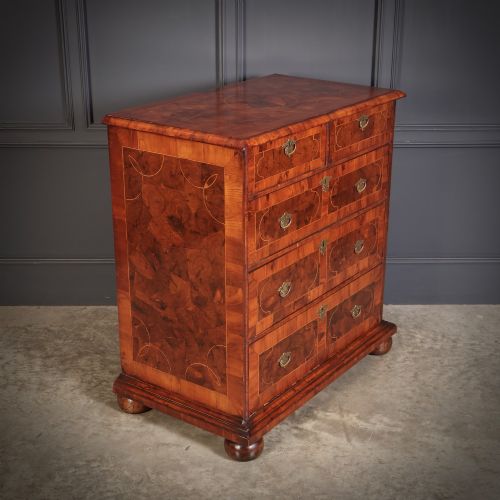
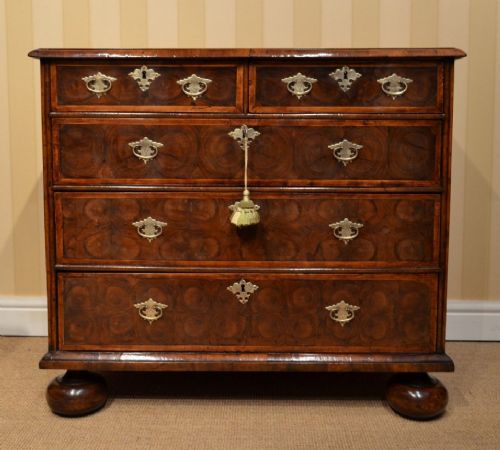
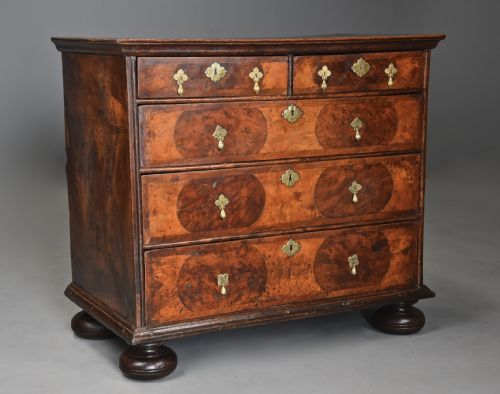
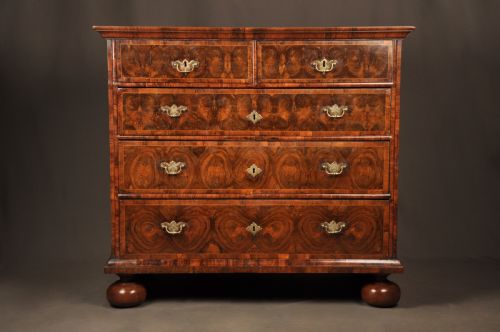
An oyster veneered walnut chest combines circular branch cuts with rich timber grain, offering a striking focal point for a period interior.

Oyster Veneered Walnut Chest
An oyster veneered walnut chest is a substantial storage piece defined by its distinctive circular timber patterns, which emerge from cross-cutting small branches. These forms appear primarily in pieces attributed to the 17th century, 1700, the 18th century, and the Georgian period, spanning styles such as William and Mary and George I.
The most common formats on this page include chests of drawers, chests on stand, and cabinets on stand. Alongside walnut, makers utilised olivewood, olive, laburnum, yew wood, boxwood, and oak, often incorporating cross banding, marquetry, and inlay.
These items range from simple chests of two short and two long drawers to elevated forms supported on stands. Each example showcases the characteristic figuring of timber roundels arranged across the primary surfaces.
Materials and construction methods
Craftsmen created oyster veneers by slicing thin roundels diagonally across small branches or roots to expose concentric growth rings. These individual discs were then fitted closely together across the surface of a carcase, which was typically constructed from oak or pine.
To enhance the decorative scheme, cabinetmakers applied cross banding in contrasting timbers such as boxwood and laburnum around the drawer fronts and borders. Brass hardware, including drop handles and escutcheons, was fitted to complete the construction.
Cabinetmakers sliced tree branches at an angle to mimic the mottled shell of an oyster, turning humble limb wood into grand court furniture.
Judging the quality of oyster veneer furniture
Quality rests upon the precision of the timber cutting and the tightness of the arrangement across the carcase. Finer pieces demonstrate careful selection of walnut, olive, or laburnum to ensure the circular grain patterns align harmoniously without excessive gaps between the discs.
The sophistication of the supporting structure also distinguishes the range. Examples that incorporate stands, intricate marquetry, or contrasting boxwood inlay reflect higher levels of joinery skill than standard chests of drawers.
The Oyster Veneered Walnut Chest Glossary
- Oyster veneer
- Slices of timber cut transversely from small branches to display circular growth rings resembling oyster shells. This technique creates a patterned surface across furniture from the late seventeenth century.
- Cross banding
- A border technique where narrow strips of veneer are laid perpendicular to the main grain of the piece. It frames drawer fronts and top panels with contrasting timber.
- Chest on stand
- A form comprising a primary drawer section elevated on a separate framework of legs. This configuration lifts the storage compartment higher off the floor.
- Marquetry
- Elaborate patterns formed by fitting together different coloured veneers onto a backing surface. It frequently incorporates floral or geometric designs using woods like walnut and boxwood.
Oyster Veneered Walnut Chest: Frequently Asked Questions
What is an oyster veneered chest?
An oyster veneered chest is a wooden storage piece covered in small, circular timber discs cut from branches. These pieces date predominantly from the late seventeenth and early eighteenth centuries.
They appear as standard chests of drawers or raised on stands, showcasing intricate grain patterns across the exterior.
How do I date an oyster walnut chest?
Dating relies on examining the construction methods, secondary timbers, and overall form. Pieces from the William and Mary period often feature distinct base stands and elaborate cross banding.
Later George I examples show stylistic shifts in leg design and hardware while retaining the characteristic circular veneer work.
Where should I place an oyster chest?
These chests serve as prominent focal points in hallways, living rooms, or bedrooms due to their decorative patterned surfaces. Their rich timber tones pair well with traditional and period interiors.
Keep them away from direct sunlight and sudden temperature changes to protect the delicate veneer.
What woods are used besides walnut?
While walnut is predominant, makers frequently incorporated olivewood, laburnum, yew wood, and boxwood into the designs. Olive and laburnum offer particularly contrasting tones when arranged in circular patterns.
Oak commonly forms the internal carcase structure supporting the exterior decorative veneers.