
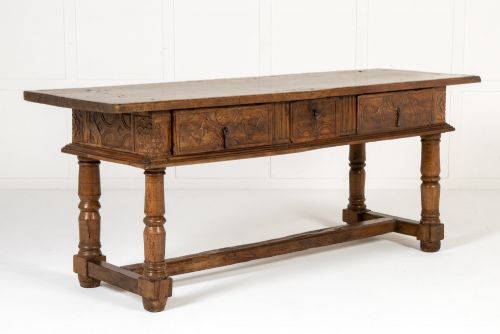


Baroque Console Table
A baroque console table commands a room with theatrical carving, rich timber and marble, built to anchor a wall with drama.
Baroque Console Table
A baroque console table is a grand wall-anchored or freestanding piece designed to display decorative objects beneath a mirror or artwork. The search phrase brings up forms spanning console tables, side tables and centre tables, heavily represented by Italian, Spanish and Dutch regional variants.
Most examples you encounter on this page date from the seventeenth and eighteenth centuries, though nineteenth-century revival pieces also appear. Walnut and giltwood dominate the selection, frequently paired with inset marble or onyx tops.
How they were made
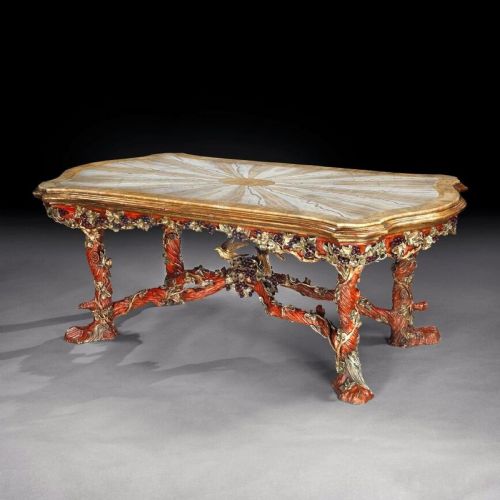
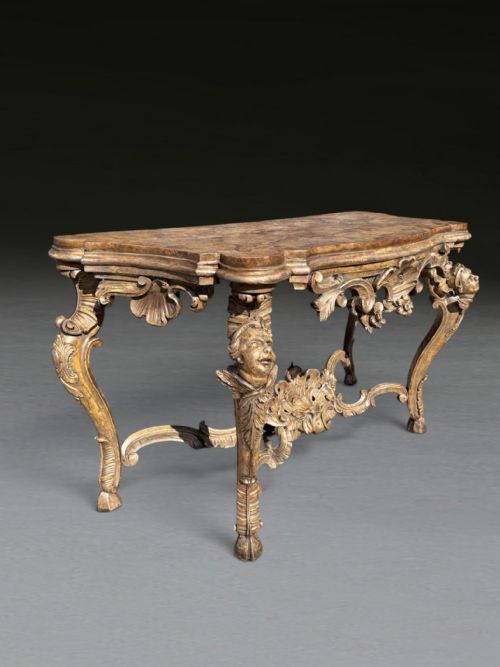
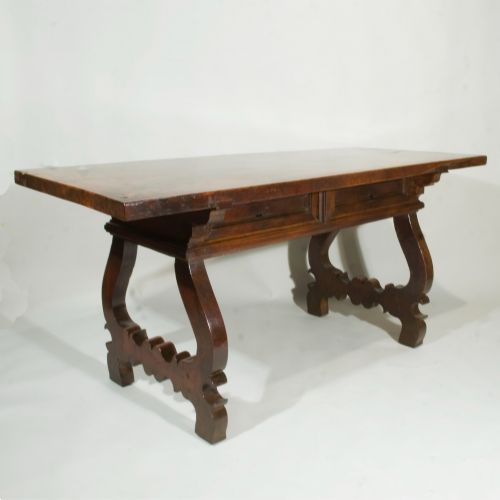
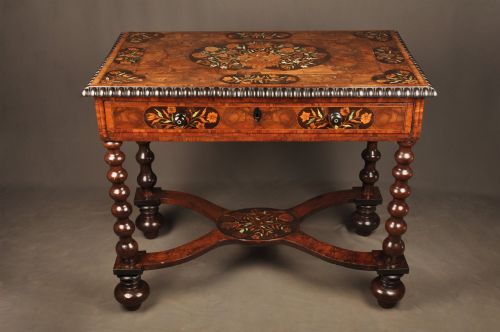
Craftsmen built these tables using solid hardwoods such as walnut, oak and yew, applying intricate marquetry, bone inlay and ebonisation to surface planes. Giltwood surfaces combine carved timber foundations coated in thin layers of gold leaf.
Tops rely on heavy slabs of marble, onyx or pink Salome stone, supported by sculptural bases featuring carved wood, wrought iron and brass mounts.
Baroque Console Table Retail Price Guide 2026
Typical asking prices for baroque console table among the pieces listed under this phrase on Sellingantiques today, from the lower quarter to the upper quarter. They describe what is for sale here now, not the wider market.
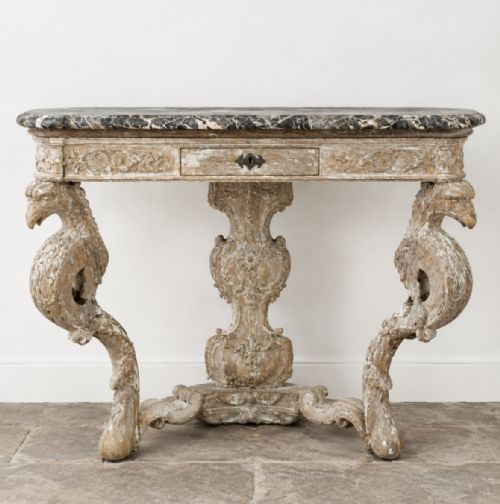
Carved wooden dolphins and eagles hold up the heavy stone tops.
What varies in quality
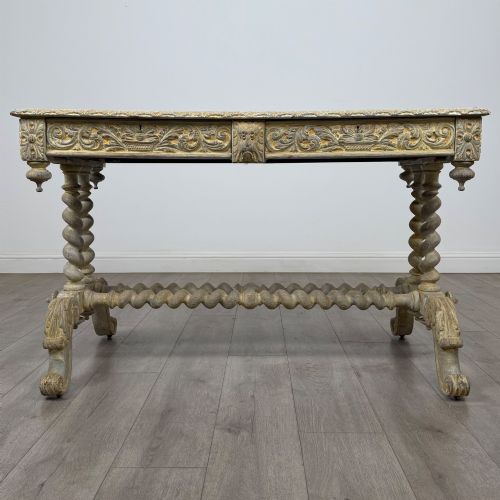
Quality rests on the depth and animation of the carving, distinguishing stiff, flat execution from fluid drapery and deep undercut foliage. The sculptural integrity of supports, whether lion's paws, eagles or dolphins, dictates the visual success of the piece.
The choice and execution of top materials elevate certain items, particularly where figured marble or intricate bone inlay matches the ambition of the carved base.
Amleto Bertoni·Pauly et Cie
The Baroque Console Table Glossary
- Console table
- A table designed to stand against a wall, frequently fixed with brackets or resting on frontal legs. These pieces traditionally supported decorative objects or urns.
- Giltwood
- Timber coated with gold leaf over a prepared gesso ground. This finish provides the characteristic metallic brilliance seen on formal Italian and French pieces.
- Marquetry
- Inlaid wood veneers arranged in geometric or pictorial patterns across the surface. Dutch makers used this technique extensively on table tops.
- Breccia marble
- A composite stone made of angular rock fragments embedded in a fine-grained matrix. It offers varied multicoloured patterns on high-status table tops.
- Demi-lune
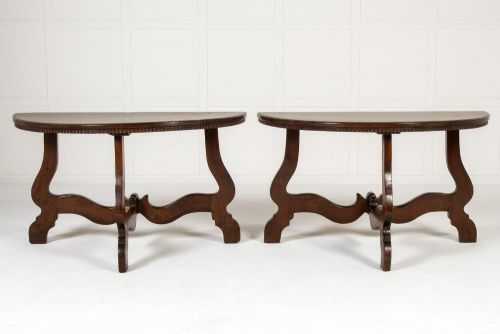
- A half-moon shape characteristic of console tables designed to sit flush against a wall. This profile saves floor space while maintaining a formal presence.
Baroque Console Table: Frequently Asked Questions
What is a baroque console table used for?
These tables served primarily as formal display surfaces in grand entryways and reception rooms, often positioned beneath large mirrors or paintings.
Today they function effectively as striking sideboards in hallways or living spaces, providing a solid surface for lamps and decorative objects.
How do I tell seventeenth-century pieces from later revivals?
Seventeenth-century pieces typically exhibit heavier construction in solid Spanish or European walnut, showing tool marks and wear consistent with age.
Nineteenth-century revival items often display brighter gilding, machine-cut elements and standardised carving styles influenced by historicism.
Are marble tops original to these tables?
Many baroque tables were designed specifically to carry heavy stone tops, utilising thick wooden rails to distribute the weight.
Replacement marble slabs do occur, so examining the fit and the seating of the stone against the wooden frame helps determine originality.
How should I care for a giltwood surface?
Giltwood requires protection from direct sunlight and high humidity to prevent the gesso and gold leaf from flaking or lifting.
Dusting should be performed gently with a dry, soft brush, avoiding any liquid polishes or abrasive cloths that damage the metallic leaf.