




Banded Geometric Rug
A banded geometric rug brings linear structure and tribal warmth into a room through horizontal registers of pattern.
Banded Geometric Rug
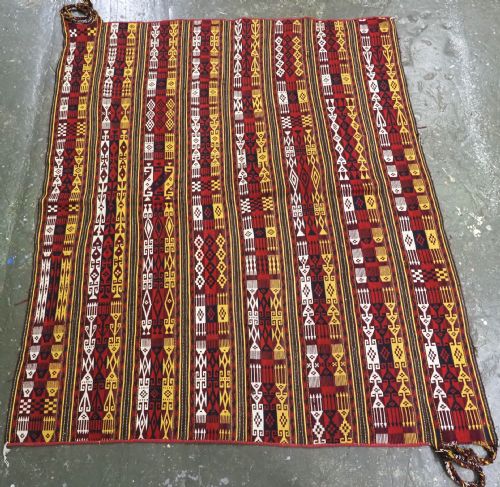
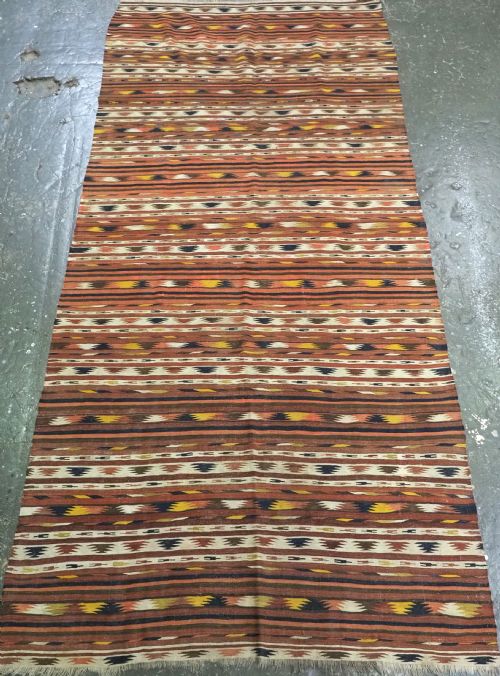
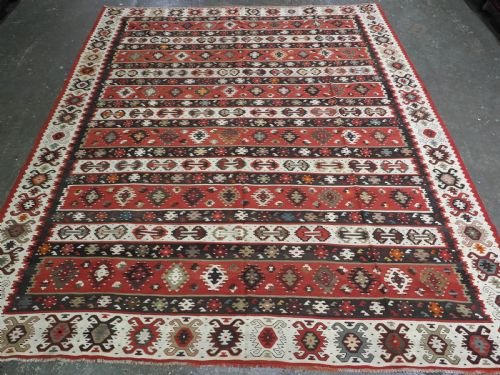
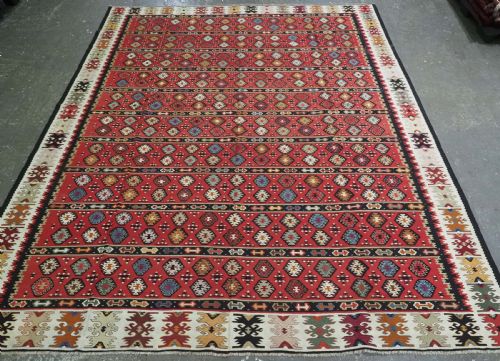
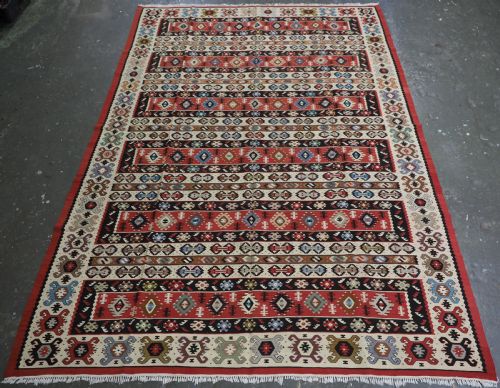
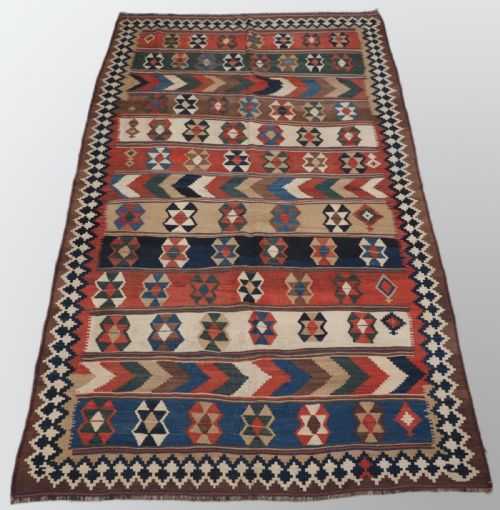
A banded geometric rug encompasses flat-woven kilims, storage bag faces, and tent bands originating from Central Asian, Caucasian, and Balkan traditions. These pieces organise visual space through repeated horizontal bands filled with chevrons, stripes, and tribal motifs rather than central medallions.
The version most commonly met on this page is the antique kilim or utilitarian weaving dating from the late nineteenth century to the early decades of the twentieth century. Examples range from small formats derived from tent bands to large floor coverings produced across regions like Pirot, Shirvan, and Baluchistan.
The design vocabulary relies entirely on linear repetition, where bands of contrasting hues alternate across the field. Makers arranged geometric symbols within these stripes to create rhythm and visual balance across wool surfaces.
Factors of Quality
Quality separates along the fineness of the weave and the precision of the geometric layout within each band. Tighter interlacing of wool fibres creates a denser, more resilient fabric that maintains structural integrity over decades of floor use.
The harmony of the natural dye palette and the preservation of original wool surfaces dictate the visual impact of the piece. Uniformity in the execution of repeated bands and the retention of original finishes, such as backings or selvedges, distinguish superior examples.
Materials appearing across the inventory are strictly limited to wool, cotton, hand-spun wool, and natural dyes utilised in tribal and nomadic workshops.
The Banded Geometric Rug Glossary
- Kilim
- A flat-woven carpet or rug produced without a pile by tightly interweaving warp and weft strands. This technique creates a lightweight textile suitable for both floor placement and wall hanging.
- Weft work
- Decorative thread passed horizontally across the warp to build up patterns and textures. In banded geometric rugs, this technique defines the distinct horizontal stripes.
- Tent band
- A long, narrow strip of woven textile used structurally within nomadic camps to secure yurt frameworks. These bands frequently find new life as small rugs or decorative elements.
- Natural dye
- Colour extracted from plants, insects, or minerals rather than synthetic compounds. These dyes yield softer tones that age with subtlety across wool fibres.
- Warp
- The stationary lengthwise threads stretched across a loom before weaving begins. The weft threads pass alternately over and under these structural strands.
Banded Geometric Rug: Frequently Asked Questions
How were banded geometric rugs used originally?
Nomadic and tribal groups utilised these textiles for practical daily functions within tents and dwellings. They served as floor coverings, storage bag faces, saddlebags, and structural tent bands.
Over time, many utilitarian objects transitioned into decorative interior items as their linear designs gained appreciation for modern living spaces.
What regions produced these geometric weavings?
Production spans several distinct geographical areas including the Caucasus, Central Asia, and the Balkans. Specific weaving centres such as Shirvan, Pirot, and regions associated with Baluch and Uzbek nomadic groups created characteristic banded patterns.
Each region imparted distinct colour palettes and wool preparation methods to their flat-woven textiles.
How do I care for an antique flat-weave rug?
Maintenance requires gentle vacuuming without a rotating brush head to protect the flat-woven wool surface. Professional cleaning tailored to antique textiles preserves the natural dye stability.
Placing a quality underlay beneath the rug prevents slipping and reduces friction between the floorboards and the wool fibres.
How can I tell different tribal styles apart?
Distinctions rest primarily on the specific geometry of the bands, the structural weave density, and the secondary motifs. Caucasian pieces often display crisp, sharp colour transitions, while Balkan and Anatolian kilims utilise softer tonal gradations.
Examining the handling of the wool and the specific arrangement of stripes reveals the regional workshop or nomadic tradition.