



Ball Moulding Mirror
A ball moulding mirror brings striking circular geometry and rich Regency character to a room, offering deep convex glass and gilded surfaces.
Ball Moulding Mirror
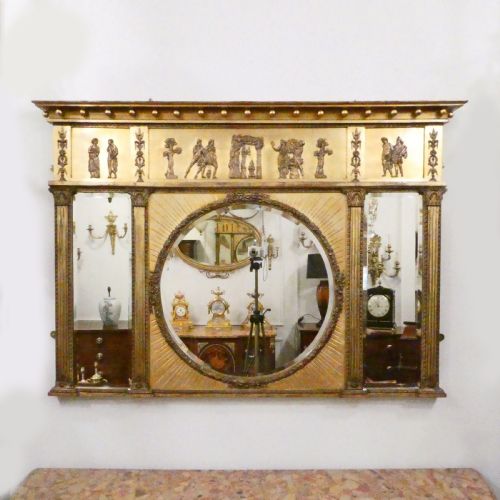
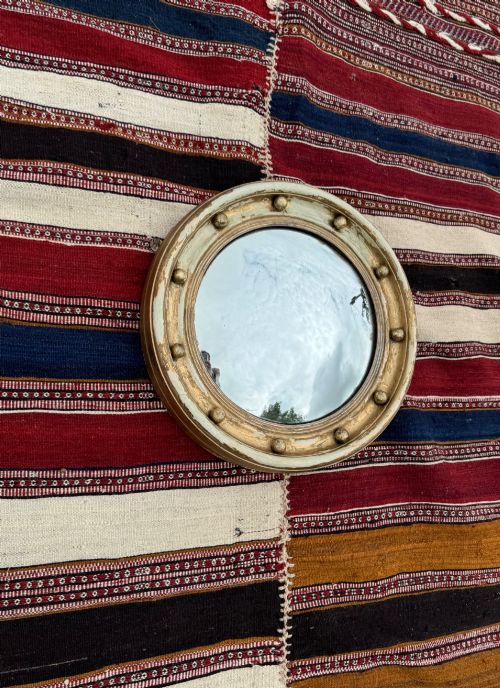
When you search for a ball moulding mirror, you are looking at circular convex wall mirrors and wide overmantel pieces defined by spherical ornamentation along their frames. These objects span the Regency era, the nineteenth century, and Edwardian revivals, bringing classical grandeur and practical light reflection into domestic interiors.
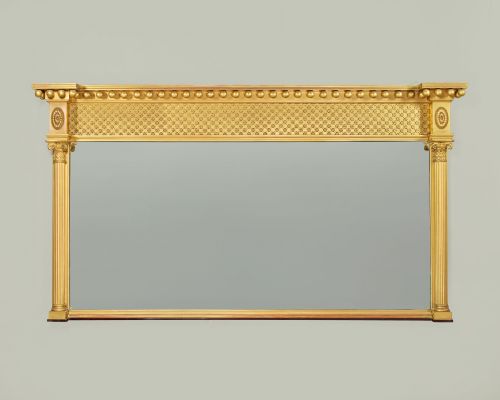
The version you are most likely to meet on this page is a nineteenth century giltwood convex wall mirror, often featuring carved eagle crests or classical motifs. Alongside these circular forms, you will find rectangular overmantel mirrors in the Regency style, designed to sit above fireplace openings.
The origins of these pieces trace through Regency and grand Regency aesthetics, with later revivals capturing the same ornamental vocabulary. Giltwood, gesso, and ebonised wood dominate the forms, creating strong visual statements that anchor a wall or mantelpiece.
How they were made
The construction of these pieces relies on carved wood foundations finished with gesso and gold leaf or composition ornament. Artisans applied layers of chalk and glue gesso over timber frames before applying gilding, creating a smooth surface that could be polished or burnished.
The distinctive spherical balls set into the frames were often turned separately from timber or formed in composition before being applied in sequence. Convex mirror glass was blown and silvered to produce a curved, wide-angle reflection characteristic of the form.
Verre eglomise panels sometimes accompany the glass, featuring reverse-painted decoration set into the upper sections of rectangular overmantel frames. Carved details such as eagles and foliage were attached securely to the primary frame structures.
Many convex mirrors wear a fierce golden eagle on top, keeping a sharp glass eye on the room below.
What varies in quality
The distinction between tiers of these pieces lies in the crispness of the carved ornamentation and the depth of the gilding. Finer examples display sharp definition in the ball moulding and delicate execution on crest mounts like eagles and acanthus leaves.
Surface finish and the preservation of original gold leaf or gesso layers dictate the visual richness of the object. Hand-carved timber framing demonstrates superior craftsmanship compared to heavily moulded composition alternatives.
The Ball Moulding Mirror Glossary
- Convex glass
- Curved mirror glass that bulges outward to produce a wide-angle, panoramic reflection of the room. This form was especially popular during the Regency period.
- Giltwood
- Timber carved and coated with gold leaf or metal leaf over a prepared gesso ground. It provides a luminous surface that catches candlelight and daylight.
- Gesso
- A mixture of gypsum or chalk and animal glue used as a base for gilding and relief ornamentation on wood frames. It allows for intricate moulded details.
- Verre eglomise
- A process of cold painting and gilding on the reverse side of glass panels. It often appears in the frieze panels of Regency overmantel mirrors.
- Overmantel mirror
- A large mirror specifically proportioned to hang on the wall directly above a fireplace mantel. These often feature landscape or horizontal formats.
Ball Moulding Mirror: Frequently Asked Questions
Where should I hang a convex mirror?
These pieces work effectively in entrance halls, dining rooms, and living spaces where their wide-angle reflection can capture the entire room. Hanging them at eye level allows the decorative frame and ball moulding to act as a focal point.
Ensure the wall structure can support the weight of the timber and glass assembly, particularly for larger examples featuring heavy crests or extended frames.
What is the difference between a wall mirror and an overmantel mirror?
Wall mirrors in this category are typically circular convex pieces designed to be hung independently on open wall expanses. Their primary function is optical as well as decorative.
Overmantel mirrors feature horizontal or landscape rectangular formats built to span the width of a fireplace mantel, incorporating classical architectural elements and plate glass.
How can I tell a Regency piece from a revival?
Regency pieces date from the early nineteenth century and exhibit period construction methods, timber shrinkage, and hand-carved detailing on elements like eagles and foliage. Revival examples, such as those from the Edwardian period, often utilise heavier composition ornament and different backing construction.
Examining the type of gesso, the ageing of the mirror glass, and the construction joints helps determine the exact period of manufacture.