





Ball and Claw Commode
These ball and claw commode chests of drawers offer grand proportions and carved detail, bringing historic presence to a room.
Ball and Claw Commode
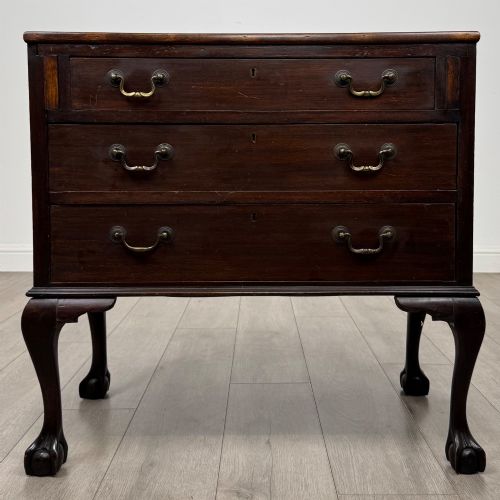
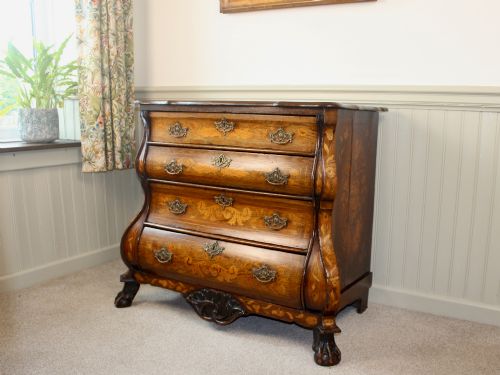
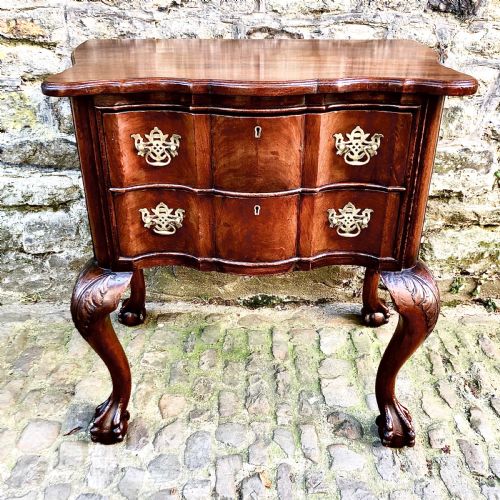
A ball and claw commode is a substantial chest of drawers defined by prominent carved feet supporting a robust timber body. These pieces range from eighteenth century Dutch marquetry and bombé forms to later Georgian revival designs.
Most examples encountered on this page date from the eighteenth to the early twentieth century, utilising traditional cabinet forms such as bow fronts, serpentine shapes, and block fronts.
How they were made
Cabinetmakers constructed these chests using dense timbers such as mahogany, walnut, and oak, often applying intricate marquetry and fruitwood inlay across the drawer fronts and surfaces.
Carving the distinctive ball and claw feet required skilled handwork to shape the timber into powerful avian or mammalian talons gripping a sphere, matched by curved bombe and serpentine bodies.
Some cabinetmakers carved the talons so tightly around the wooden sphere that dust has settled undisturbed in the grip for centuries.
What varies in quality
Quality rests in the crispness of the foot carving and the precision of the timber joints, where sharper talons and seamless bombé curves separate superior work from simpler production.
The choice and execution of surface decoration dictate value, distinguishing finely figured burr walnut and detailed marquetry panels from plain mahogany surfaces.
The Ball and Claw Commode Glossary
- Bombé
- A swelling or bulging outline to the front and sides of a chest. This curving form requires advanced woodworking skill to shape accurately from solid timber.
- Marquetry
- Inlaid patterns of wood veneers applied to furniture surfaces. Craftsmen cut contrasting timbers to create pictorial or geometric designs.
- Serpentine
- A furniture front curving inward centrally and outward at the ends. This undulating shape demands precise joinery to ensure drawers fit smoothly.
- Block front
- A cabinet front divided visually into three vertical sections, with the central section recessed and the outer sections projecting forward. It is a hallmark of robust historic cabinetry.
Ball and Claw Commode: Frequently Asked Questions
What is a ball and claw commode?
It is a heavy chest of drawers raised on carved feet that depict a bird's talon or animal paw grasping a ball. These pieces function primarily for storage while serving as strong decorative focal points.
They appear in various historic styles, from eighteenth-century Dutch marquetry to Edwardian revival pieces, each bringing distinct timber figuring and carved details.
How do I place one in a room?
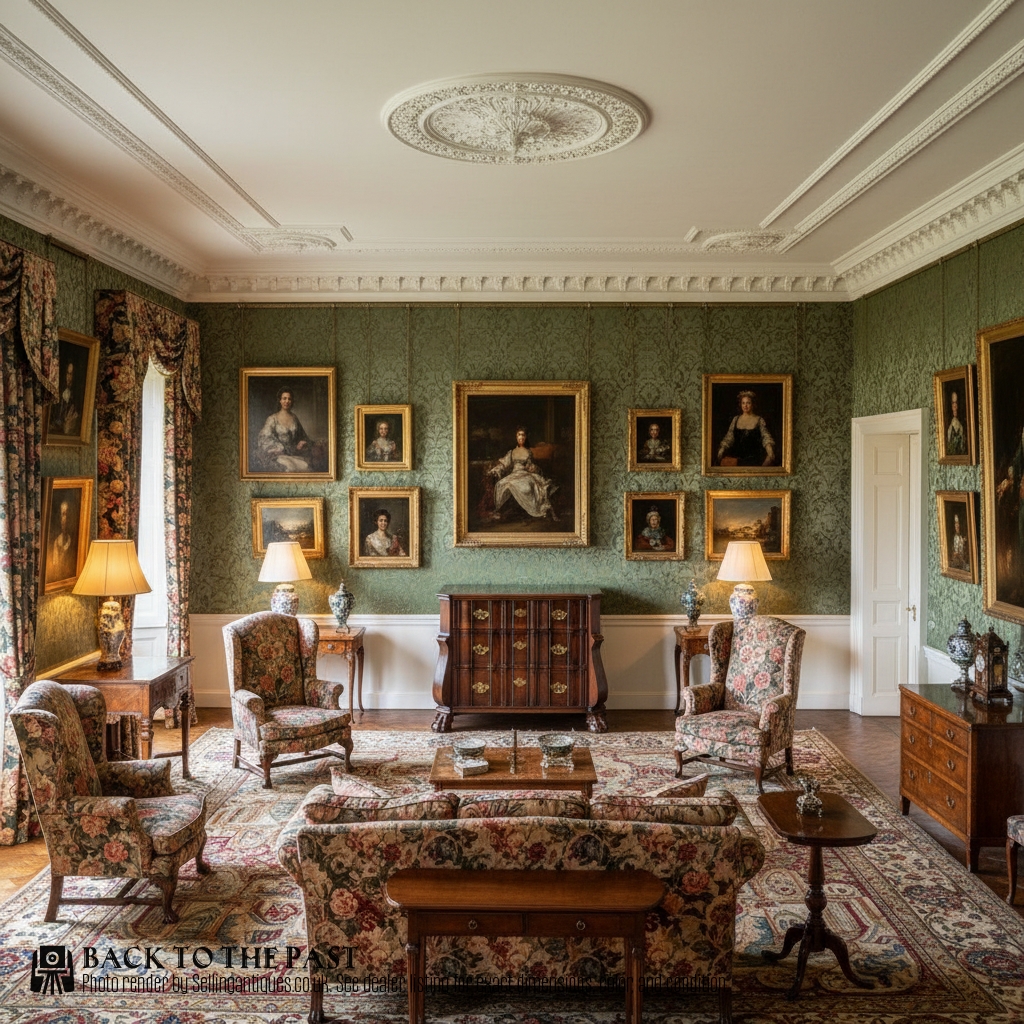
These large chests require adequate floor space and a solid wall to anchor their substantial visual weight. They suit living rooms, large hallways, or bedrooms where their timber tones can complement neutral walls.
Keep them away from direct heat sources and strong sunlight to protect the polished wood surfaces and delicate marquetry inlay from drying out.
How do I distinguish eighteenth-century pieces?
Eighteenth-century examples often display regional characteristics like Dutch bombé curves or specialised regional timbers such as South African stinkwood. Construction methods, hand-cut dovetails, and period-specific brass hardware help confirm age.
Later revival pieces from the Edwardian era or the nineteen-twenties emulate these earlier historic styles while utilising slightly different interior construction techniques.