
French Style Walnut Commode
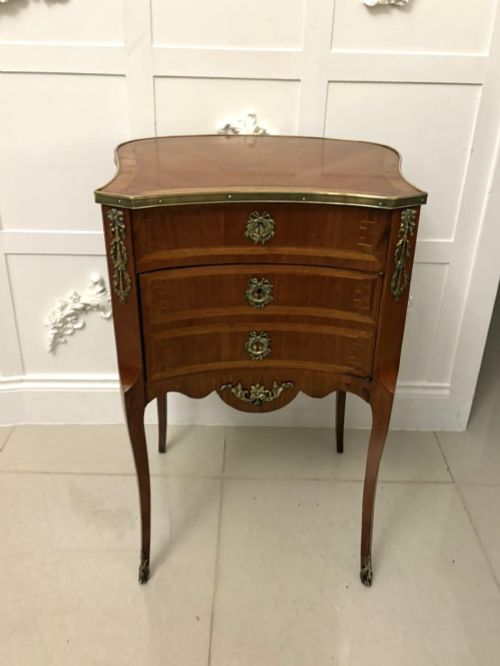
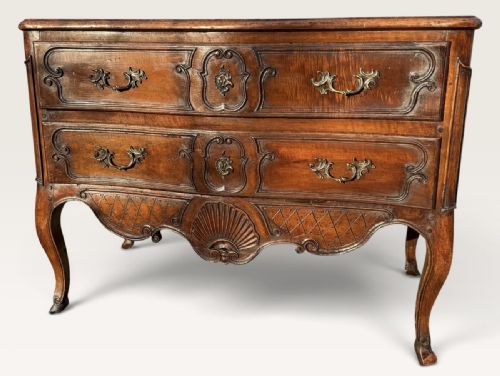
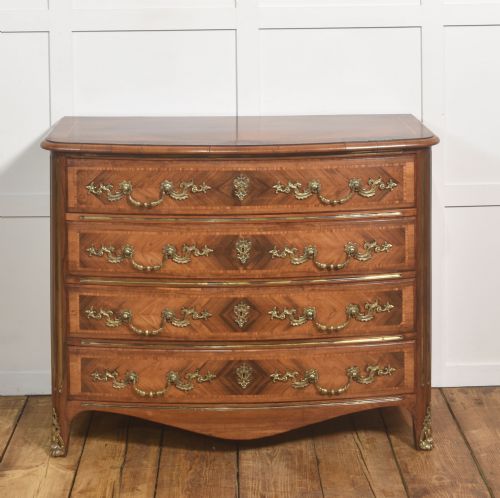
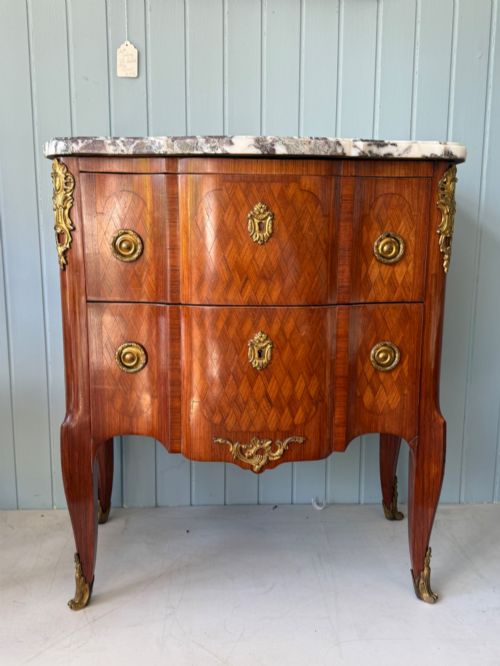
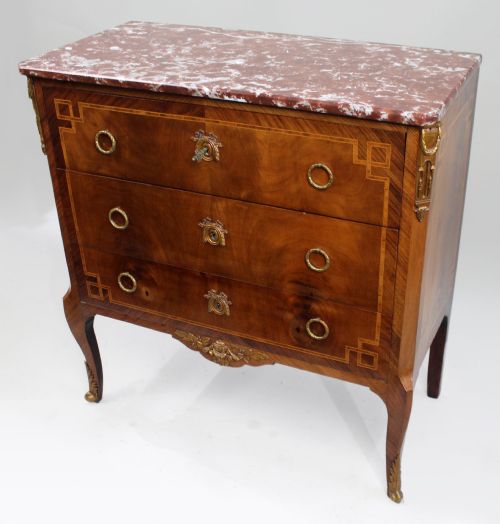
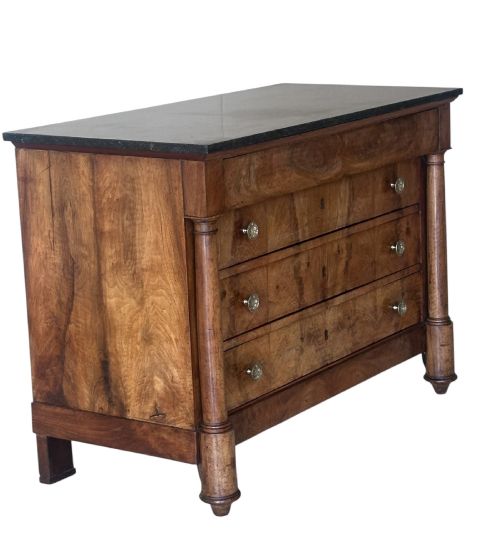
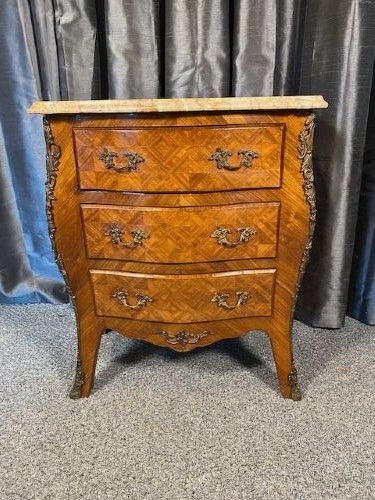
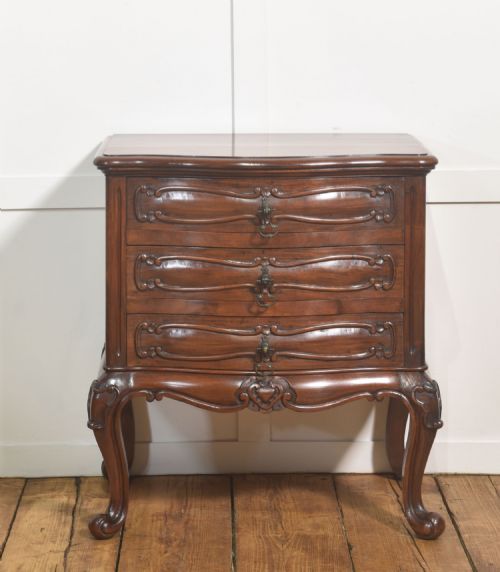
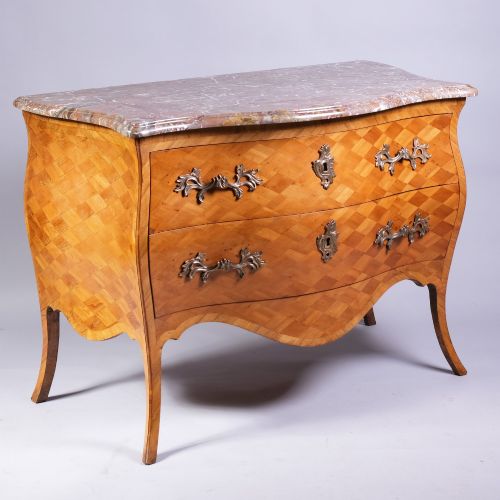
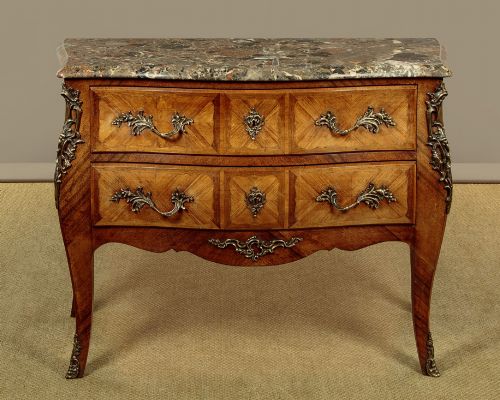
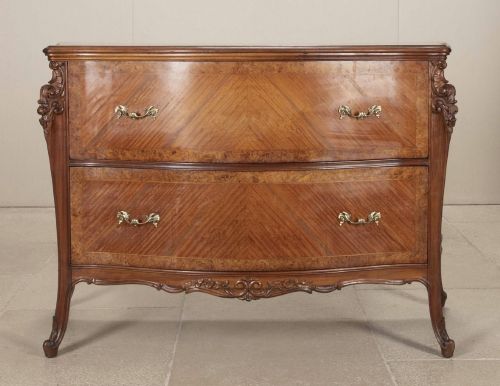
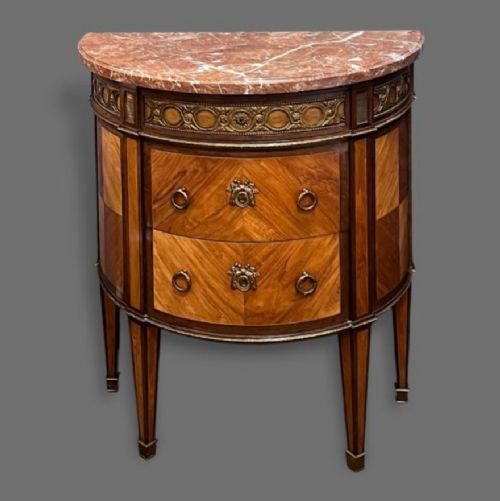
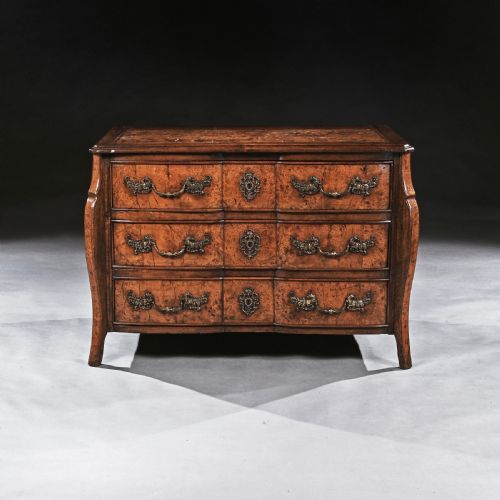
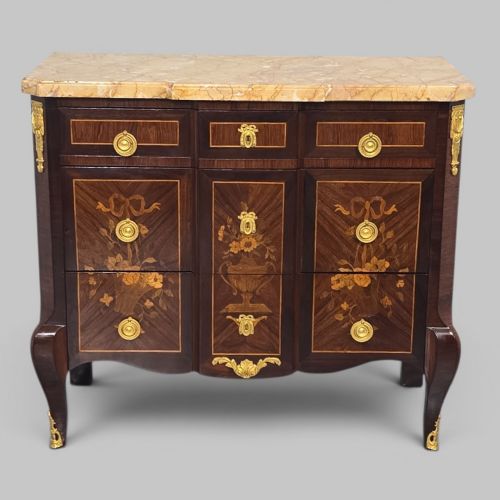
These french style walnut commode pieces combine walnut timber with serpentine shapes and marble tops, providing storage with distinct continental character.
French Style Walnut Commode
A french style walnut commode serves as a low chest of drawers or side cabinet, originating from continental workshops and revival periods. The selections span from eighteenth century provincial examples to nineteenth and early twentieth century revival pieces.
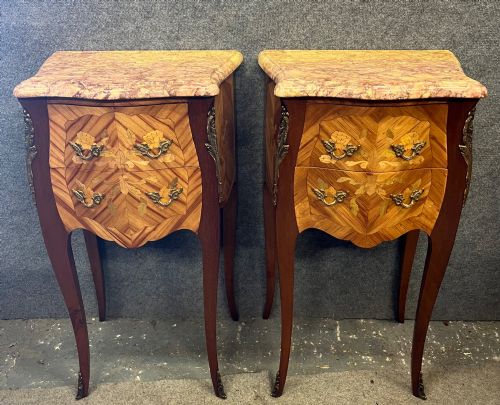
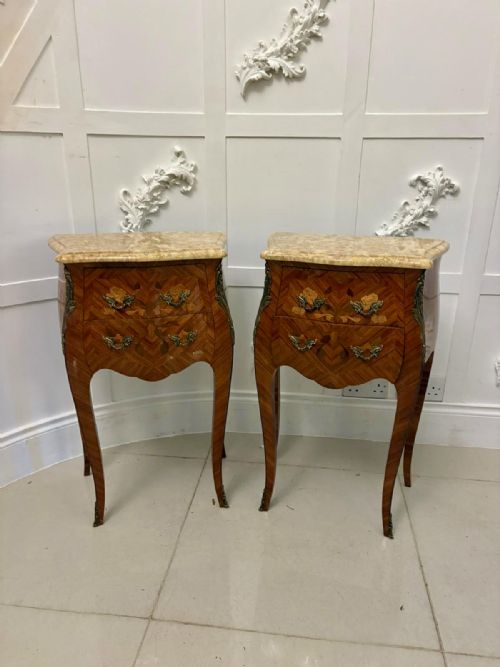
Most entries follow Louis XV or Louis XVI designs, displaying serpentine or bombe fronts alongside marquetry inlay. Alongside standard chests of drawers, the forms include bedside tables, side cabinets, and console tables.
Originating predominantly from France, these items function as practical storage units while exhibiting decorative wood veneers and stone surfaces. Buyers encounter both eighteenth century originals and later nineteenth century interpretations.
How they were made
Cabinet makers utilised walnut timber as a primary base, frequently incorporating burr walnut, kingwood, rosewood, and satinwood for contrasting marquetry panels. Timber selection dictated the grain patterns across serpentine fronts and flat surfaces.
Marble slabs, including rouge marble, form the functional tops on many items, matched with cast or chased brass and ormolu mounts at the corners and handles. Joinery methods relied on traditional carcase construction suited to shaped drawer configurations.
Several bedside chests arrive in matching pairs, ready to guard opposite sides of a four poster bed.
What varies in quality
Construction quality depends on the precision of the marquetry inlay and the thickness of the walnut veneers applied to the carcase. Finer specimens display seamless alignment across serpentine drawer fronts and intricate floral or geometric patterns.
The weight and finish of the ormolu mounts and the thickness of the fitted marble top separate standard production from superior examples. Original hardware and well-fitted drawer linings indicate higher workshop standards.
The French Style Walnut Commode Glossary
- Bombe
- A swollen or bulging convex shape common on continental drawer fronts, requiring advanced timber bending and shaping techniques.
- Serpentine
- A line of furniture fronting that curves inward centrally and outward at the ends, creating a flowing undulating contour.
- Ormolu
- Gilt bronze mounts applied to furniture corners, feet, and key escutcheons for decorative accent.
- Marquetry
- Inlaid wood veneers arranged in pictorial or geometric patterns across the exterior surfaces.
- Demi-lune
- A half moon shape applied to console tables and commodes designed to sit flush against a wall.
- Scagliola
- A composite material made from glue, pigments, and selenite that imitates marble and other stone types.
French Style Walnut Commode: Frequently Asked Questions
Where did these commodes originate?
Most examples emerge from French workshops, following design movements like Louis XV and Louis XVI from the eighteenth century onward.
Craftsmen across continental Europe adopted these stylistic traditions during subsequent nineteenth century revival periods.
How do I care for walnut veneer?
Protect the wood surfaces from direct sunlight and excessive moisture changes to prevent the walnut veneers from drying or lifting.
Apply suitable wax polish sparingly and buff gently with a soft cloth to maintain the timber sheen.
What is a serpentine front?
A serpentine front describes a piece of furniture where the wood curves outward at the edges and inward at the centre.
This shaped profile demands precise joinery and flexible veneer work from the cabinet maker.
Are the marble tops original?
Many commodes retain their fitted marble tops, which vary in colour from white to rouge depending on the period and style.
These heavy stone slabs rested directly on the wooden carcase to provide a durable and decorative surface.