




Asian Wood Side Table
An asian wood side table brings dense grain and quiet proportion into a room, spanning low altar forms to marble-topped stands.
Asian Wood Side Table
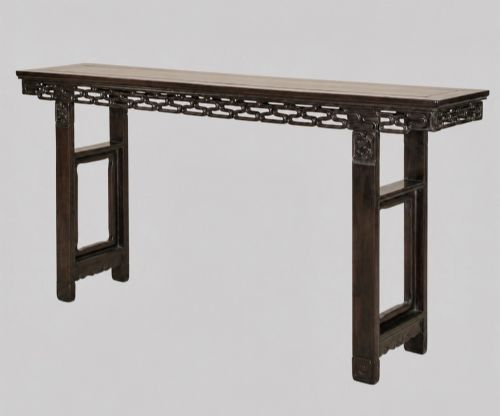
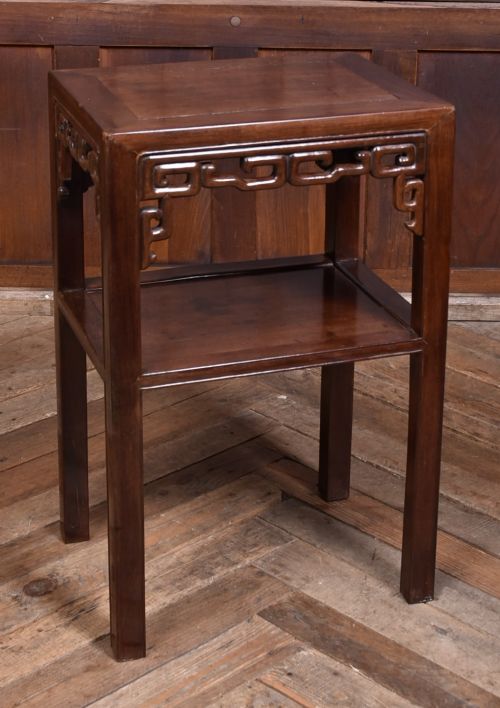
When you search for an asian wood side table, you encounter pieces originating from diverse traditions including Chinese Qing Dynasty craftsmanship, Japanese Meiji works, and Anglo-Indian production. The forms span low tables, nesting sets, plant stands, and altars intended for domestic or ceremonial use.
The nineteenth century provides the bulk of the examples, alongside pieces from around nineteen hundred through to the nineteen thirties. Regional variations bring specific regional timbers and functional shapes directly into domestic interiors.
Materials and construction
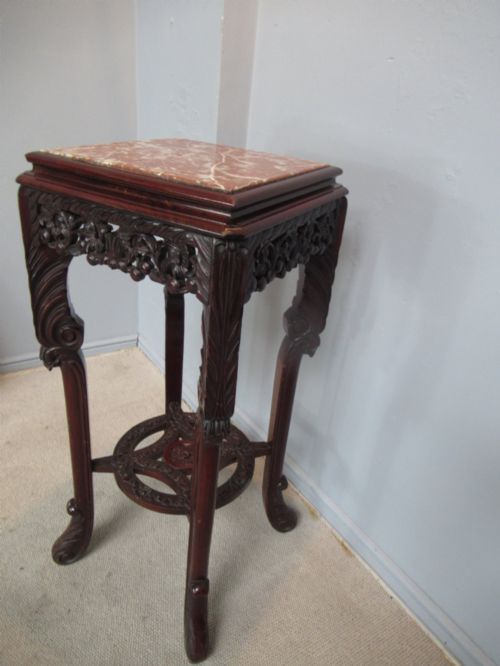
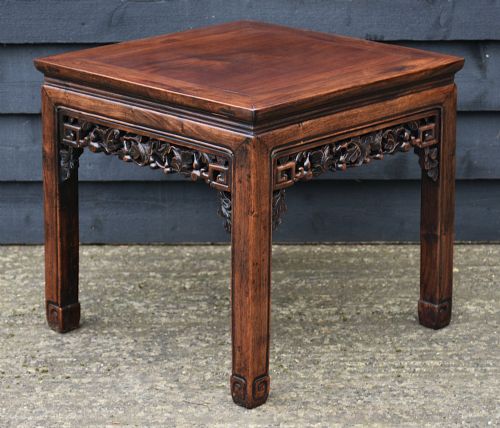
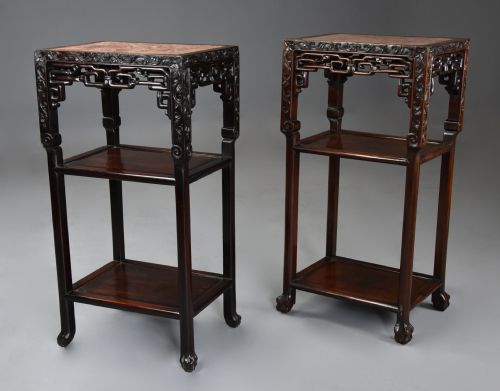
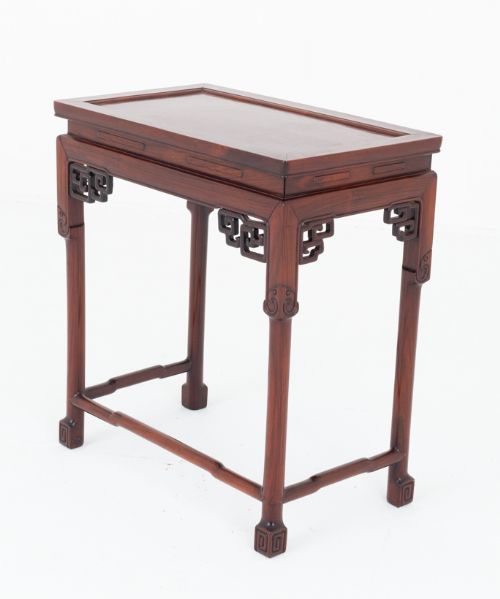
Construction relies heavily on dense timbers such as rosewood, hongmu, and elm, often paired with inset marble or quartz panels for flat, cool surfaces. Joinery techniques manage timber movement without relying on modern metal fixings.
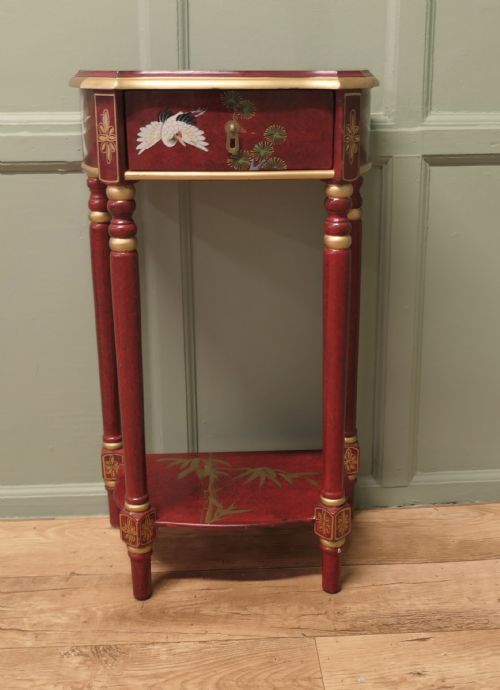
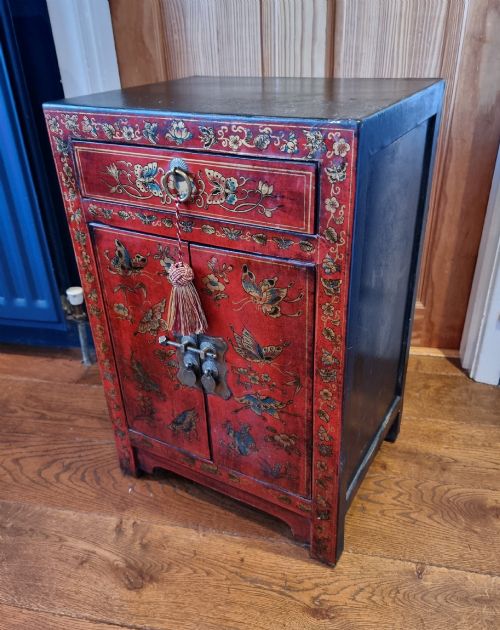
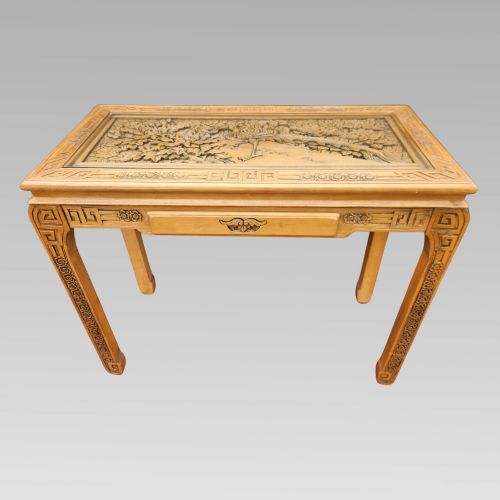
Surface treatments range from natural polished hardwood to applied red lacquer and hand-carved decorative motifs like dragons. Brass accents occasionally appear on hardware and corners to finish the piece.
Rootwood stands make the most of natural timber gnarling, turning underground tree growths into deliberate geological pedestals for stone tops.
Distinctions in standard
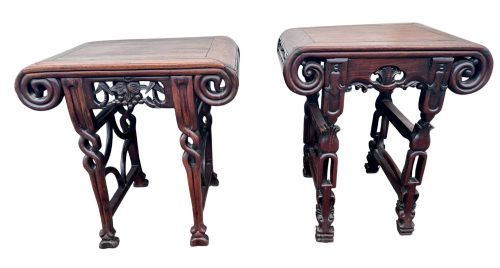
Quality rests upon the crispness of hand-carving and the structural integrity of the frame. Denser timbers like hongmu and rosewood hold intricate detail far better than softer woods over generations of use.
The integration of inset stone tops, such as marble or quartz, dictates the refinement of the piece. Well-fitted joints and balanced proportions distinguish accomplished cabinet work from simpler provincial items.
The Asian Wood Side Table Glossary
- Altar table
- A long, narrow table originating from ceremonial spaces featuring upturned flanges at the short ends. These items now function as console tables in domestic hallways.
- Hongmu
- A dense, heavy Chinese hardwood often translated as red wood. This material accommodates deep, sharp carving without splintering.
- Chabudai
- A short-legged traditional Japanese table used while sitting on tatami mats. They appear in elm and other regional timbers.
- Qing Dynasty
- The final imperial dynasty of China, spanning from sixteen forty-four to nineteen twelve. Pieces from this era frequently employ traditional mortise and tenon joinery.
- Meiji
- The period in Japanese history from eighteen sixty-eight to nineteen twelve. Furniture from this era often combines traditional joinery with emerging export designs.
Asian Wood Side Table: Frequently Asked Questions
How were these tables used originally?
Many of these pieces served specific domestic or ceremonial roles, such as supporting ritual objects on altar tables or displaying porcelain and plants on pedestals. Low tables accommodated floor-level activities including tea preparation and writing.
Over time, European and British export demand shifted their function toward general display and placement beside seating in reception rooms.
What is the difference between rosewood and hongmu?
Rosewood encompasses a broad botanical family of dense, figured tropical timbers valued for durability and rich colour. Hongmu is a specific Chinese classification denoting dense, red-hued cabinet woods.
Both materials were utilised for high-status furniture because they accepted intricate chiselling and developed a deep patina through handling.
How do I care for a marble top?
Marble and quartz inserts require simple dusting with a soft cloth and immediate wiping of any liquid spills. Avoid acidic cleaners that etch the polished stone surface over time.
Natural wax applied sparingly to the surrounding wooden frame helps maintain the finish without harming the stone inset.
Are nesting tables a modern invention?
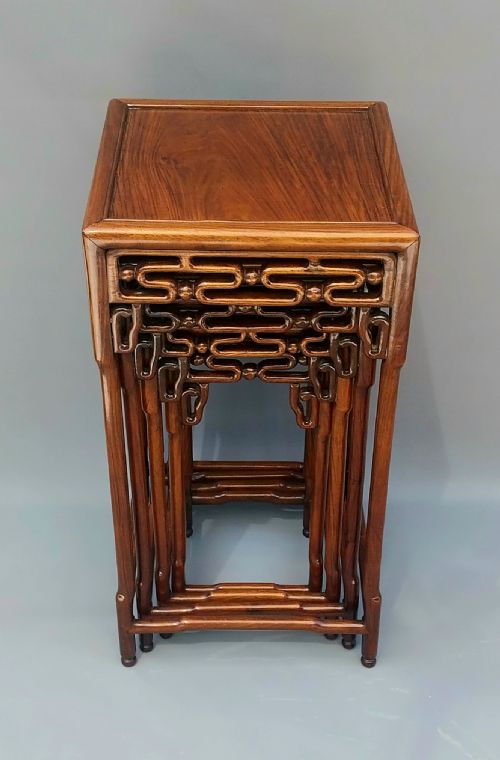
Nesting sets appear frequently in nineteenth-century Chinese export furniture, constructed in graduated sizes that slide neatly beneath one another. These sets maximised floor space in compact urban dwellings.
Craftsmen built them using identical timbers and decorative schemes across all four pieces to maintain visual harmony when stacked.