



Asian Wood Carving Statue
An asian wood carving statue brings centuries of sculptural craft into a room, depicting deities, animals, and scholars rendered in rich timber.
Asian Wood Carving Statue
When you search for an asian wood carving statue, you encounter sculptural works originating predominantly from China, Japan, Burma, and Indonesia. These figures take the form of Buddhist immortals, Daoist deities, temple guardians, animals, and daily life figures.
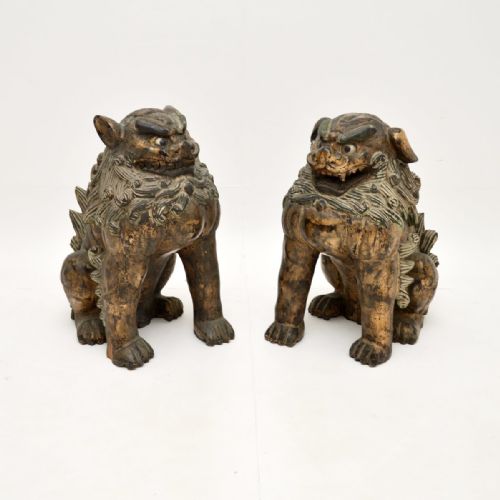
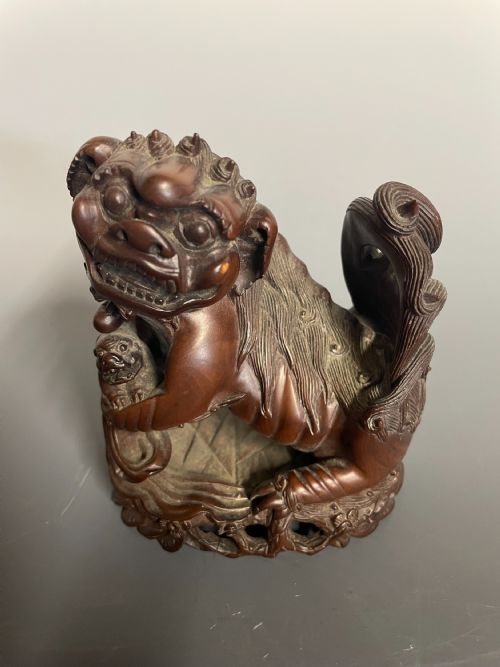
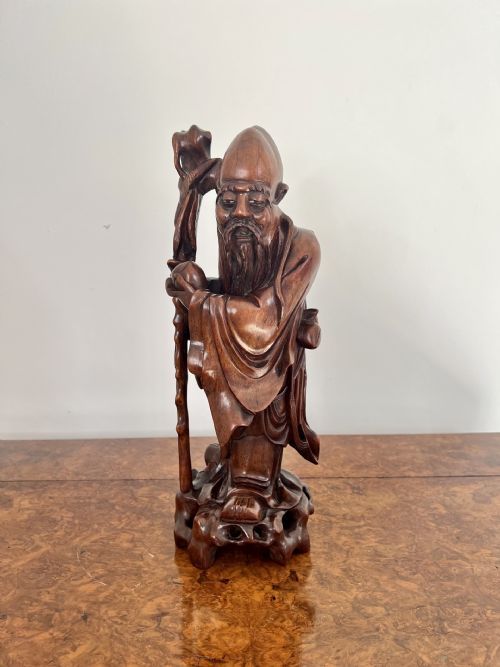
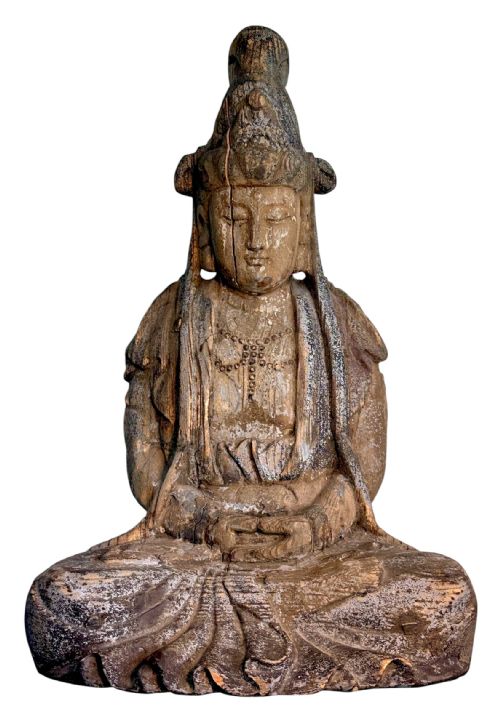
The selections span centuries, incorporating pieces from the 18th, 19th, and early 20th centuries. On this page, the most common representations include figures of Buddha, Foo Dogs, and immortals carved from dense timbers.
Materials and construction
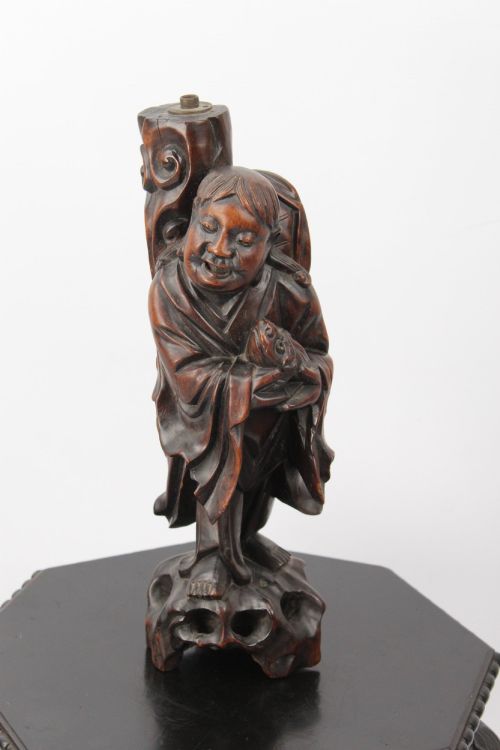
Maker traditions rely heavily on dense woods such as hardwood, boxwood, and root wood, which allow for intricate detail without splitting. Carvers also utilise root wood to follow natural organic contours for figures like scholars and mythical beasts.
Many surfaces receive additional treatment through lacquer, gold leaf, and polychrome paint, adding colour and protective layers to temple figures and ritual sculptures.
Listings feature woods such as boxwood and root wood alongside surface treatments like gold leaf and polychrome paint.
Factors determining quality
Preservation of original surface finishes, such as historical gilding and polychrome pigment, elevates the standing of a sculpture. Natural grain integration in root wood pieces also separates standard items from exceptional examples.
The Asian Wood Carving Statue Glossary
- Hardwood
- Slow-growing timber that yields dense, durable material ideal for intricate chisel work. It retains sharp edges over centuries.
- Polychrome
- Painted in several colours, often applied over a gesso ground on temple figures to enhance ritual presence.
- Root wood
- Timber sourced from the root system of a tree, chosen for gnarled, twisting shapes that inspire figurative carving.
- Foo Dog
- Traditional guardian lion statue placed at thresholds to ward off evil spirits and protect sacred spaces.
- Okimono
- Japanese decorative standalone carving designed for display in a domestic interior rather than a temple.
Asian Wood Carving Statue: Frequently Asked Questions
Where were these statues originally placed?
Many figures served devotional or protective roles inside temples, ancestral halls, and domestic shrines. Temple guardians stood near entrances, while deities and immortals occupied central altars.
Other smaller carvings, such as okimono or scholar pieces, were created for quiet contemplation in private studies or reception rooms.
How do I care for a wooden statue?
Keep wooden sculptures away from direct sunlight and strong heat sources to prevent the timber from drying out and cracking. Maintain a stable indoor humidity level.
Dust the surface gently with a dry, soft brush rather than using wet cloths or chemical polishes that might damage historical paint or lacquer.
What is root wood carving?
Root wood carving is a traditional technique where the artisan works with the natural, irregular contours of tree roots. The grain and twisting shapes suggest the form of figures, animals, or scholars.
Carvers shape these organic formations minimally to highlight the inherent movement within the timber.
How do I identify a temple figure?
Temple figures typically display larger scales, monumental proportions, and traces of historical gilding or polychrome paint. Their subjects are usually guardians, civil officials, or seated Buddhas meant for public or ritual veneration.
Such pieces often show greater weathering and wear consistent with placement in active religious spaces.