


Asian Religious Figure
An asian religious figure brings centuries of devotion into a room, cast in bronze or carved from timber to hold the quiet presence of deities and guardians.
Asian Religious Figure
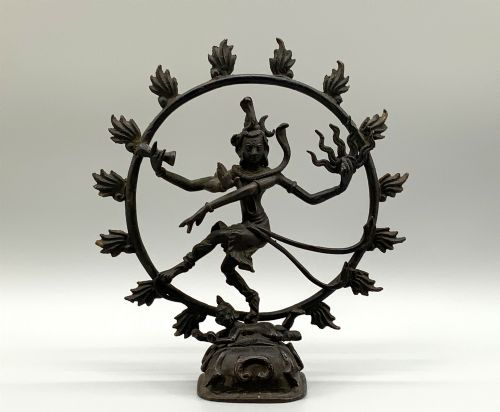
When you search for an asian religious figure, you encounter sculptures shaped by Buddhist and Hindu traditions across China, India, Southeast Asia, and the Himalayas. These works take the form of Buddhas, temple guardians, bodhisattvas such as Guanyin, and deities including Shiva and Vishnu.
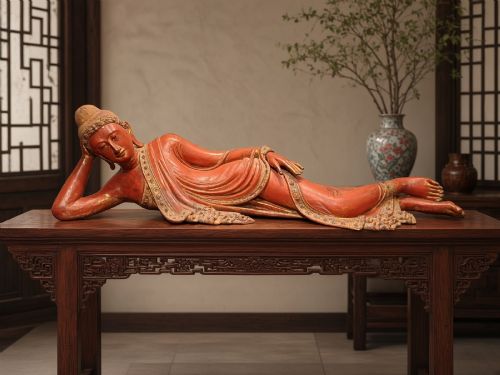
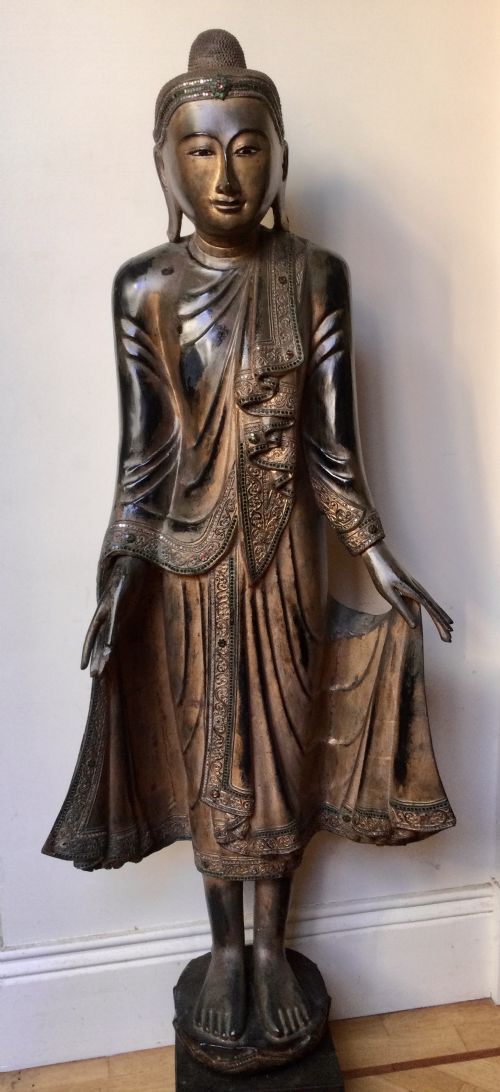
The pieces on this page span from the fifteenth century through the Edwardian and Victorian eras, with nineteenth-century examples appearing most frequently. You will find standing statues, seated icons in meditation, and reclining forms intended for altars or private shrines.
Regional styles dictate the silhouette, from the distinctive postures of Ayutthaya and Sino-Tibetan workshops to the expressive drapery of Qing dynasty carvings. Each piece reflects the iconography of its specific belief system and the aesthetic of its period of origin.
Materials and Construction
Metal sculptures rely on bronze or copper alloy, often shaped through casting and finished with gilding, gold leaf, or polished surfaces. These metallic figures show the durability of cast bronze and the distinct weight of silver and copper compositions.
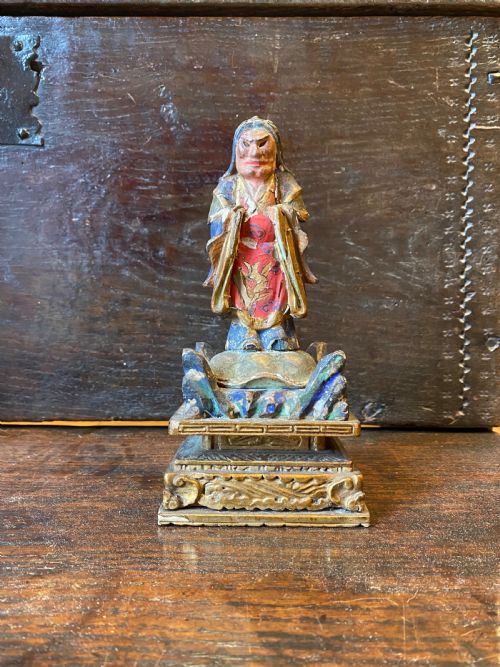
Wooden sculptures make use of carved timber, sometimes enhanced with polychrome pigment, lacquer, or gilt wood layers. The carvers worked in high relief to define robes, adornments, and facial expressions, leaving traces of paint and gold upon the grain.
Listings feature materials spanning bronze, wood, lacquer, gold leaf, and stone, originating from India, China, and Southeast Asia.
Factors of Quality
The distinction between tiers of quality rests upon the precision of the carving or the crispness of the casting. Superior metalwork retains sharp details in the hair, hands, and drapery, whereas finer wooden figures display depth in the chisel work and careful application of pigment or gold leaf.
Proportion and the preservation of original surfaces separate ordinary pieces from exceptional examples. Patina accumulated through ritual use and the intact nature of polychrome or gilt layers carry significant weight in assessing a figure's integrity.
The Asian Religious Figure Glossary
- Polychrome pigment
- Paint applied to wood or stone surfaces to add colour to garments, flesh, and decorative elements. This finish often survives only in fragments on older figures.
- Gilt wood
- Timber coated with a thin layer of gold leaf or gold paint to impart a luminous appearance. This technique elevates the status of temple guardians and deities.
- Bhumisparsha mudra
- The earth-touching gesture executed by seated Buddha figures, signifying enlightenment and steadfastness. The right hand reaches down to touch the ground.
- Copper alloy
- A metal mixture containing copper combined with other elements such as tin or zinc, commonly utilised for cast statues. This material develops a rich surface over time.
Asian Religious Figure: Frequently Asked Questions
How are these figures cleaned?
Dusting with a soft, dry brush is sufficient for maintenance. Moisture and chemical polishes damage historic wood, pigment, and bronze surfaces.
Preserving the original patina protects the character and history of each sculpture.
Were these statues used in temples?
Many of these pieces originated in shrines, domestic altars, or temple complexes as focal points for meditation and worship. Their iconography aligns with specific ritual practices.
Over time, examples transitioned from sacred spaces into private collections and international trade.
How do I identify the deity?
Attributes such as hand gestures, known as mudras, physical postures, and associated items provide clear identification. Deities like Shiva, Vishnu, and Guanyin each carry distinct symbols.
Iconographic details reveal the specific mythology and religious tradition behind the artwork.
Are bronze or wood figures older?
Both materials span centuries of production, with surviving examples appearing from the medieval period onward. Bronze withstands environmental changes well, while wood requires stable conditions.
Age depends on the specific workshop and region rather than the primary material alone.