




Asian Religious Art
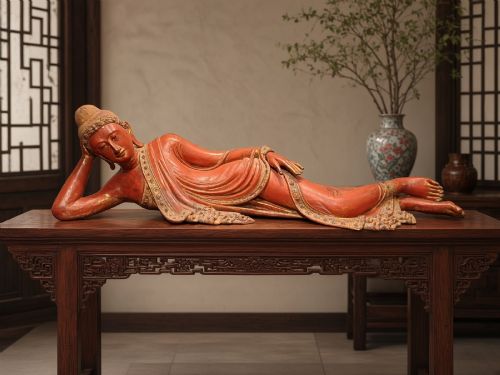
These pieces of asian religious art bring centuries of ritual devotion into a room, offering quiet wooden figures and cast bronzes that anchor a space.
Asian Religious Art
When you search for asian religious art, you encounter centuries of sacred craftsmanship spanning wooden sculptures, cast bronzes, and framed scroll paintings. These works encompass ritual figures, temple deities, and manuscript leaves originating from China, Tibet, Burma, and Thailand.
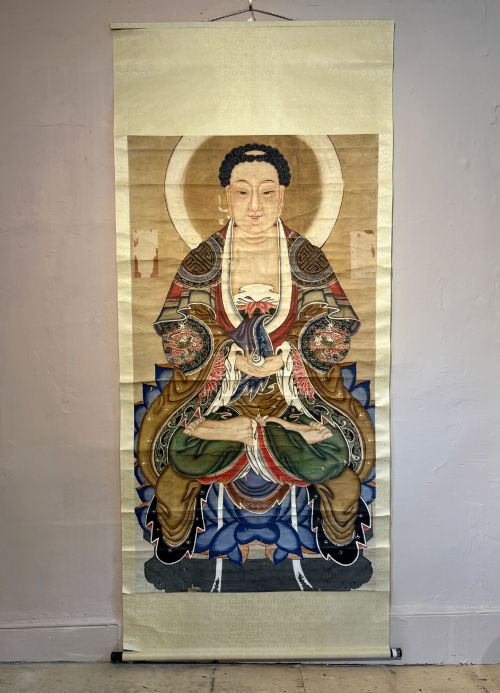
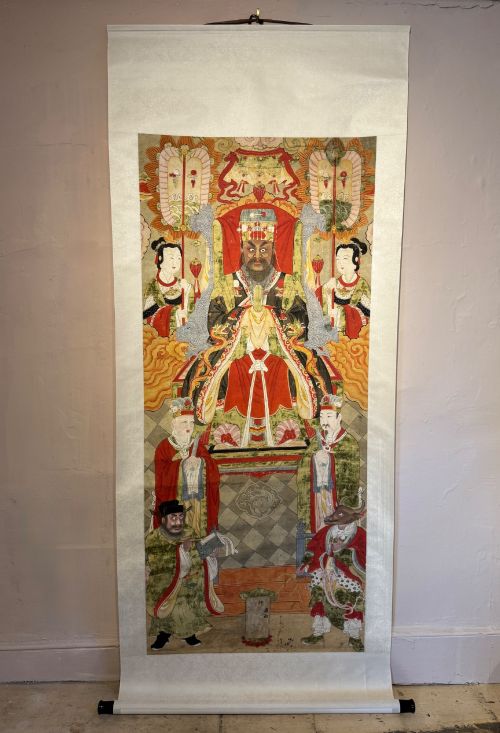
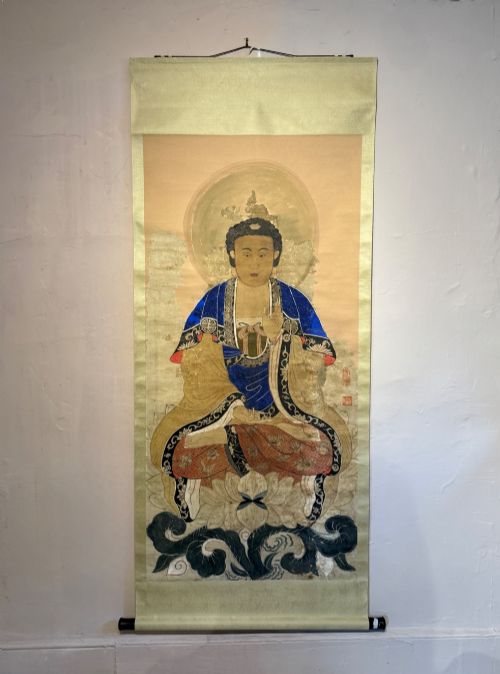
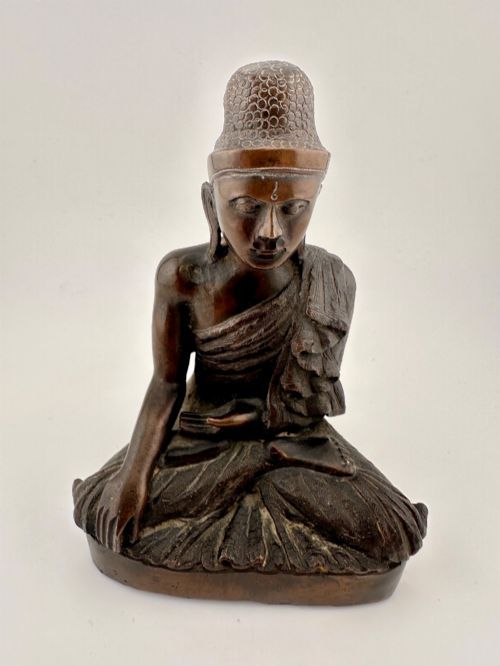
The most common forms on this page are carved wooden and cast bronze Buddha statues, alongside framed thangkas and scroll paintings depicting immortals. Pieces range from small ritual figures to large temple statues, created across periods from the sixteenth century to the early twentieth century.
Materials vary from mulberry wood and gilded bronze to polychrome pigment and gold leaf applied to textiles. Each form carries specific iconographic details that reflect traditional Buddhist and Daoist practices across different Asian regions.
How they were made
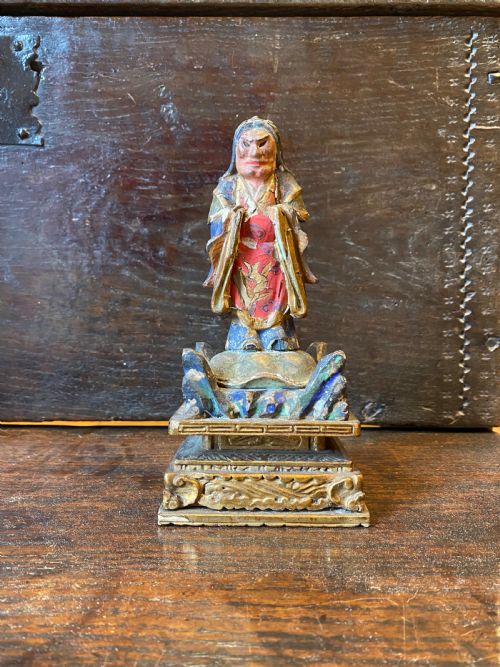
Makers shaped sacred forms using traditional carving techniques on woods such as mulberry, applying layers of polychrome pigment, lacquer, and gold leaf to surfaces. High relief carving defined figures like the Chinese polychrome wood Buddha and various temple deities.
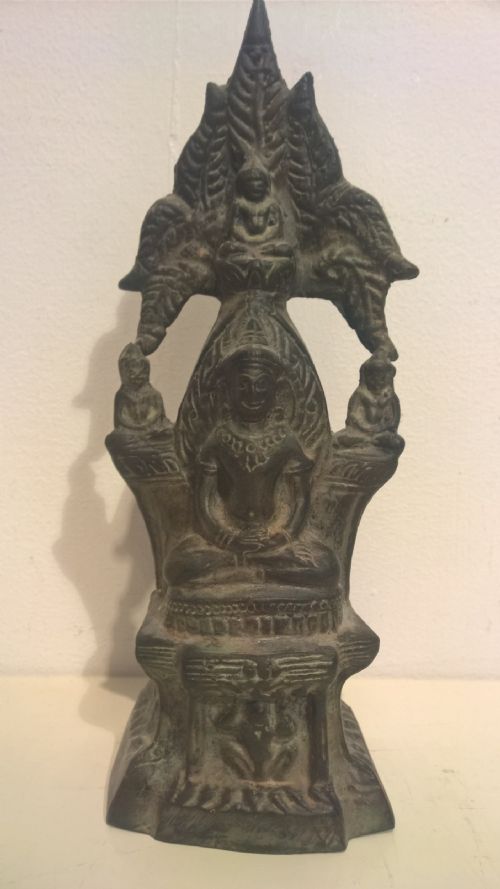
Metalworkers utilised casting methods for bronze Buddha figures, finishing surfaces with gilding where appropriate. Scroll paintings and thangkas employed pigments on prepared grounds, often framed for preservation and display.
Asian Religious Art Retail Price Guide 2026
Typical asking prices for asian religious art among the pieces listed under this phrase on Sellingantiques today, from the lower quarter to the upper quarter. They describe what is for sale here now, not the wider market.
Listings feature works from the 16th century to 1920, utilising wood, bronze, lacquer, gold leaf, and polychrome pigment.
What varies in quality
Quality rests in the precision of the carving and the preservation of original polychrome pigment, gold leaf, and lacquer surfaces. Finer works display controlled detail in facial expressions, drapery folds, and iconographic hand gestures.
Bronze figures differ in the crispness of the cast and the integrity of any remaining gilding. Painted works rely on the subtlety of the pigment application and the condition of the textile or paper support.
The Asian Religious Art Glossary
- Thangka
- A Tibetan Buddhist painting on cotton or silk depicting a deity, scene, or mandala, usually framed for display. These works served as teaching tools and objects of meditation.
- Bhumisparsha Mudra
- The earth-touching gesture common in Buddha statues, signifying the moment of enlightenment. The right hand reaches down to touch the ground, calling the earth as witness.
- Polychrome
- Decorated in multiple colours using pigments applied to wood, stone, or metal. This technique brought devotional sculptures to life with realistic or symbolic hues.
- Ayutthaya Period
- An era in Thai history associated with distinct bronze Buddha sculptures featuring serene expressions and refined crown work. Pieces from this time reflect specific regional stylistic developments.
- Quan Yin
- The East Asian bodhisattva of compassion, frequently represented in carved wood and porcelain figures. These sculptures often show the figure in a posture of relaxed contemplation.
Asian Religious Art: Frequently Asked Questions
How do I display these?
Place statues on stable surfaces where their carved details and patinated surfaces can be appreciated away from direct sunlight.
Framed thangkas and scroll paintings require wall spaces protected from humidity and extreme temperature fluctuations to preserve the pigments.
How old are these?
The pieces span from the sixteenth century through the seventeenth, eighteenth, and nineteenth centuries, up to early twentieth-century examples.
Dating relies on stylistic markers associated with periods such as the Qing Dynasty or the Ayutthaya era.
What is a mudra?
A mudra is a symbolic hand gesture used in Buddhist art to convey specific teachings or states of mind.
Common examples include the earth-touching gesture seen on bronze Buddha figures from Burma and Thailand.