



Bronze Temple Statues
Bronze temple statues are sacred and devotional figures cast in metal, offering collectors powerful historic presence and intricate ritual artistry.
Bronze Temple Statues
When you search for bronze temple statues, you encounter a diverse range of sacred figures, architectural models, and guardian lions originating from Asian and European traditions. These pieces span several centuries, with particular strength in nineteenth-century examples and earlier sixteenth-century works.
How they were made
The objects listed show primary construction in bronze, brass, copper alloy, and patinated iron, occasionally enhanced with gilt bronze, gold inlay, or marble elements. Casting techniques allowed makers to produce both massive temple lions weighing thirty-five kilograms and finely detailed smaller devotional figures.
Surface treatments range from rich patination to gilding that highlights the intricate robes and adornments of the deities. Artisans shaped these metals to reflect specific regional iconographies, from Rattanakosin and Ayutthaya styles to Javanese Buddhist and Meiji period aesthetics.
This selection spans from the sixteenth century to the 1930s, featuring bronze, brass, copper alloy, and patinated iron.
What varies in quality
Quality in these works rests upon the crispness of the casting and the fidelity of the regional style, whether representing a sixteenth-century Ayutthaya Buddha or a nineteenth-century Tibetan lion. Superior pieces retain their original surface patination, gilding, and gold inlay without intrusive later repairs.
Unno Shomin
The Bronze Temple Statues Glossary
- Mudras
- Symbolic hand gestures in Buddhist art that convey specific teachings, fearlessness, or meditation. They are essential for identifying the exact nature of a figure.
- Bodhisattva
- An enlightened being destined for Buddhahood who compassionate delays entry to Nirvana to help others. These figures are often heavily adorned with jewels and crowns.
- Okimono
- Japanese decorative statues designed for display on a tokonoma alcove or shelf. They display exceptional metalwork skill from makers such as Unno Shomin.
- Foo Dogs
- Guardian lions traditionally placed outside temple gates to ward off evil spirits. They are frequently cast in large pairs with one male and one female.
- Ayutthaya Period
- An era in Thai history spanning several centuries known for distinct stylistic representations of Buddha. Works from this tradition often feature serene expressions and refined conical ushnishas.
Bronze Temple Statues: Frequently Asked Questions
How do I identify a temple lion?
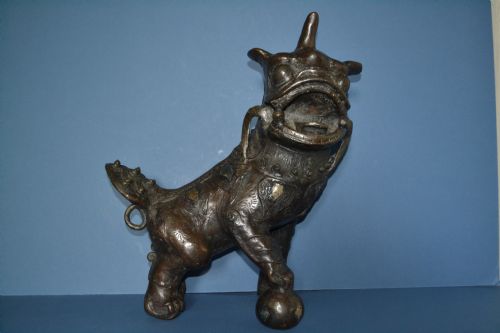
Temple lions, often called Foo dogs, usually appear in pairs intended to flank a sacred entrance or altar. They are recognisable by their muscular forms, stylized mannes, and fierce expressions.
Look for dynamic stances where one paw rests upon a ball or a cub. Their robust construction in cast bronze or copper alloy reflects their protective function.
What is a double mudra?
A double mudra refers to a specific hand gesture formation seen on certain Buddhist sculptures. It denotes a unique ritual action or teaching moment captured by the artisan.
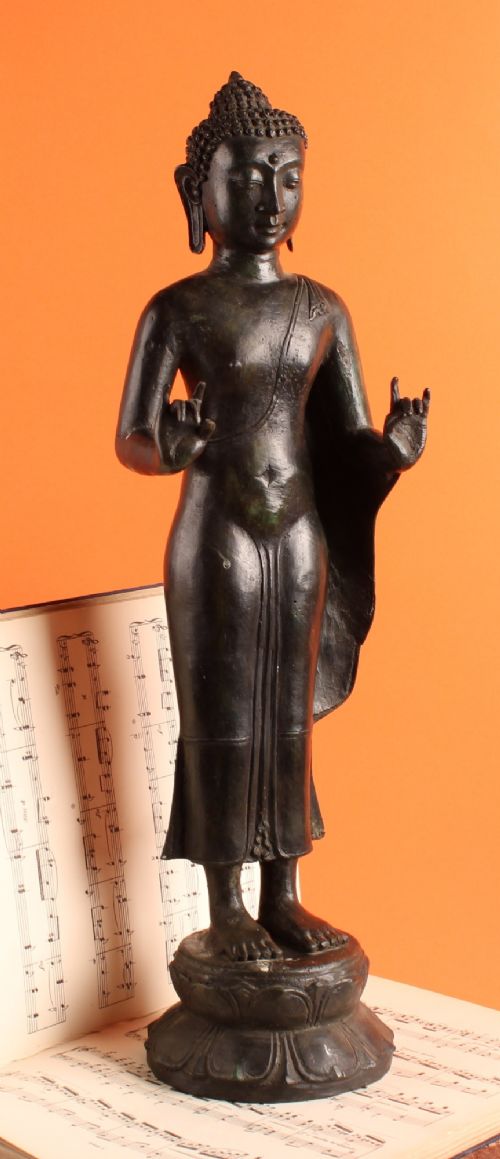
These gestures require careful study of regional iconography to interpret correctly. They add significant ritual depth to nineteenth-century standing figures.
How should I care for patinated bronze?
Patinated bronze requires minimal intervention to preserve its historic surface. Dust the piece gently with a soft, dry brush and avoid chemical polishes that strip the aged finish.
Keep the sculpture away from direct sunlight and damp environments to protect the underlying metal and inlay work. Stable indoor humidity ensures the patina remains secure.
What distinguishes sixteenth-century bronzes?
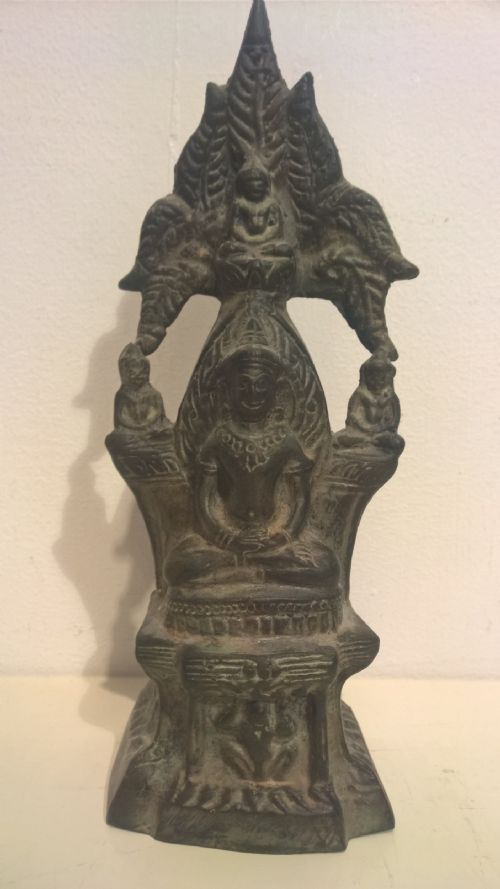
Sixteenth-century bronzes, such as Ayutthaya style Buddhas or Javanese Bodhisattvas, display earlier stylistic conventions and traditional casting methods. Their surfaces often show centuries of handling and ritual use.
These pieces carry distinct regional patinations and wear patterns that differ markedly from later nineteenth-century revival or export works. Their scarcity reflects the passage of time.