




Asian Low Accent Table
These low asian accent table pieces bring distinct regional form and proportion into a room, offering low surfaces rooted in historic cabinetmaking.
Asian Low Accent Table
An asian low accent table brings a low horizontal plane into an interior, drawing on diverse regional traditions from Chinese and Japanese domestic interiors. The selection on this page centres on coffee tables, side tables, and occasional tables designed for low seating arrangements.
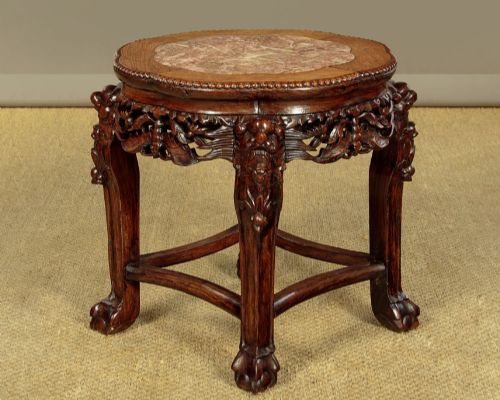
The periods represented span from the eighteenth century through the Victorian and Edwardian eras into the early twentieth century, including pieces from the Qing dynasty, Meiji period, and Taisho period. Forms range from vernacular round occasional tables and trays to carved hardwood opium tables, kang tables, and Japanese chabudai tea tables.
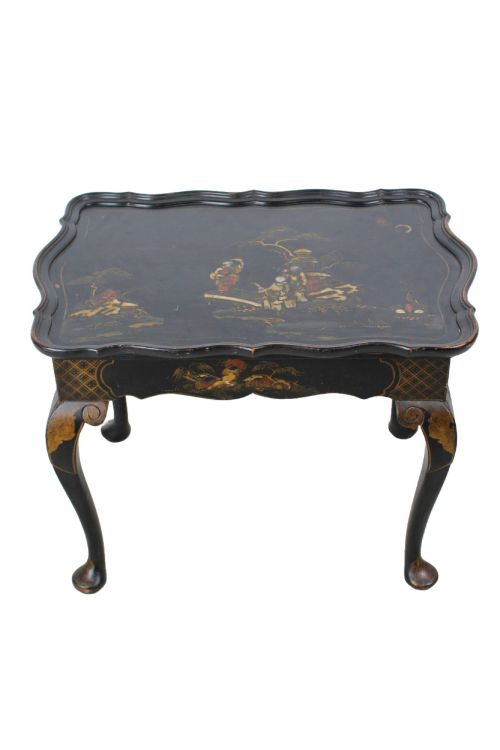
Buyers encounter traditional Chinese styles alongside Edwardian interpretations of Chinoiserie, each offering a specific height and proportion suited to modern living spaces.
How they were made
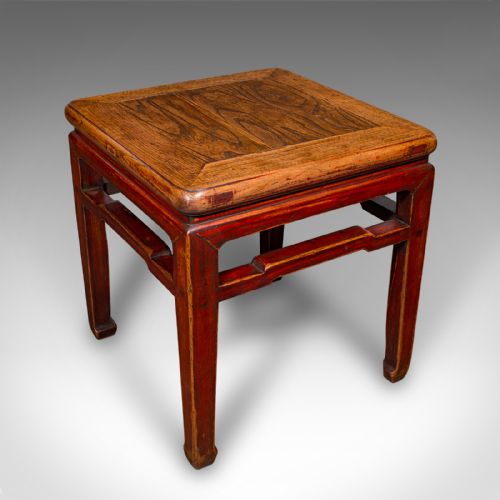
Makers utilised solid timbers such as elm, hongmu, and general hardwoods, building structures designed to endure heavy daily use at floor level. Joinery relied on traditional framing methods that accommodated seasonal timber movement without metal fasteners.
Surfaces received specialist finishes including applied red lacquer and ebonised timber, occasionally enhanced with gilt detailing. Carved decorative elements were worked directly into the dense grain of the hardwood or shaped within the lacquer layers.
Listings feature periods spanning the eighteenth, nineteenth, and early twentieth centuries, alongside Edwardian and Victorian eras.
What varies in quality
The standard of a piece rests in the integrity of its timber selection and the precision of its joinery. Dense hardwoods like hongmu and well-seasoned elm demonstrate superior structural stability compared to softer substitute woods.
Surface finish dictates visual depth, where hand-applied lacquer layers or carved relief work show deliberate craftsmanship rather than mechanical uniformity. Proportion and balance in low forms determine how successfully a piece sits within a room.
The Asian Low Accent Table Glossary
- Kang table
- A low platform table traditionally used on a heated brick bed in northern China for dining or writing. These surfaces sit close to the floor and translate well into low coffee tables.
- Chabudai
- A traditional short-legged table used in Japan for domestic activities such as taking tea or eating meals while kneeling on tatami mats.
- Hongmu
- A category of dense, heavy Chinese hardwood prized for its deep colour and durability in cabinetmaking. It often takes a fine polish without needing heavy staining.
- Chinoiserie
- A European artistic style reflecting Chinese motifs and decorative techniques, prevalent during periods like the Edwardian era. It reinterprets Asian forms through Western design conventions.
- Meiji
- A period of Japanese history spanning from eighteen sixty-eight to nineteen twelve, known for opening international trade while retaining traditional craftsmanship in furniture and arts.
Asian Low Accent Table: Frequently Asked Questions
What is an asian low accent table used for?
These low tables function effectively as coffee tables, media surfaces, or display platforms in contemporary living spaces. Their reduced height creates a grounded focal point in a room.
Historically, pieces like chabudai and kang tables served domestic daily routines involving floor seating. Today, they bring historic proportion and materiality to modern seating layouts.
How do I date an antique low table?
Dating relies on examining the timber species, construction joinery, and wear patterns across the surfaces. Tool marks and fastener types offer clues to the period of manufacture.
Stylistic markers such as Qing dynasty carving details or Edwardian Chinoiserie interpretations help place a piece within its historical era. Comparing the construction methods to known examples confirms the timeframe.
Are these tables made of solid wood?
The pieces in this selection utilise solid timbers including elm, hongmu, and ebonised or lacquered wood. Cabinetmakers relied on heavy hardwoods to ensure stability at lower heights.
Substrates were chosen for their grain density and structural strength rather than applied veneers. This solid construction contributes to the longevity of each piece.
How do I care for a lacquered wood surface?
Laquered surfaces require protection from direct sunlight and excessive humidity to prevent timber movement or finish degradation. Dusting with a soft, dry cloth maintains the sheen without abrasive cleaners.
Avoiding heat and moisture directly on the lacquer preserves the integrity of the antique finish over time. Gentle handling ensures the surface remains stable.