


Traditional Chinese Furniture Pair
These traditional chinese furniture pair selections bring matched seating and display forms from the nineteenth and early twentieth centuries into the room.
Traditional Chinese Furniture Pair
A traditional chinese furniture pair brings together matched seating, cabinets, and tables created during the nineteenth and early twentieth centuries. The selection centres heavily on armchairs and side chairs constructed in various regional workshops.
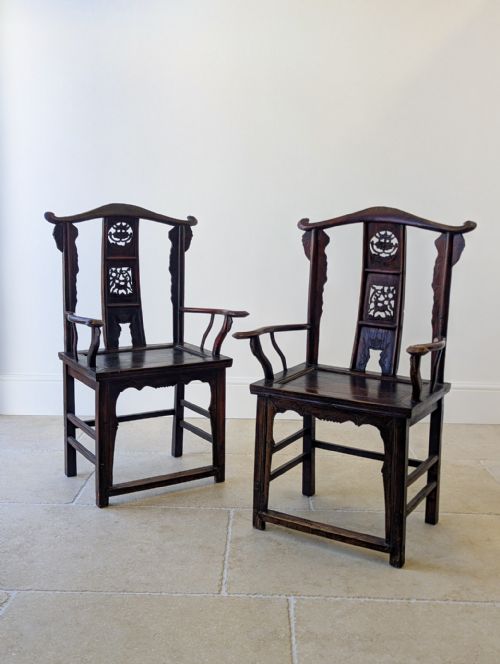
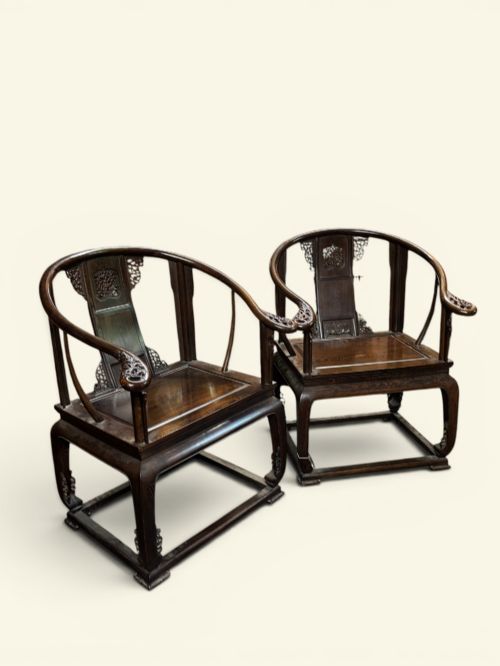
Buyers encounter forms ranging from yoke-back and horseshoe-back armchairs to compound cabinets, low tables, and stands. These pieces reflect Qing Dynasty and Ming style aesthetics spanning the Victorian era through the early nineteen-twenties.
Armchairs dominate the available options, frequently appearing alongside occasional tables, console tables, and storage cabinets. Matched pairs offer symmetry for domestic interiors, maintaining the balanced proportions established by traditional makers.
Construction and Materials
Makers utilised dense timbers including hardwood, hongmu, elm, and teak to build sturdy frames capable of supporting daily use. Joinery techniques often relied on interlocking wood joints rather than metal fasteners to maintain structural integrity.
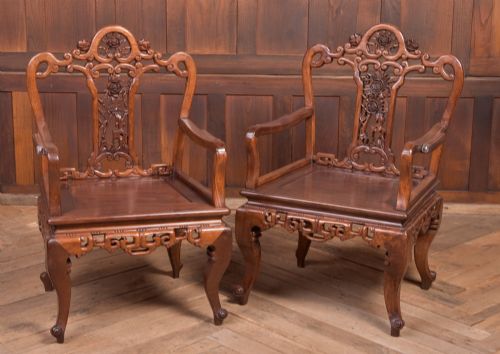
Surface treatments incorporated dark lacquer, brass inlay, and cane canework seating inserts. Pickled finishes and hand-carved detailing appeared across various chairs and tables produced during the late nineteenth century.
Some nineteenth-century elm chairs carry the charming moniker lamp hanger, named for the distinctive shape of their extended top rails.
Judging Quality and Finish
Quality rests upon the density of the chosen timber, such as heavy hongmu versus softer elm, and the crispness of any carved ornamentation. Superior examples display precise joinery and well-preserved surface finishes that have aged naturally.
The integrity of secondary materials, including brass inlays and woven cane panels, separates standard production pieces from finer works. Matched pairs that retain their original corresponding patination and structural harmony command greater interest.
The Traditional Chinese Furniture Pair Glossary
- Hongmu
- A dense tropical hardwood prized for its dark colour and heavy weight in traditional cabinet making. It frequently appears in Qing Dynasty chairs and stands.
- Yoke-back armchair
- A traditional chair design featuring a curved top rail resembling a ox yoke. This form provides distinct ergonomic support for the sitter.
- Horseshoe-back armchair
- A continuous curved crest rail that sweeps down to form the armrests. The design requires sophisticated joinery to shape the timber smoothly.
- Compound cabinet
- A tall storage unit built in sections for versatility and ease of transport. These pieces often feature dark lacquer finishes.
- Canework
- Woven plant material utilised for seat inserts in chairs to provide flexible support. It adds textural contrast to the surrounding wooden frames.
Traditional Chinese Furniture Pair: Frequently Asked Questions
How do I arrange a furniture pair?
Matched chairs or tables work best when placed symmetrically around a fireplace, beneath a window, or flanking a console table. Their balanced design helps anchor a room's layout.
Spacing them evenly allows the eye to appreciate the matching timber grains and carved details without cluttering the floor space.
What is hongmu wood?
Hongmu is a general term used for dense, durable Asian hardwoods that finish with a rich dark tone. It provides exceptional strength for chairs and tables.
Objects made from this material tend to feel noticeably heavy and resist regular wear over generations.
How do I clean lacquered wood?
Dust surfaces gently with a soft, dry cloth to prevent scratching the delicate finish. Avoid harsh chemical cleaners that can strip the lacquer over time.
Keeping the pieces away from direct sunlight and damp conditions preserves the original surface sheen.
Are these chairs comfortable?
Traditional designs such as horseshoe-back and yoke-back armchairs incorporate contoured wooden rails and armrests to support posture. Many examples were built for upright sitting rather than lounging.
Adding small silk cushions can soften the wooden seats for longer periods of use.