


Asian Enamel Decorative Dish
An asian enamel decorative dish brings intricate craftsmanship and vibrant motifs into a room, offering a tangible link to historical ceramic and metalworking traditions.
Asian Enamel Decorative Dish
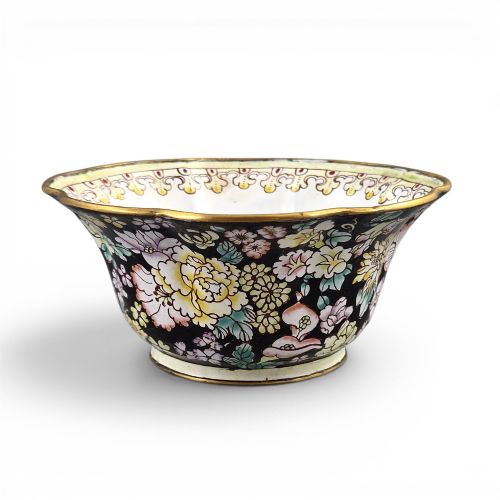
When a buyer searches for an asian enamel decorative dish, they encounter a diverse selection of chargers, plates, bowls, and trays originating primarily from nineteenth-century Japan and China. These vessels range from compact dishes to large chargers spanning fifty centimetres in diameter.
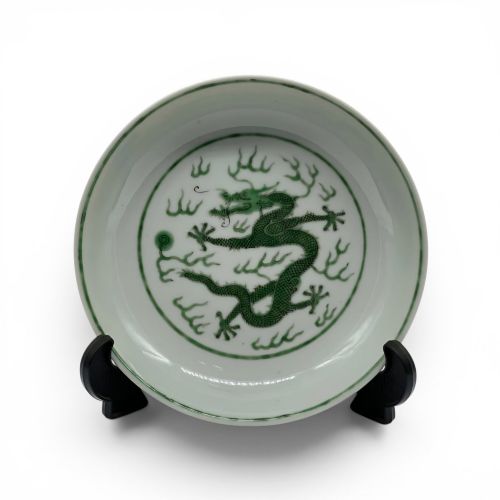
The objects appearing most frequently on this page date from the Meiji period and the late nineteenth century, reflecting significant periods of East Asian artistic production. Forms include round chargers, square trays, and lidded bowls decorated with birds, dragons, and floral motifs.
Originating from traditions such as Japanese cloisonne and Chinese painted enamel, these pieces function as display objects rather than tableware. Their varied forms demonstrate the broad decorative repertoire utilised by makers across the Edo, Meiji, and Qing periods.
Materials and Techniques
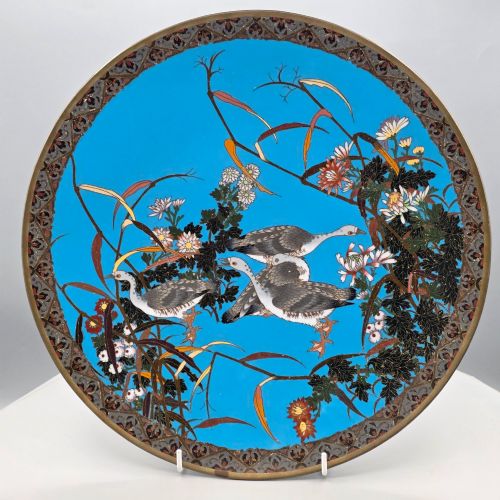
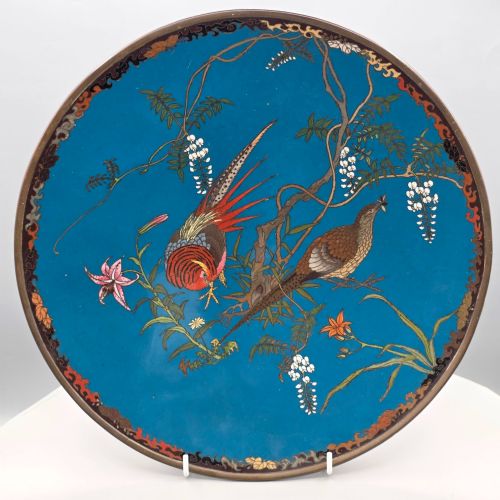
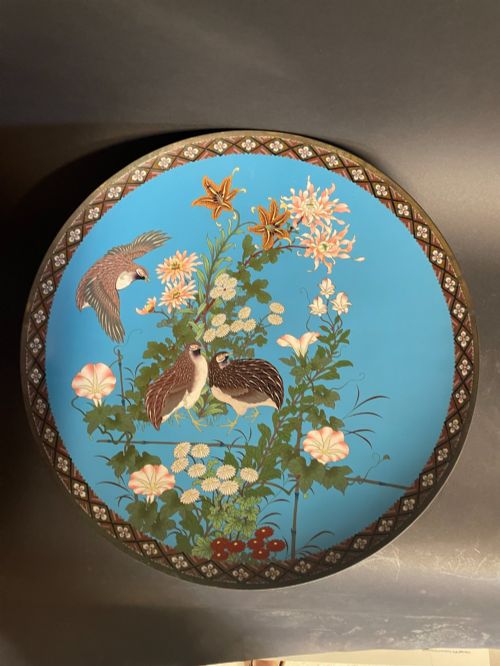
Many of these pieces utilise copper or brass as a base metal, onto which coloured vitreous enamels are applied using distinct techniques. In cloisonne work, thin metal wires create cells that hold the enamel paste before firing and polishing.
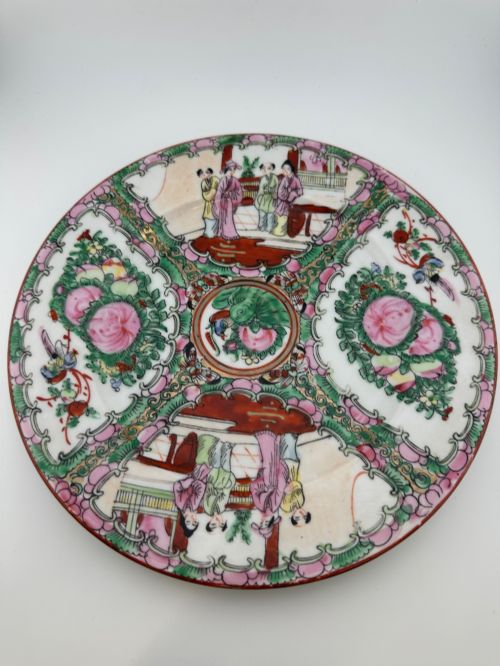
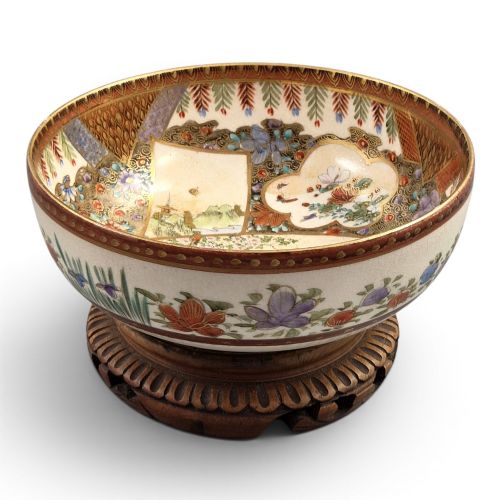
Other examples employ porcelain as a substrate, decorated with painted enamels, gold leaf, or gilt accents. Chinese Canton pieces typically feature enamel fused directly onto copper bodies, while Japanese Satsuma and Kutani wares combine ceramic bodies with detailed hand-painted designs.
Motifs span natural subjects including owls, shrimp, geese, koi, and bamboo alongside mythological figures.
Evaluating Quality and Execution
The standard of a piece depends heavily on the precision of the enamel work and the complexity of the design. Finer examples display meticulous wirework in cloisonne or exceptionally detailed brushwork on porcelain, with harmonious colour palettes and balanced compositions.
Scale and ambition also differentiate the range, as larger chargers and trays featuring elaborate subjects like leaping koi, phoenixes, or samurai demonstrate greater technical demands during the firing process than smaller, simpler vessels.
Kozan·Meizan·Kinkozan
The Asian Enamel Decorative Dish Glossary
- Cloisonne Enamel
- A metalwork technique where thin wires are soldered to a base to form compartments filled with enamel paste. This method creates defined patterns of coloured glass across chargers and plates.
- Charger
- A large decorative plate utilised primarily for display on walls or stands rather than for serving food. These items often showcase the most elaborate artistry of a maker or period.
- Meiji Period
- A Japanese historical era spanning from 1868 to 1912 noted for a surge in refined decorative arts produced for international and domestic markets. Pieces from this time frequently exhibit advanced technical mastery.
- Qing Dynasty
- The final imperial dynasty of China, lasting from 1644 to 1911 and encompassing periods of notable innovation in painted enamel and porcelain. Works from this era include imperial-style dishes and bowls.
- Edo Period
- The period in Japanese history lasting from 1603 to 1867, preceding the Meiji era. Items attributed to this time often display early developments in cloisonne and regional ceramic styles.
Asian Enamel Decorative Dish: Frequently Asked Questions
Where should I display an antique dish?
Displaying these items typically involves placing them on sturdy plate stands or mounting them securely on walls where lighting can highlight their enamel surfaces and metallic details. Keeping them away from direct sunlight preserves the vibrancy of the coloured enamels and gilt highlights.
Because many examples measure significant widths, sturdy support is essential to ensure stable placement on furniture or walls.
How do I distinguish Meiji period pieces?
Japanese items from the Meiji period often exhibit highly refined cloisonne wirework or dense pictorial decoration depicting flora, fauna, and mythological subjects like dragons and phoenixes. Many of these works reflect the opening of Japan to international trade, which influenced both scale and subject matter.
Signatures or marks on the base can sometimes provide further context regarding the specific workshop or artist involved in their creation.
What is the difference between cloisonne and painted enamel?
Cloisonne involves applying thin metal wires to a metal base to create raised partitions that contain separate areas of coloured enamel paste. This method results in a textured surface defined by the visible metal gridwork.
Painted enamel, by contrast, involves applying enamel pigments directly onto a prepared metal or porcelain surface with a brush, creating a continuous flat or gently curved picture without wire cells.