


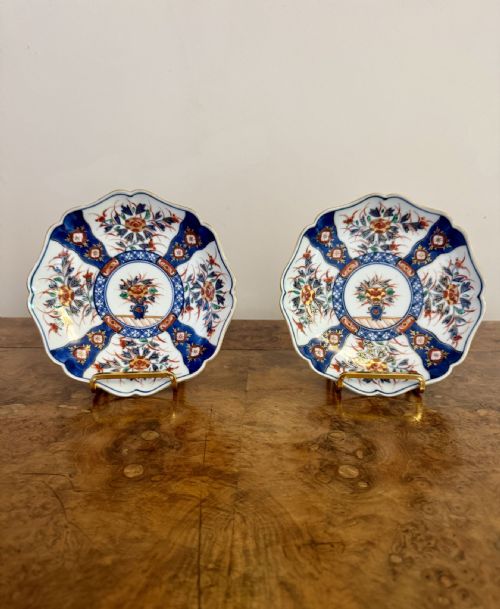
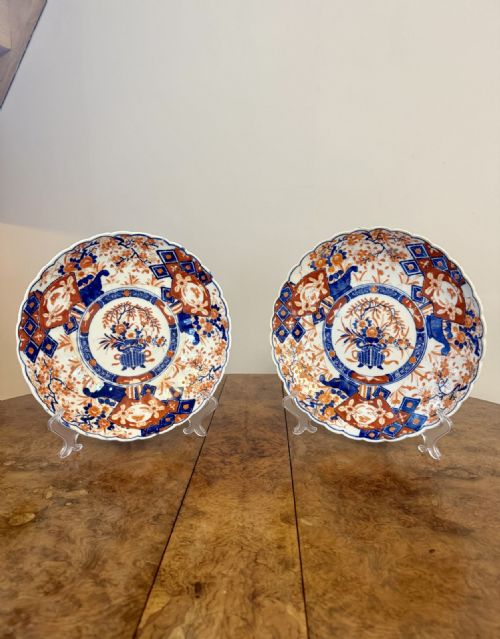
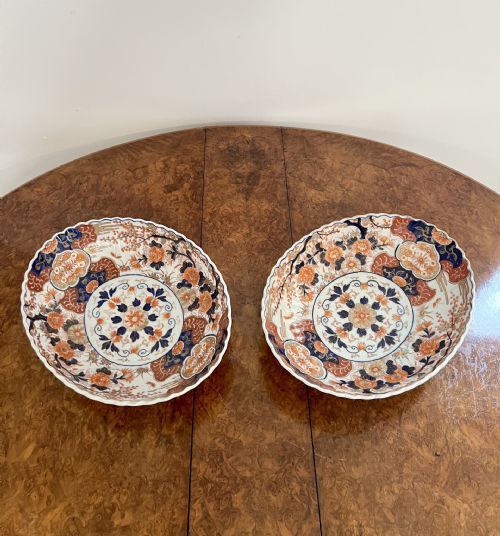


Asian Ceramic Charger Pair
An asian ceramic charger pair brings bold palettes and intricate motifs into a room, offering striking symmetry for display.
Asian Ceramic Charger Pair
The objects take various forms including wide chargers, scalloped edge bowls, and large plates designed for prominent wall or surface display. These pieces showcase elaborate hand-painted designs depicting exotic birds, traditional figures, and the Seven Lucky Gods.
Making and Materials
These pieces are fashioned from hard-paste porcelain, shaped into large plates and chargers before receiving intricate hand-painted decoration. Artisans applied cobalt blue underglaze to establish foundational patterns directly on the ceramic body.
Overglaze enamel pigments in iron red and other vibrant colours were subsequently added, often accented with gold leaf or gilding to create the characteristic rich palette seen across the pieces.
Current listings feature porcelain chargers spanning from the Edo period through the Victorian era, utilising cobalt blue underglaze, enamel, and gold leaf.
Quality Variations
Quality in these ceramics rests upon the precision and complexity of the brushwork, particularly within detailed figurative scenes and complex border patterns. Finer examples display meticulous hand-painted execution with crisp cobalt blue underglaze and richly applied overglaze enamels.
The integration of gold leaf and gilding also dictates the standard of the piece, with superior specimens maintaining vibrant metallic highlights that complement the underlying ceramic glaze without heavy fading.
The Asian Ceramic Charger Pair Glossary
- Imari
- A traditional Japanese style of porcelain originating from the town of Arita, typically characterised by a palette of cobalt blue, iron red, and gold.
- Overglaze enamel
- Coloured glass decoration applied on top of a fired and glazed porcelain surface, then fixed with a secondary low-temperature firing.
- Cobalt blue underglaze
- Pigment applied directly to the raw porcelain body beneath the transparent glaze before the primary high-temperature firing.
- Charger
- A large decorative plate or platter traditionally utilised for display or ceremonial purposes rather than for dining.
- Gilding
- The application of gold leaf or gold powder to the surface of the ceramic to provide metallic ornamentation and highlights.
Asian Ceramic Charger Pair: Frequently Asked Questions
How were asian ceramic charger pair items displayed historically?
These large plates were traditionally positioned on walls or substantial display stands within formal interiors to showcase the wealth and taste of the household.
Their generous scale and vibrant decoration made them focal points in reception rooms, where the matching pairs created visual balance.
What defines the Imari style on these pieces?
The Imari aesthetic is defined by a specific combination of underglaze cobalt blue and contrasting overglaze iron red, frequently enriched with gold leaf.
This distinct palette creates a dense, colourful surface pattern featuring birds, figures, and floral motifs that typifies the style.
How do I care for antique porcelain chargers?
These ceramic items require gentle handling and should be dusted softly with a dry cloth to protect delicate overglaze enamels and gilding.
Display stands must be properly fitted to support the weight of the large plates securely without placing undue stress on the edges.
How can I distinguish Meiji period pieces?
Meiji period ceramics often exhibit particularly fine, intricate brushwork and a confident use of gold leaf alongside traditional cobalt and iron red pigments.
The forms include large scalloped bowls and chargers produced during an era of significant export craftsmanship.