



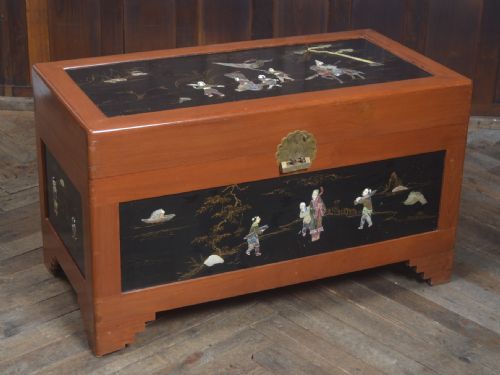


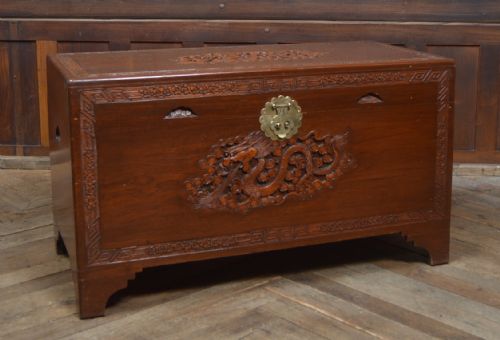


Asian Carved Trunk
These pieces known as asian carved trunk examples are solid timber storage boxes offering deep utility and historic character.

Asian Carved Trunk
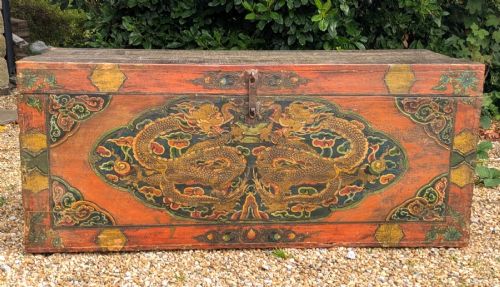
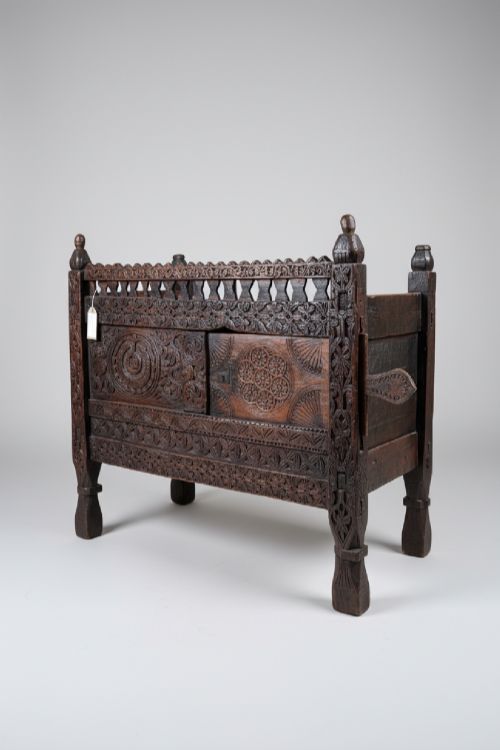
An asian carved trunk serves as a robust storage box for blankets, clothing and personal belongings, appearing across this selection in forms such as blanket boxes, dowry chests and storage coffers. These pieces trace back to the nineteenth century and the early decades of the twentieth century, reflecting traditional Chinese export, Swat Valley folk art and colonial craftsmanship.
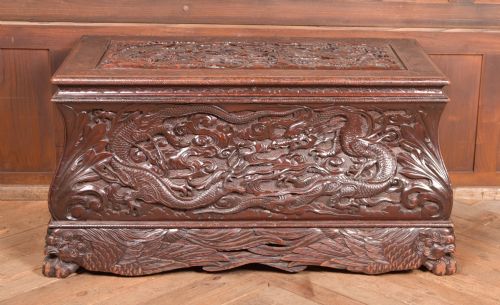
Buyers seeking an asian carved trunk will most frequently encounter camphor wood and camphorwood examples alongside hardwood, cedar wood and elm variations. The exterior surfaces commonly display deep relief carving, while specific pieces incorporate brass fittings or lacquer finishes to complement the timber grain.
How they were made
Makers constructed each asian carved trunk using dense timbers such as camphor wood and hardwood, valued for their durability and aromatic qualities. Carpenters joined the panels using traditional woodworking techniques that allowed the timber to move naturally over decades of use.
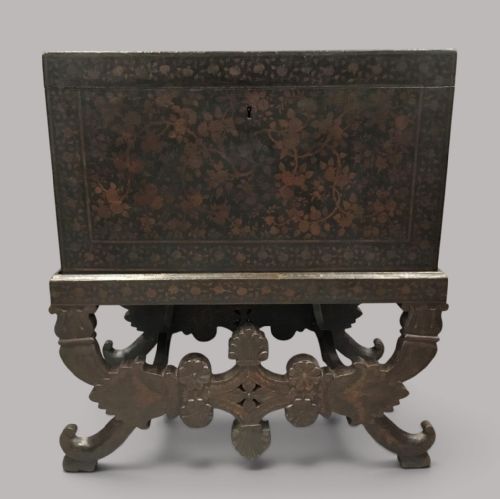
Surface decoration on an asian carved trunk relies on hand carving into the solid wood to create intricate pictorial and floral scenes. Certain examples incorporate brass hardware for reinforcement and visual contrast, whereas others receive layers of lacquer or gilt detailing.
Asian Carved Trunk Retail Price Guide 2026
Typical asking prices for asian carved trunk among the pieces listed under this phrase on Sellingantiques today, from the lower quarter to the upper quarter. They describe what is for sale here now, not the wider market.
What varies in quality
The distinction between standard and superior pieces rests on the depth and precision of the hand carving across the panels. Finer examples display crisp, undercut relief work where every motif retains sharp definition and balanced proportions.
Quality also shows in the selection of the timber and the integrity of the original brass mounts or hinges. Superior pieces maintain sound structural joinery alongside well-preserved surface treatments like lacquer or polished wood.
The Asian Carved Trunk Glossary
- Camphor wood
- A fragrant timber native to Asia, widely utilised for trunks because its natural scent protects stored textiles from insects.
- Dowry chest
- A traditional storage piece created to hold household goods and linens brought by a bride to her marriage.
- Chinoiserie
- European artistic interpretation of Chinese decorative motifs, seen on certain chests alongside traditional Asian export work.
- Lacquer
- A durable resin finish applied to wooden surfaces in multiple coats to provide protection and a smooth sheen.
- Swat Valley folk art
- A regional decorative style characterised by distinctive geometric and floral carvings originating from the Swat region.
Asian Carved Trunk: Frequently Asked Questions
What were asian carved trunk chests originally used for?
These boxes served as secure containers for valuable garments, household linens and personal documents. Families often utilised them as dowry chests to transport and store a bride's belongings.
Because camphor wood naturally repelled insects, the trunks protected woollens and silks from moth damage over many years of storage in domestic interiors.
How do I date an asian carved trunk?
Dating relies on examining the timber construction, the style of the carving and any surviving hardware. Pieces from the nineteenth century often feature hand-cut joinery and heavy brass strapping.
Later examples from the early twentieth century display slightly different tool marks and specific regional design characteristics recorded across the inventory.
Where should I place an asian carved trunk at home?
These chests function well at the foot of a bed or as a coffee table in a living room. Their substantial flat lids provide useful surface space while the interior conceals clutter.
Keep the timber away from direct heat sources and radiators to prevent the wood from drying out and splitting over time.
What is the difference between a blanket box and a dowry chest?
Blanket boxes were general household containers built for storing bedding and heavy textiles within the home. Dowry chests held specific symbolic and practical items prepared for a wedding.
Both forms share heavy timber construction and carved exteriors, though dowry pieces often display more elaborate regional iconography.