




Asian Carved Table Lamp
An asian carved table lamp brings rich texture and intricate craftsmanship from nineteenth-century workshops into a modern interior.
Asian Carved Table Lamp
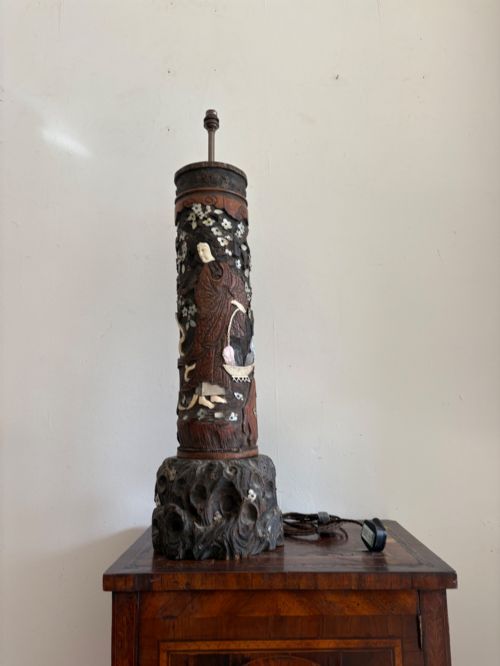
The search for an asian carved table lamp directs attention toward nineteenth-century works originating from Chinese and Japanese traditions. These pieces combine sculptural forms with practical illumination, incorporating traditional bases adapted from vessel stands, root wood, and decorative bronzes.
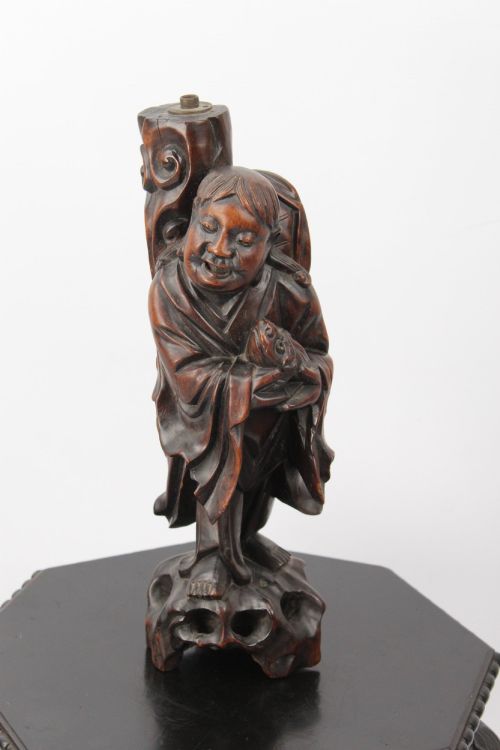
The selection on this page relies heavily on items from the Meiji period and late nineteenth-century Qing Dynasty productions. Buyers encounter various configurations, including converted vases, carved root wood figures, and detailed bronze animal sculptures adapted for electricity.
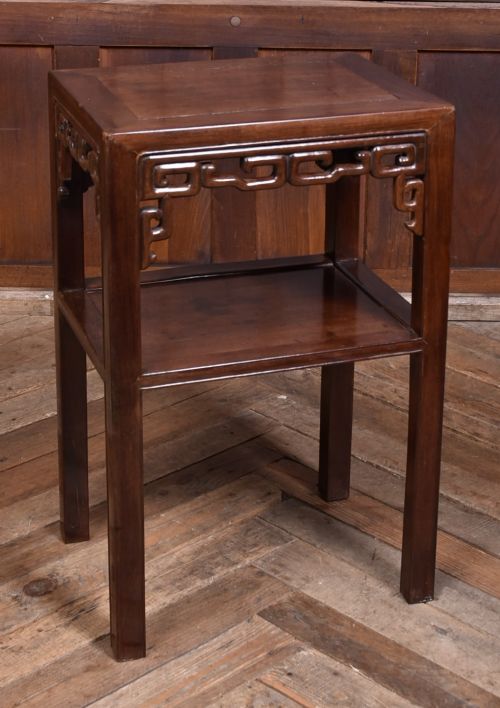
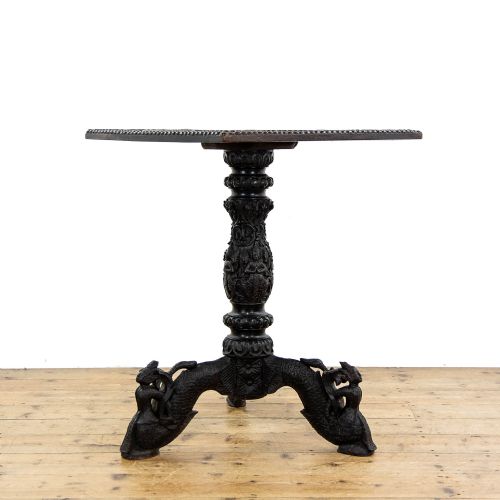
Beyond standard lamp fittings, the category often blurs the line between furniture supports and lighting, utilising small stands and tables repurposed to hold luminaires. Hardwoods such as huali and rosewood dominate the structural elements found across these offerings.
Materials and Construction
Makers utilised dense timbers, predominantly hardwood, rosewood, and root wood, carving complex figurative and botanical motifs by hand. These organic materials often retain their natural grain and irregular contours, particularly in root wood lamps and plant stands.
Metals such as bronze feature in cast and chased animal figures, while porcelain elements incorporate celadon and famille rose glazes. Assemblages frequently combine carved wooden bases with metal mounts and fabric components to complete the lighting structure.
Several elephants and dragons moonlight as illumination sources.
Distinction in Craft
Quality rests in the depth and clarity of the carving, where master artisans achieved sharp definition in foliage, dragons, and figures. Superior examples display balanced proportions and seamless integration between the original artefact and modern electrical adaptation.
The choice of material dictates the baseline of refinement, with dense huali hardwood and finely cast bronze representing the upper tier of production. Lesser pieces rely on simpler turnings and softer woods with minimal hand-chasing.
The Asian Carved Table Lamp Glossary
- Meiji Period
- The era in Japanese history spanning from 1868 to 1912, known for exceptional metalwork and decorative arts. Pieces from this time often exhibit naturalistic animal forms and intricate bronze casting.
- Qing Dynasty
- The final imperial dynasty of China, lasting from 1644 to 1912, characterised by ornate hardwood carving and refined porcelain production. Items from this period frequently utilise dense huali and rosewood.
- Root Wood
- Timber formed from the root system of a tree, selected for gnarled, twisting shapes that dictate the final sculptural form. Artisans carved these organic shapes into bases and lamp bodies.
- Celadon
- A term for ceramics denoting a pale green glaze, originating in China. These glazed vessels appear frequently as bodies for converted table lamps.
- Famille Rose
- A palette of opaque enamel colours introduced in Chinese porcelain during the Qing dynasty. These ceramics often feature floral and figural scenes.
Asian Carved Table Lamp: Frequently Asked Questions
How do I date these lamps?
Dating relies on stylistic markers associated with nineteenth-century Qing Dynasty and Japanese Meiji periods. Artisans utilised traditional hand-carving methods typical of these specific eras before industrial replication became common.
Material analysis also helps confirm age, as dense hardwoods and early bronze casting techniques differ significantly from twentieth-century reproductions.
Are these original lamps or conversions?
Many examples began life as decorative objects, vases, or scholar's items before receiving electrical fittings. This practice of conversion preserves antique materials while adapting them for modern domestic use.
Original stands and furniture components are often repurposed carefully to serve as stable bases for lighting.
What woods are typically used?
Makers favoured dense Asian hardwoods including rosewood, huali, and organic root wood. These materials provided the structural integrity needed for intricate, deep-relief hand carving.
The natural grain and weight of these timbers distinguish them from lighter, modern substitutes.
How do I style these lamps?
These lamps function as sculptural focal points in a room, pairing well with traditional or eclectic interior schemes. Their textured wooden or bronze bases add warmth and historical depth to side tables and living spaces.
Matching them with simple fabric shades allows the detailed carving of the base to remain the primary visual feature.