




Chinese Carved Dragon Stand
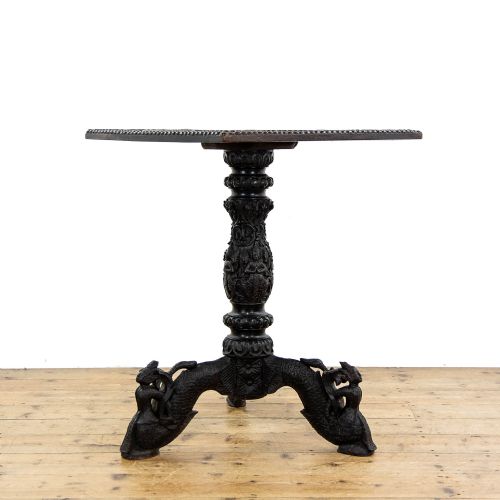
These Chinese carved dragon stand items are solid wood furnishings finished with sinuous serpentine motifs, prized for their dense craftsmanship and distinct cultural presence.
Chinese Carved Dragon Stand
A Chinese carved dragon stand represents a specific category of antique furnishings designed primarily to display decorative objects, lamps, or plants. The examples encountered on this page encompass various forms, from compact occasional tables and lantern stands to taller torchiere floor lamps and display cabinets.
Most pieces date from the nineteenth and early twentieth centuries, spanning the Victorian and Edwardian eras alongside late Qing Dynasty periods. Buyers will find that side tables, plant stands, and standard lamp bases form the core of the selection available here.
The aesthetic bridges traditional Eastern craftsmanship with pieces tailored for Western export markets during the late nineteenth century. These objects function equally well as functional surfaces and sculptural focal points within an interior space.
Assessing quality in carved dragon stands
Quality rests primarily on the depth, sharpness, and anatomical definition of the dragon carvings. Superior examples display undercut scales, dynamic facial expressions, and fully realised limbs that stand proud from the main structure, rather than shallow, stamped, or mechanically churned surface patterns.
The choice of timber and structural integrity dictate the long-term resilience of each piece. Heavier, dense rosewoods and properly seasoned hardwoods maintain stable joints, whereas lesser items utilise softer woods that prove prone to splitting under shifting humidity.
Several dragon stands double as standard lamps, illuminating rooms with serpents wrapped tightly around the electrical wiring.
The Chinese Carved Dragon Stand Glossary
- Hardwood
- A dense timber derived from broad-leaved trees, favoured by makers for its capacity to hold sharp, detailed hand-carved motifs. Rosewood and ebonised varieties appear frequently in these listings.
- Torchiere
- A tall stand or floor lamp designed to direct light upwards towards the ceiling. In this context, the shaft often takes the form of a coiled wooden dragon.
- Chinoiserie
- European decorative style reflecting Chinese artistic influences, produced largely during the eighteenth and nineteenth centuries. It often merges local cabinet-making techniques with Asian motifs.
- Jardiniere stand
- A specialised low table or pedestal specifically constructed to support heavy plant pots or floral arrangements. They frequently feature inset marble tops to prevent water damage from overflow.
- Qing Dynasty
- The final imperial dynasty of China, lasting from sixteen forty-four to nineteen twelve. Many items bearing this attribution reflect the elaborate craftsmanship associated with the later decades of the era.
Chinese Carved Dragon Stand: Frequently Asked Questions
How are these stands best used at home?
These pieces function ideally as anchor points for lamps, heavy ceramic bowls, or large house plants where their sturdy frames can support significant weight.
Their decorative carved forms also allow them to stand alone as sculptural elements in hallways or corners without needing anything placed upon them.
What woods were used to make them?
Makers relied predominantly on dense dark timbers, specifically rosewood and various heavy Asian and European hardwoods.
These materials provided the structural stability required for deep undercutting and projecting dragon motifs without snapping.
How do I distinguish nineteenth-century pieces?
Nineteenth-century examples typically display hand-cut joinery, heavier timber weights, and deeper relief carving with individual chisel marks visible in recessed areas.
Later twentieth-century reproductions often feature more uniform machine sanding and shallower, simplified dragon details.
Why do some stands have marble tops?
Inset marble slabs provided a durable, cool, and water-resistant surface designed to hold damp plant pots or hot tea vessels without scorching the wood.
This material combination protected the intricate frames while adding a contrasting texture and weight to the composition.