
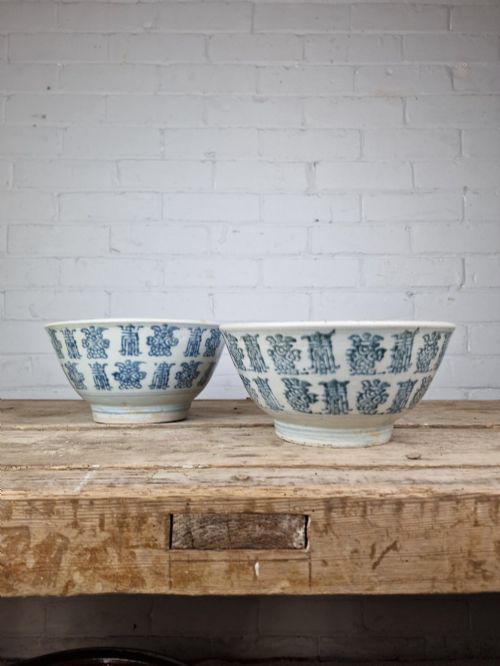

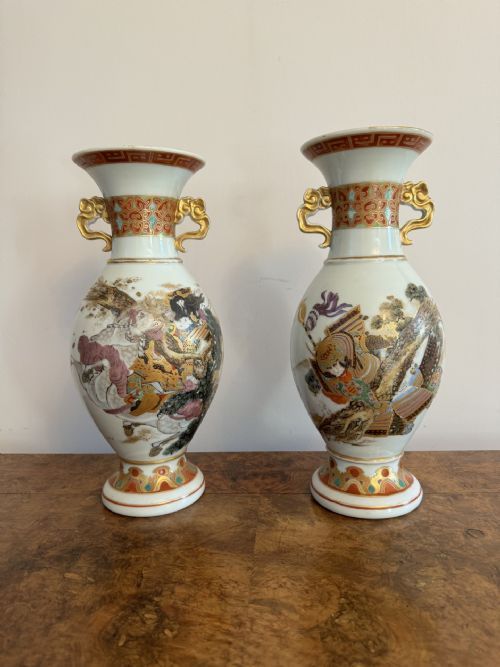
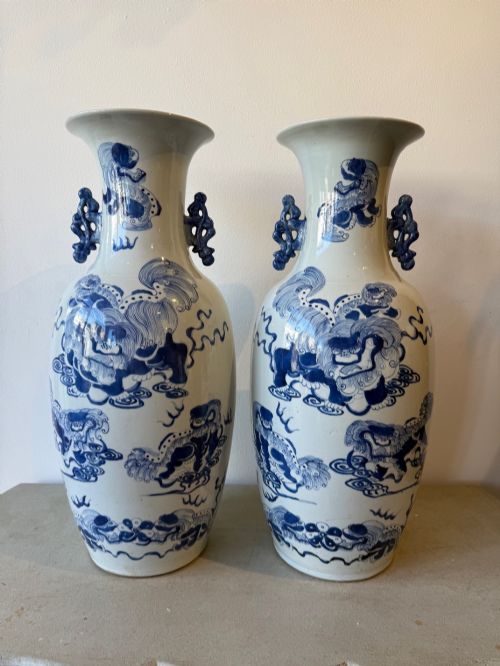
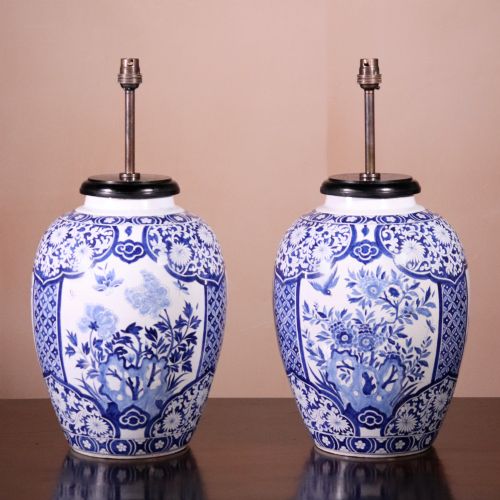
Asian Porcelain Pair
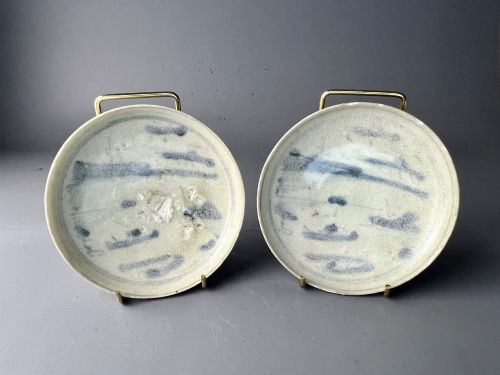
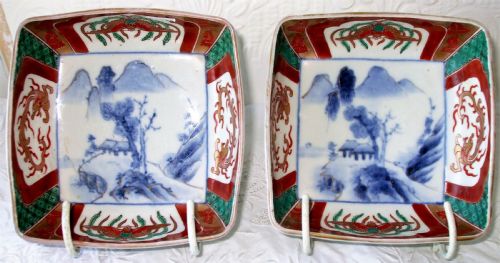
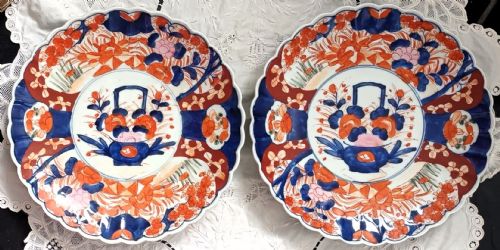
An asian antique porcelain pair brings symmetrical balance and historical craftsmanship to a room, ranging from vibrant Japanese Imari plates to detailed Chinese blue and white vases.
Asian Porcelain Pair
When searching for an asian antique porcelain pair, buyers encounter matching sets created for display and utility, originating from distinct East Asian periods. The selection on this page leans heavily towards Japanese Meiji period wares alongside Chinese pieces from the Qing dynasty and later decades.
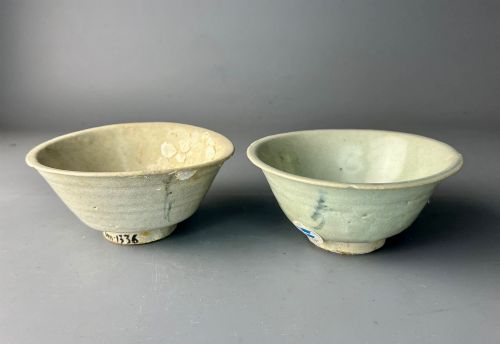
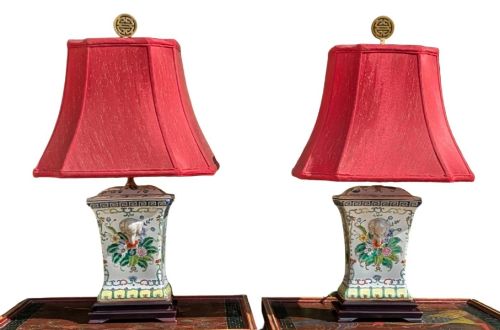
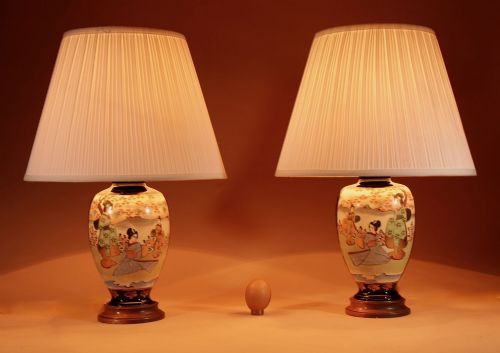
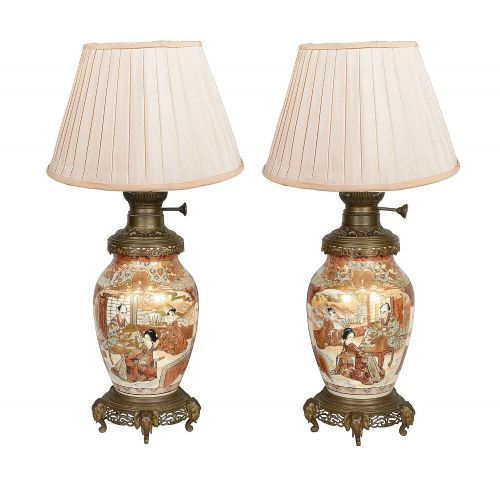
Forms vary considerably according to domestic and export demands, encompassing large floor and table vases, lidded jars, decorative bowls, chargers, and dishes. Table lamps adapted from traditional vessels also appear frequently among the listed objects.
Origins span several centuries, with pieces dated from the eighteenth, nineteenth, and early twentieth centuries. Japanese styles such as Satsuma, Kutani, and Arita Imari sit alongside Chinese export ceramics and provincial blue and white items.
Materials and Techniques
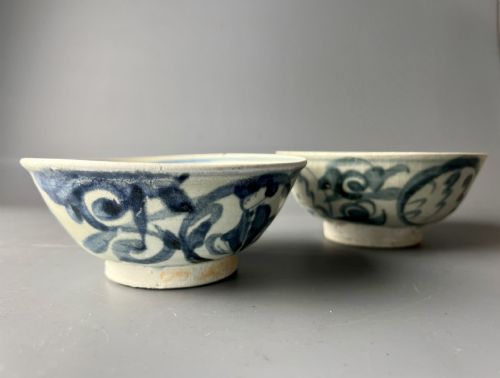
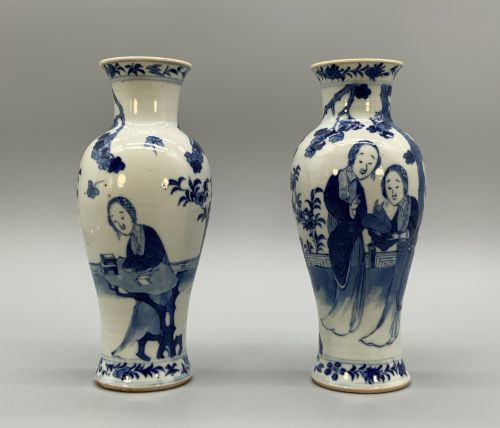
Potters shaped these vessels from refined clay bodies, applying mineral glazes and painted pigments before firing them in kilns. Cobalt blue underglaze decoration dominates the Chinese blue and white pieces, requiring precise brushwork prior to the final glaze.
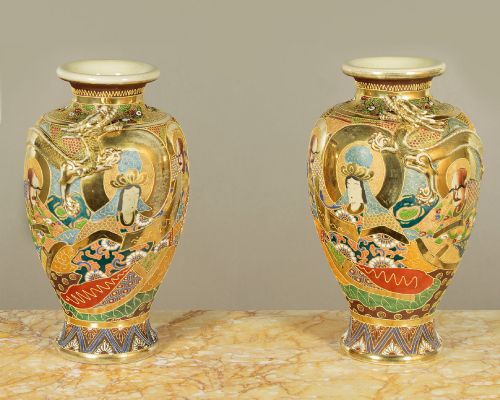
Many Japanese Satsuma and Imari works incorporate coloured enamels and raised gold leaf applied over the glazed surface. Secondary materials such as wood, brass, and gilt appear on stands and mounted table lamps.
Listings feature porcelain, earthenware, enamel, gold leaf, wood, and brass across nineteenth and early twentieth-century periods.
Evaluating Quality and Execution
The distinction between standard production and masterwork execution rests on the precision of the hand-painted detail and the complexity of the design. Pieces associated with named workshops or identifiable artists display finer control in the enamelling and gilding.
Balance and symmetry within the pair determine visual harmony, as hand-thrown and hand-painted items naturally diverge in minor details. The crispness of the porcelain paste and the stability of the original glaze provide further indicators of superior manufacture.
Manpei·Kinkōzan·Kato Sanhei·Makuzu Kozan II
The Asian Porcelain Pair Glossary
- Imari
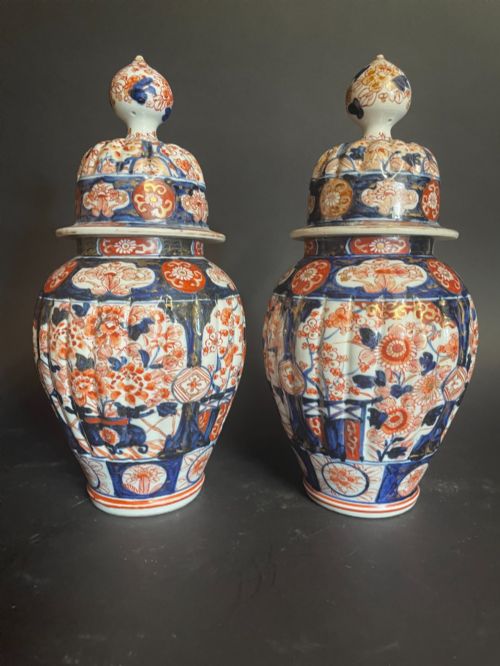
- A style of Japanese porcelain featuring a palette of underglaze blue, iron red, and gold, named after the port of shipment. These colourful designs gained immense popularity in Europe during the export period.
- Satsuma
- Earthenware pottery originating from Satsuma province, characterised by a finely cracked ivory glaze decorated with intricate enamel and gold motifs. Many fine examples were produced in Kyoto during the Meiji period.
- Meiji Period
- The era of Japanese history lasting from 1868 to 1912, noted for a surge in decorative arts produced for international export. Pieces from this time often exhibit elaborate pictorial scenes.
- Qing Dynasty
- The final imperial dynasty of China, ruling from 1644 until 1912. Ceramics from this era include refined blue and white wares and polychrome porcelain.
- Baluster
- A vase shape with a rounded body that tapers towards the base and flares slightly at the neck. This classic silhouette provides a stable canvas for extensive painted decoration.
Asian Porcelain Pair: Frequently Asked Questions
What defines an antique Imari pair?
An Imari pair consists of two matching Japanese porcelain vessels decorated in characteristic palettes of blue, red, and gold. They were produced primarily for export and display.
These pieces often depict floral motifs, birds, or figurative scenes, utilising vibrant enamels over a white porcelain body.
How were Satsuma vases decorated?
Satsuma pieces utilise a cream-coloured earthenware body covered in a finely crackled glaze. Artisans painted detailed scenes over this surface using rich enamels and gold leaf.
Production centres such as Kyoto produced many of the refined landscape and figural designs seen on the market today.
Are these porcelain pairs functional or decorative?
Most items in an asian antique porcelain pair were created for decorative display, including chargers, lidded jars, and large exhibition vases. Some examples were later converted into table lamps.
While robustly made from fired clay and porcelain, their historical nature makes them better suited for careful interior display than heavy daily use.
How do I distinguish Chinese from Japanese pieces?
Chinese porcelain often relies on underglaze cobalt blue on a hard white paste, particularly during the Qing dynasty. Japanese export wares frequently incorporate heavier enamel colours and gilt highlights, especially in Imari and Satsuma styles.
Examining the base and the style of the painted motifs helps clarify the regional origin and period of manufacture.