
Ash and Elm Chairs
Ash and elm chairs bring sturdy vernacular design into domestic spaces, pairing resilient seats with flexible spindle frames.
Ash and Elm Chairs
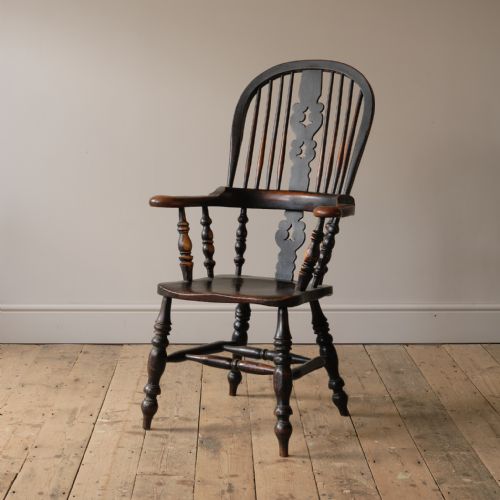
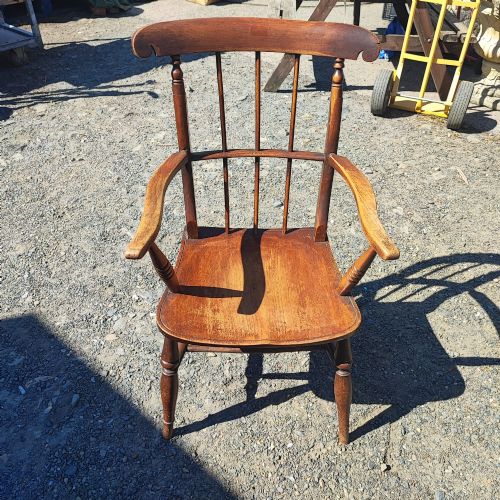
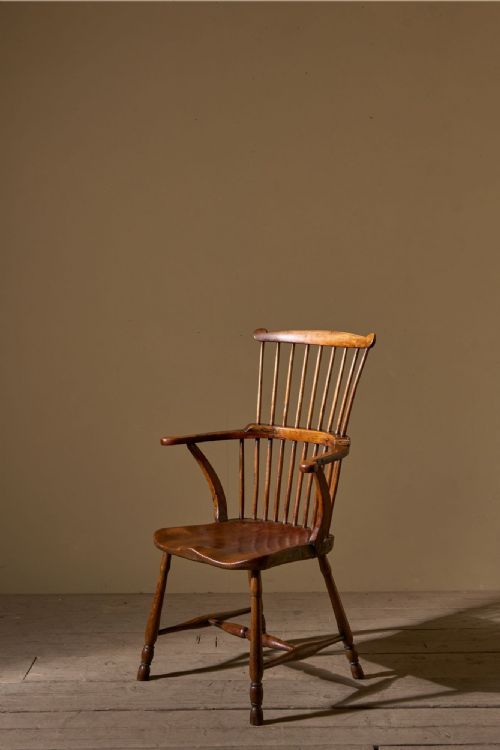
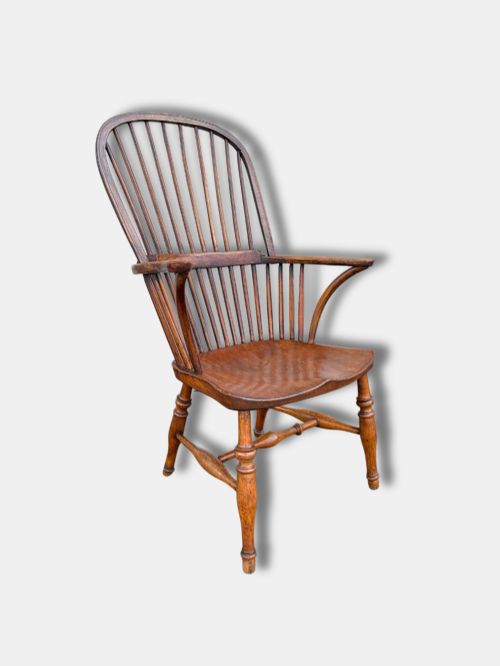
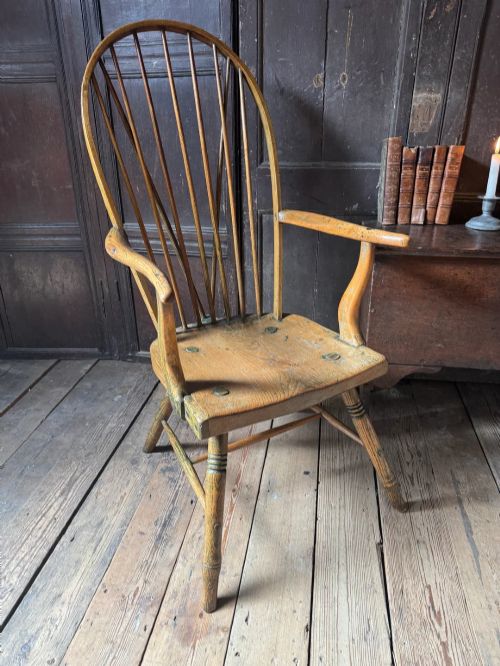
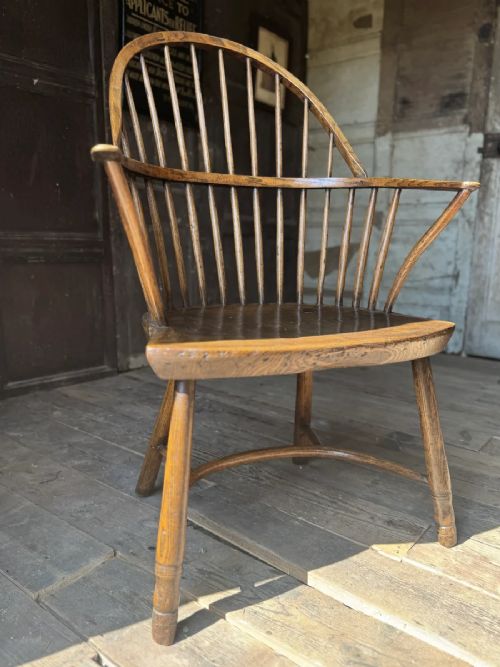
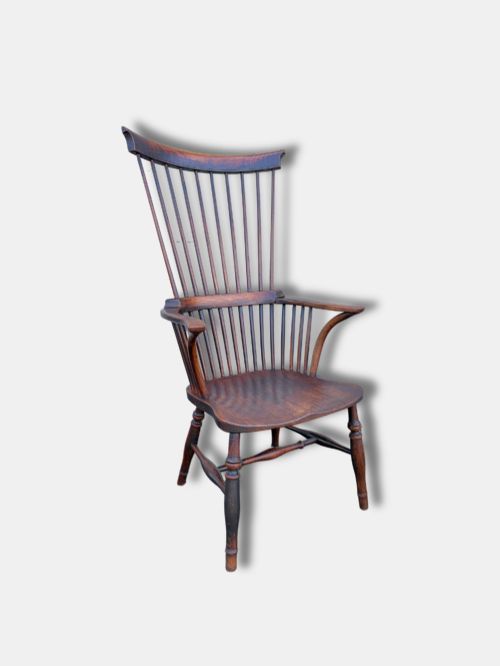
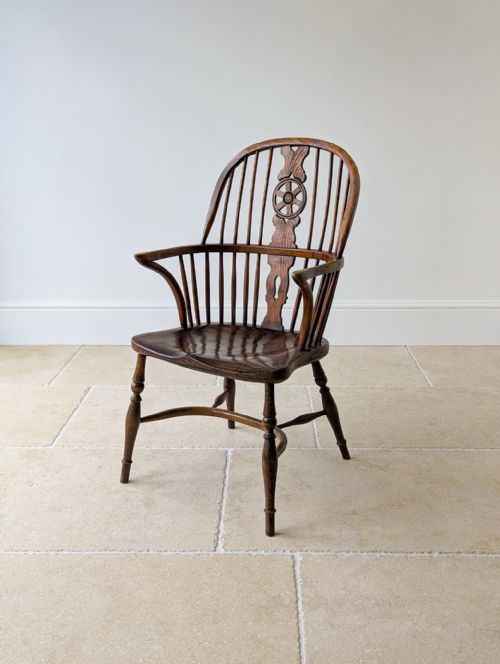
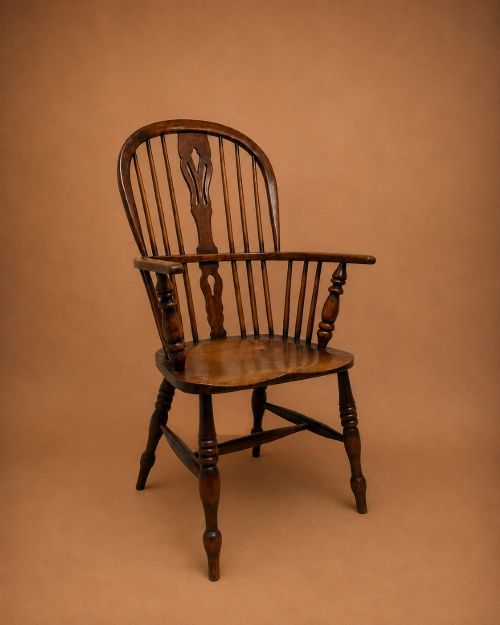
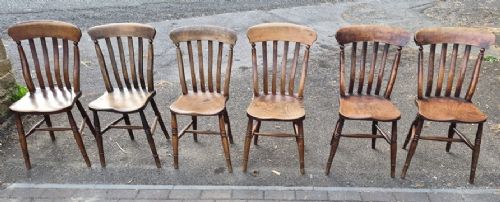
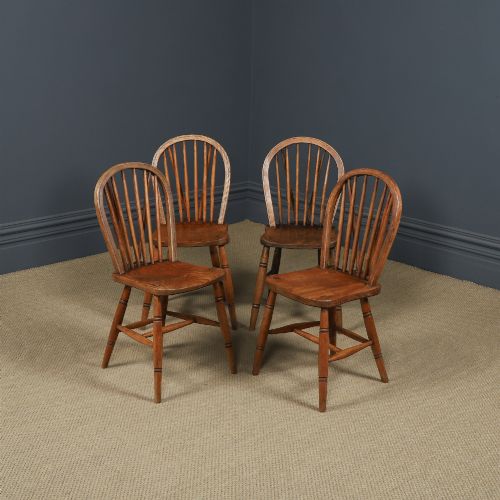
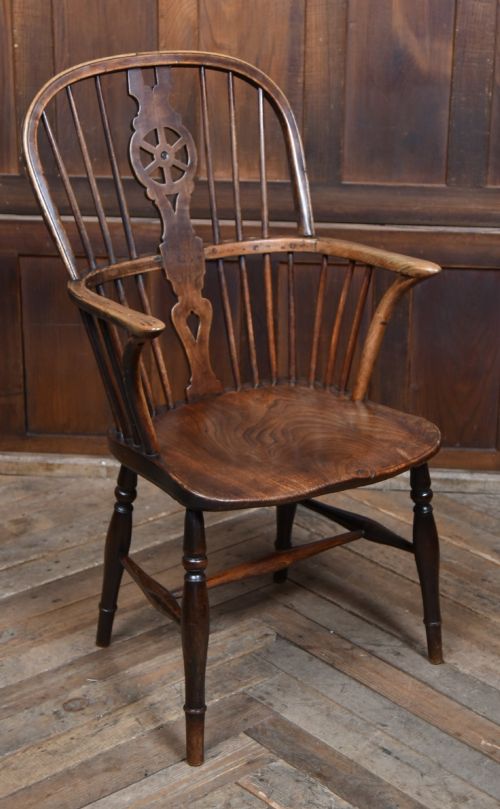
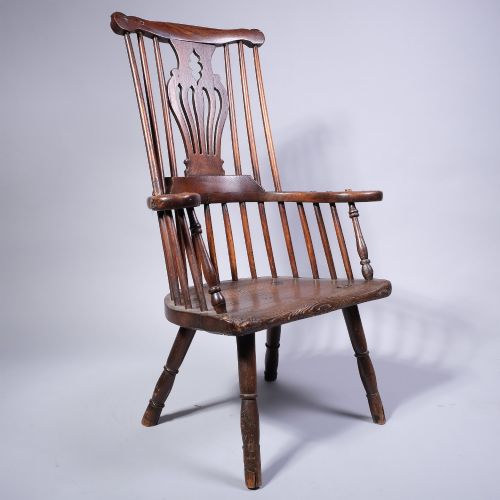
Ash and elm chairs encompass a range of vernacular seating forms originating in English rural workshops during the eighteenth and nineteenth centuries. Buyers frequently encounter Windsor variants, including low-back, high-back, comb-back, and wheel-back armchairs designed for kitchen or farmhouse use.
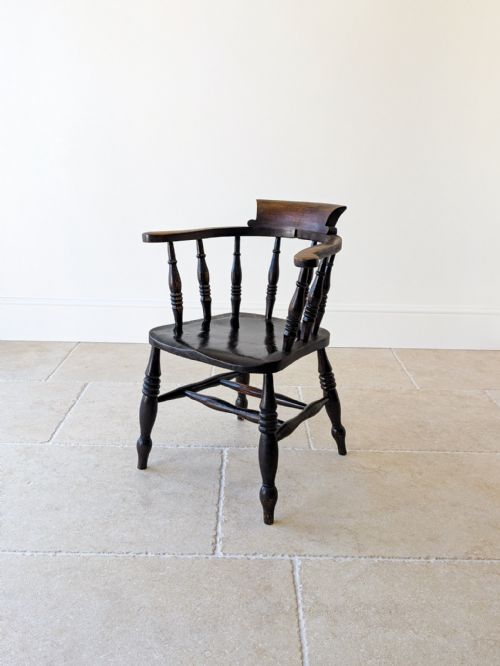
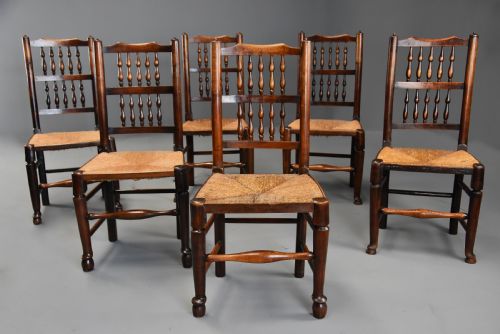
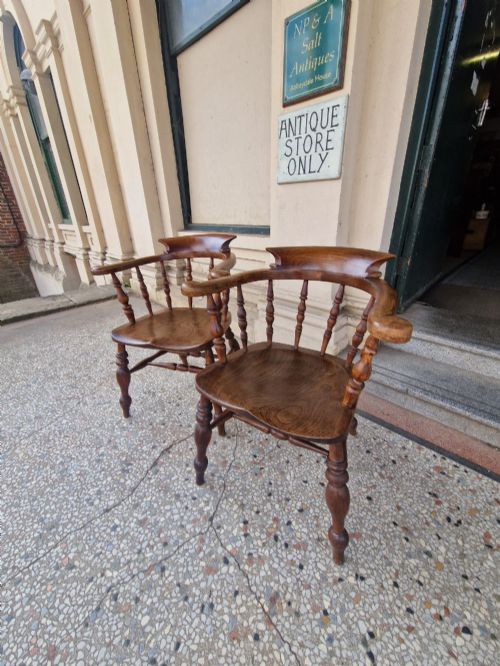
The selection also includes matched or harlequin sets of dining chairs, ladderbacks, and smokers bows spanning the Georgian and Victorian eras. Regional variations such as Thames Valley, West Country, and Lancashire pieces appear regularly across the inventory.
How they were made
Craftsmen utilised elm primarily for the solid, thick saddle seats, taking advantage of the timber's interlocking grain to resist splitting under heavy use. Ash supplied the structural strength needed for the steam-bent hoops, bows, and turned spindles supporting the back.
Additional framing components occasionally integrated beech or sycamore where straight-grained turning was required. Rush seating or solid wood construction dominated, while surface finishes relied on natural wear and traditional waxing over the bare timber.
Ash and Elm Chairs Retail Price Guide 2026
Typical asking prices for ash and elm chairs among the pieces listed under this phrase on Sellingantiques today, from the lower quarter to the upper quarter. They describe what is for sale here now, not the wider market.
Child's high chairs brought pint-sized family members right to the farmhouse table alongside full-scale Windsor armchairs.
What varies in quality
Quality rests upon the sculptural shaping of the solid elm seat and the integrity of the wedged tenon joints connecting the undercarriage. Pieces featuring deeply sculpted saddles and thick, well-proportioned arm bow turnings command greater appreciation.
The survival of original surface patination and balanced proportions across multi-piece dining sets distinguishes finer examples from heavily restored or mismatched assemblies.
Fred Walker Rockley
The Ash and Elm Chairs Glossary
- Windsor chair
- A chair built with a heavy wooden saddle seat into which the legs and back spindles are independently inserted. This method creates a sturdy, resilient frame typical of English country furniture.
- Comb-back
- A Windsor chair style featuring a low back topped by a horizontal headpiece with vertical spindles rising through it. It resembles the teeth of a traditional hair comb.
- Wheel-back
- A regional Windsor variation incorporating a pierced wooden splat shaped like a carriage wheel into the centre of the backrest. This design gained popularity during the nineteenth century.
- Harlequin set
- A collection of dining chairs that share similar periods, materials, and overall styles while varying slightly in individual details. These sets were assembled over time rather than produced as a single batch.
- Smokers bow
- A low-backed Windsor armchair featuring a rounded, continuous arm rail supported by turned spindles above a solid seat. They are frequently found in Victorian domestic and commercial settings.
Ash and Elm Chairs: Frequently Asked Questions
What is a Windsor chair?
A Windsor chair is constructed by boring legs and back spindles directly into a solid wooden seat rather than using a conventional framed skeleton.
This method distributes weight efficiently and yields a resilient piece suited for daily domestic use.
How do I care for antique wood?
Maintain antique elm and ash surfaces by applying occasional neutral beeswax and avoiding direct placement near heat sources or strong sunlight.
Stable indoor humidity prevents the timber from drying out or shrinking.
Are these chairs comfortable for dining?
The saddle seats are carved to fit the human form, offering ergonomic support during extended sitting.
Adding loose cushions provides extra comfort while preserving the original wooden structure.
What defines a harlequin set?
A harlequin set consists of chairs sharing period, materials, and general form, though individual pieces show minor variations in turning or size.
Such groups were typically gathered together gradually rather than purchased as a uniform suite.