


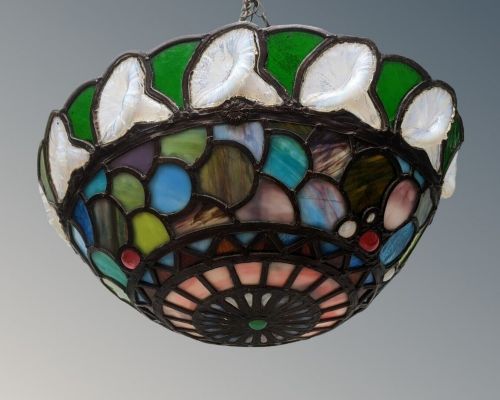


Arts and Crafts Hanging Lamp
An arts and crafts hanging lamp brings honest metalwork and warm glass illumination into a room, offering both practical utility and distinct period character.
Arts and Crafts Hanging Lamp
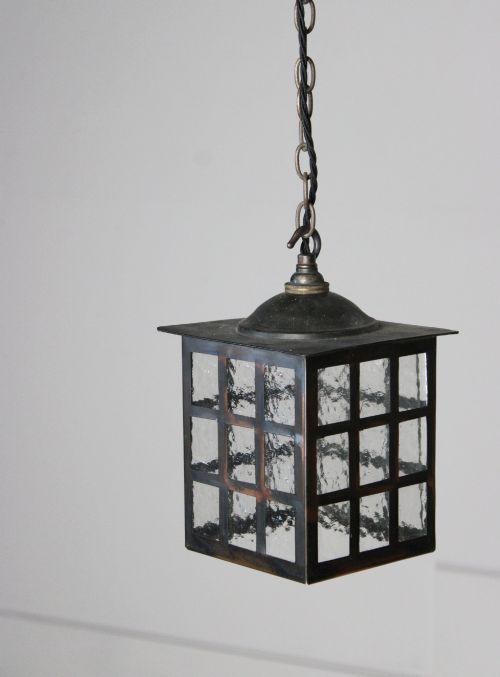
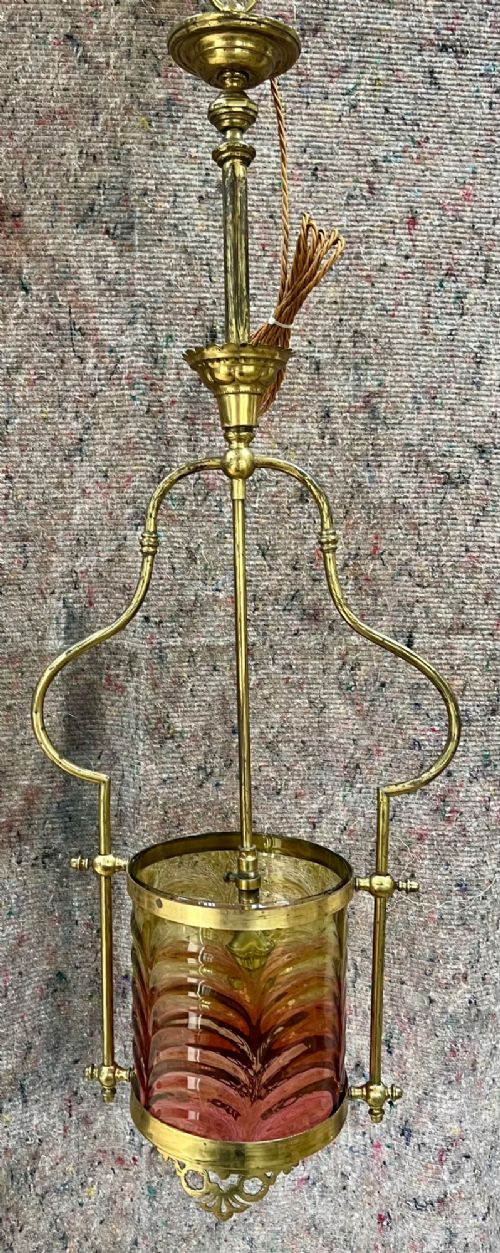
When you search for an arts and crafts hanging lamp, you encounter ceiling fixtures rooted in the design movements of the late nineteenth and early twentieth centuries. These pieces encompass pendant lights, hall lanterns, and multi-branch chandeliers designed to illuminate domestic spaces with functional directness. The examples met on this page span the Victorian era, Edwardian period, and subsequent decades up to the nineteen-thirties.
The dominant forms rely on geometric or restrained organic silhouettes executed in metal and glass. Ceiling lights appear as single-bulb pendants, bowl shades suspended by chains, and multi-lantern configurations suited to larger hallways or reception rooms. Origins stretch across British production alongside continental examples showing Gothic Revival or Art Nouveau influences.
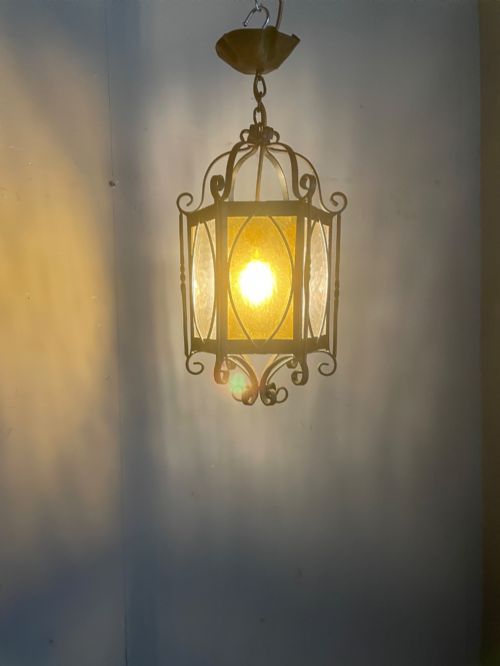
Makers focused on visible construction methods, allowing rivets, lead cames, and hammered surfaces to form part of the aesthetic. Whether configured as a simple hexagonal hall lantern or a large cobalt blue leaded glass pendant lamp, each object prioritises utilitarian purpose combined with thoughtful proportion. Buyers select these lamps to anchor a historic interior or to introduce tactile craftsmanship into a modern room.
How they were made
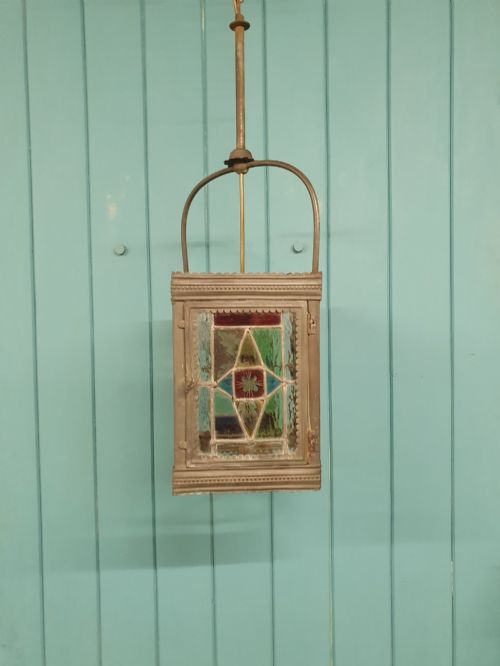
The construction of these lamps relies on structural metals worked by hand or shaped in early industrial foundries. Brass and copper provide warm metallic tones, often left with patinated surfaces, while wrought and cast iron deliver heavy structural support for glazed panels. Lead cames secure pieces of glass within lantern frames, creating sturdy grid patterns that hold coloured or opalescent panes firmly in place.
Glass panels are integral to the lighting effect, utilising opalescent, stained, leaded, or cobalt blue variations to diffuse light gently. Some specialised pieces incorporate organic materials such as hand-stitched leather and vellum alongside traditional metalwork. Blacksmith techniques appear in the forged scrollwork and rigid frames of iron hall lanterns, demonstrating straightforward assembly without superficial ornamentation.
One unusual survivor swaps standard metal entirely for hand-stitched leather and vellum, proving that illumination could take tactile, organic forms.
What varies in quality
Quality in these hanging lamps rests primarily on the substance of the materials and the integrity of the construction. Substantial gauge copper and brass frames maintain their rigidity over decades, whereas thinner metals bend under tension and lose their alignment. The weight and depth of the glass, particularly in opalescent and leaded variants, separate standard commercial production from more considered workshop output.
The sophistication of the assembly dictates the visual success of the piece. Clean solder lines on leaded glass, precise hammering on copper hoods, and well-balanced multi-branch proportions indicate higher manufacturing standards. Original components, such as matching ceiling roses and authentic suspension chains, elevate the integrity of a fixture compared to later replacements.
The Arts and Crafts Hanging Lamp Glossary
- Opalescent Glass
- Glass that has a milky, translucent appearance, diffusing light softly without total transparency. This material was frequently utilised in pendant bowls to reduce glare.
- Leaded Glass
- Small panes of glass joined together by narrow strips of lead known as cames. The resulting network forms decorative geometric or floral patterns within a lantern frame.
- Hall Lantern
- An enclosed ceiling-hung light fixture designed specifically for narrow entranceways and corridors. They typically feature glazed sides to protect the flame or bulb from drafts.
- Wrought Iron
- Iron that has been heated and shaped by a blacksmith using tools rather than cast in a mould. It displays subtle surface textures resulting from the hammering process.
Arts and Crafts Hanging Lamp: Frequently Asked Questions
How do I hang a heavy arts and crafts hanging lamp safely?
Hanging heavy fixtures requires anchoring directly into ceiling joists using rated steel hooks rather than relying on standard plasterboard fixings. Professional installation ensures the electrical wiring meets current safety standards while supporting the combined weight of metal and glass.
Adjusting the suspension chain allows the lamp to hang at the correct height for the room volume. Ensuring the weight rests on the structural chain rather than the electrical flex prevents internal wire strain over time.
Can I use modern LED bulbs in an antique hanging lamp?
Modern LED bulbs work well in these fixtures because they generate significantly less heat than traditional incandescent lamps. Lower thermal output protects fragile components like vintage glass, leather, and historical wiring insulation from deterioration.
Selecting warm colour temperatures maintains the intended amber glow characteristic of period lighting. Matching the bulb wattage to the lamp's original capacity preserves both the fixture and the desired atmosphere.
How do I clean opalescent and stained glass shades?
Cleaning requires a soft microfiber cloth dampened lightly with warm water and mild dish soap. Avoiding harsh chemical cleaners prevents damage to the aged metal patination and fragile lead cames surrounding the glass.
Dry the panels thoroughly after washing to prevent moisture from settling in the joints. Regular dusting keeps the glass translucent without requiring aggressive scrubbing.
How do I distinguish an Edwardian pendant from a Victorian one?
Distinguishing between these periods involves examining the shift from ornate Victorian eclecticism towards the cleaner lines favoured in the Edwardian era. Edwardian pieces frequently exhibit simpler geometric frames and less surface ornamentation.
Material choices also offer clues, with Edwardian workshops often favouring hammered copper and exposed fixings. Reviewing construction techniques alongside design motifs helps place a fixture within its proper chronological window.