

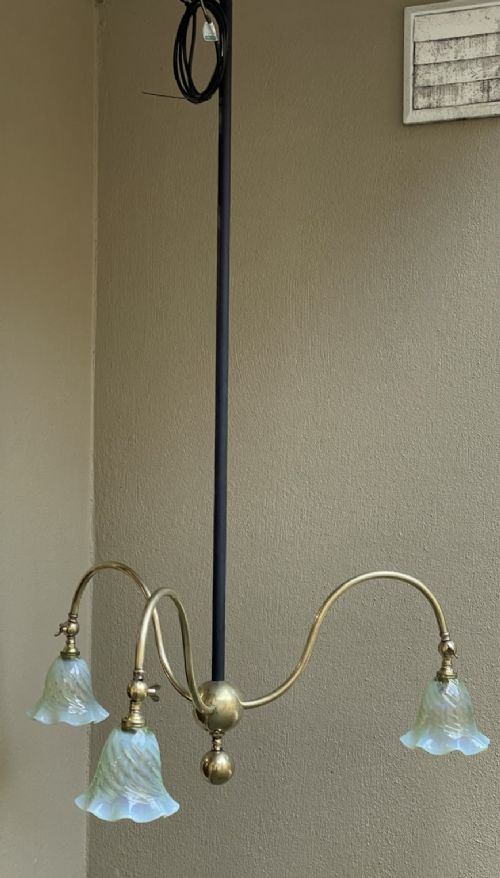
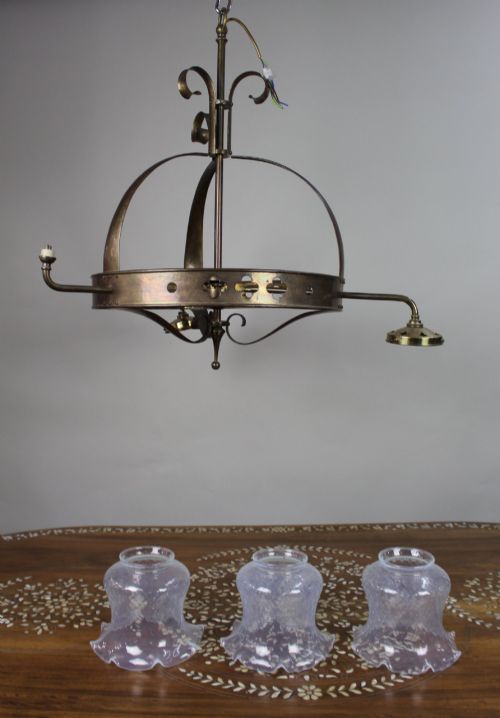


Opalescent Ceiling Pendant Light
An opalescent ceiling pendant light catches and softens overhead illumination through milky, shifting glass.
Opalescent Ceiling Pendant Light
An opalescent ceiling pendant light suspends from above to diffuse interior illumination, appearing primarily in Victorian, Edwardian, and 1930s incarnations. These fixtures emerge in styles ranging from Gothic Revival and Arts and Crafts to Art Nouveau and Art Deco.
The forms span from hanging lampshades and bowls to multi-light gasoliers and rise-and-fall configurations. Buyers most frequently encounter single pendant bowls alongside brass or copper three-light variants.
How they were made
Glassmakers combined specific minerals within the molten batch to produce the characteristic milky opacity that shifts in tone under changing light. Artisans then shaped these opalescent and frosted shades by hand, pairing them with metalwork components.
Supporting structures combine brass, patinated brass, and copper frames with fabric cords for suspension. These metals undergo casting and working to match the Gothic, Arts and Crafts, or Art Nouveau aesthetic of the period.
Opalescent Ceiling Pendant Light Retail Price Guide 2026
Typical asking prices for opalescent ceiling pendant light among the pieces listed under this phrase on Sellingantiques today, from the lower quarter to the upper quarter. They describe what is for sale here now, not the wider market.
Materials recorded across current inventory include brass, copper, frosted glass, fabric cord, and patinated brass.
What varies in quality
The depth and subtlety of the glass diffusion set superior examples apart from plainer trade pieces. Richer mineral suspensions create a more convincing play of light across the bowl or shade.
Metalwork execution distinguishes workshop production from standard output. Heavier gauge brass or patinated copper components, finished with careful attention to structural detail, elevate the presence of the fixture.
The Opalescent Ceiling Pendant Light Glossary
- Opalescent glass
- Glass containing ingredients that scatter light to create a milky, translucent appearance with pearlescent tones. This material softens direct illumination while adding colour nuance.
- Rise and fall
- A mechanical pulley system allowing the pendant height to be adjusted manually. This arrangement suits spaces requiring flexible illumination levels.
- Gasolier
- A multi-burner light fixture originally designed for gas lighting and later adapted for electricity. These pieces feature robust metal framing to support several shades.
- Patinated brass
- Brass treated with chemical solutions or natural ageing to darken the surface and create depth. This finish mutes the bright yellow glare of raw metal.
Opalescent Ceiling Pendant Light: Frequently Asked Questions
How do I hang a heavy opalescent pendant?
Heavy fixtures require direct anchoring to ceiling joists using suitable metal fixings rather than plaster alone. The weight of brass framing and thick glass bowls demands secure load-bearing support.
Consult a qualified electrician to assess the ceiling capacity and ensure the wiring matches the hardware requirements of older brass or copper stems.
Can these lights use modern bulbs?
Most antique fixtures accept standard modern LED or incandescent bulbs provided the wattage matches the historical socket limits. The milky glass helps diffuse the point source of modern lamps effectively.
Check the interior clearance of the shade to ensure the bulb size fits comfortably without touching the glass surface.
How do I clean opalescent glass shades?
Wash the glass gently in lukewarm water using mild dish soap and a soft cloth. Avoid abrasive scouring pads that might scratch the delicate surface.
Dry the components thoroughly before reassembly, and keep metal polishes away from the glass to prevent staining.
What rooms suit an arts and crafts pendant?
These fixtures work well in entrance halls, dining spaces, or studies where direct, softened overhead lighting complements period interiors. The warm metal tones and milky glass harmonize with natural timber.
Consider the ceiling height when hanging multi-light variants to ensure adequate clearance beneath the lowest point of the shade.