
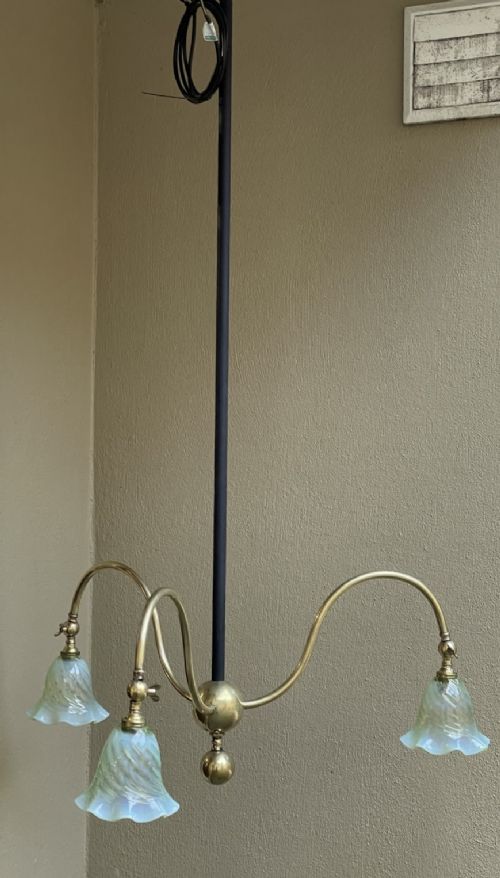
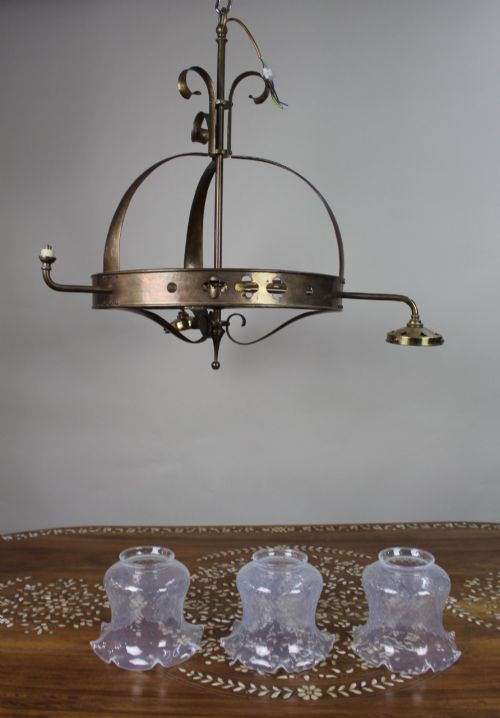


Opalescent Glass Shade Light
An opalescent glass shade light brings a gentle, milky glow to a room through the alchemy of transformed glass.
Opalescent Glass Shade Light
When you search for an opalescent glass shade light, you encounter a striking array of ceiling lights, pendant lights, and oil lamps spanning the Victorian era through the mid twentieth century. These pieces encompass distinct design movements including Arts and Crafts, Art Nouveau, Art Deco, and Gothic Revival, each utilising milky or iridescent glass to diffuse illumination.
The version you are most likely to meet on this page is a ceiling pendant or bowl lampshade forged during the nineteenth or early twentieth centuries, often paired with brass or copper mountings. Such fixtures range from simple utilitarian hallway lights to grand three-light gasoliers salvaged from civic buildings.
How they were made
The construction of these pieces relies heavily upon the union of pressed or blown opalescent glass with durable base metals such as brass, copper, and chrome. Artisans shaped the glass to scatter light evenly while metalworkers fashioned structural brackets, canopies, and frames to support the weight.
Secondary materials such as fabric cords and patinated brass fittings appear across the inventory, reflecting the technical standards of Victorian, Edwardian, and later twentieth century workshops. The glass itself achieves its characteristic milky translucence through chemical agents added during the molten phase.
Object forms recorded in this inventory include pendant lights, exterior wall lights, oil lamps, and ceiling bowls.
What varies in quality
Quality in these lighting fixtures rests upon the depth and fire of the opalescent glass and the substantial weight of the supporting metalwork. Superior examples exhibit subtle gradations of colour within the glass and robust, hand-finished brass or copper components rather than thin, stamped sheet metal.
The integrity of the original period mountings and the subtlety of the decorative motifs - whether flowing Art Nouveau lines or geometric Art Deco facets - distinguish finer creations from standard utility pieces.
The Opalescent Glass Shade Light Glossary
- Opalescent glass
- Glass containing agents that create a milky, semi-translucent appearance with shimmering milky or bluish tones. This material diffuses harsh glare while adding a warm decorative quality to the room.
- Gasolier
- A multi-burner hanging light fixture originally designed for illuminating spaces with coal gas before the widespread adoption of electricity. Many surviving examples later underwent conversion to electric wiring.
- Rise and fall
- A mechanical pulley system utilising counterweights that allows the user to adjust the hanging height of a pendant light manually. This mechanism is frequently found in Edwardian and Arts and Crafts domestic interiors.
- Arts and Crafts
- A design movement valuing handcraftsmanship, simple forms, and honest expression of materials over mass production. Pieces from this tradition often feature exposed metalwork rivets and hand-beaten copper elements.
Opalescent Glass Shade Light: Frequently Asked Questions
What is an opalescent glass shade light?
An opalescent glass shade light is a vintage or antique lighting fixture featuring a translucent, milky glass diffuser paired with metal mounts.
These fixtures were produced across several decades, encompassing styles from Victorian Gothic Revival to Art Deco.
How do I date these lights?
Dating relies on examining the manufacturing techniques, metal alloys, and stylistic markers such as Art Nouveau curves or Art Deco geometries.
Wiring methods and mounting hardware also offer reliable clues to whether a piece originates from the Victorian era or the nineteen-thirties.
Can I use modern bulbs in them?
Most antique fixtures can accommodate modern LED bulbs provided the wattage matches the historical capacity of the fitting.
It is advisable to have a qualified electrician inspect older brass and copper wiring before installation.
Where were these lights used?
They hung in domestic parlours, hallways, and grand civic spaces such as town halls, as well as exterior locations.
Specialised variants also served as table lamps or bracket-mounted oil lamps before being electrified.