



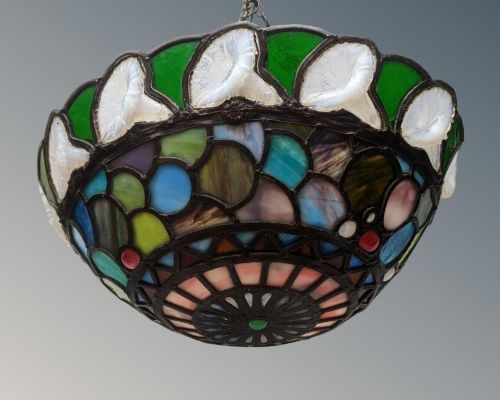
Arts and Crafts Ceiling Shade
These arts and crafts ceiling shade examples bring authentic period illumination into a room, forged from heavy metals and rich coloured glass.
Arts and Crafts Ceiling Shade
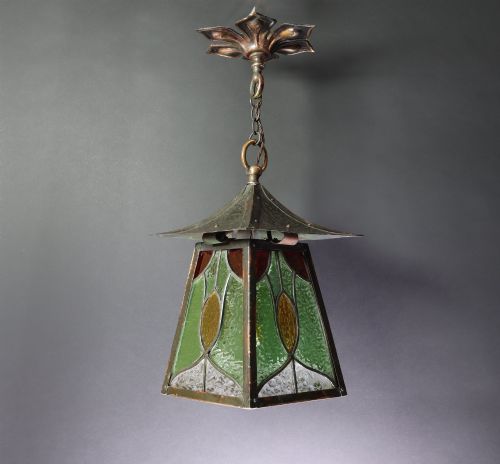
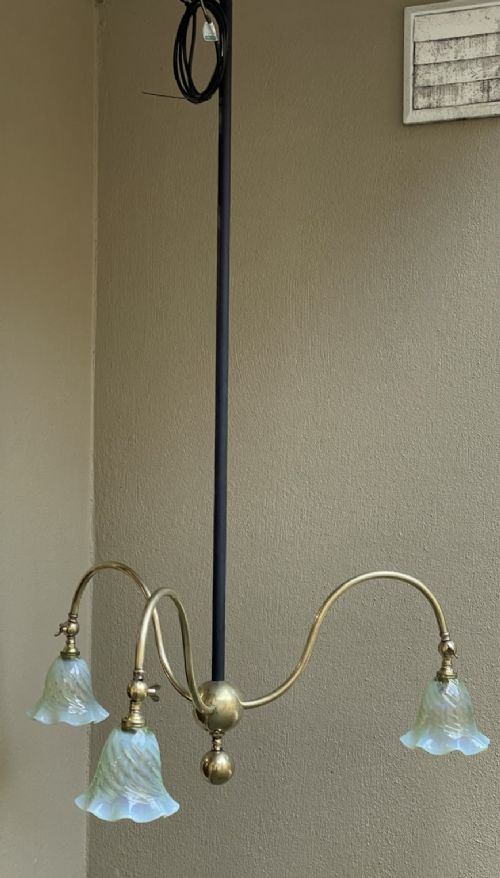
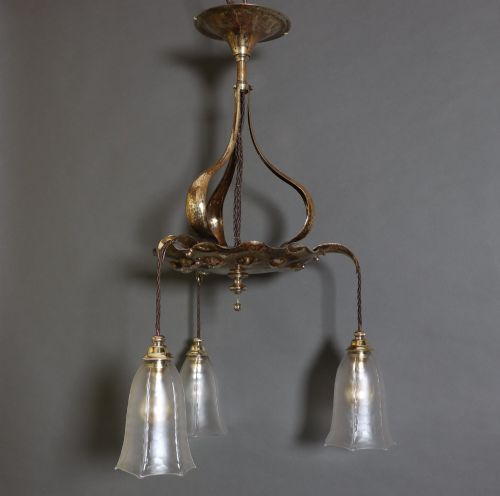
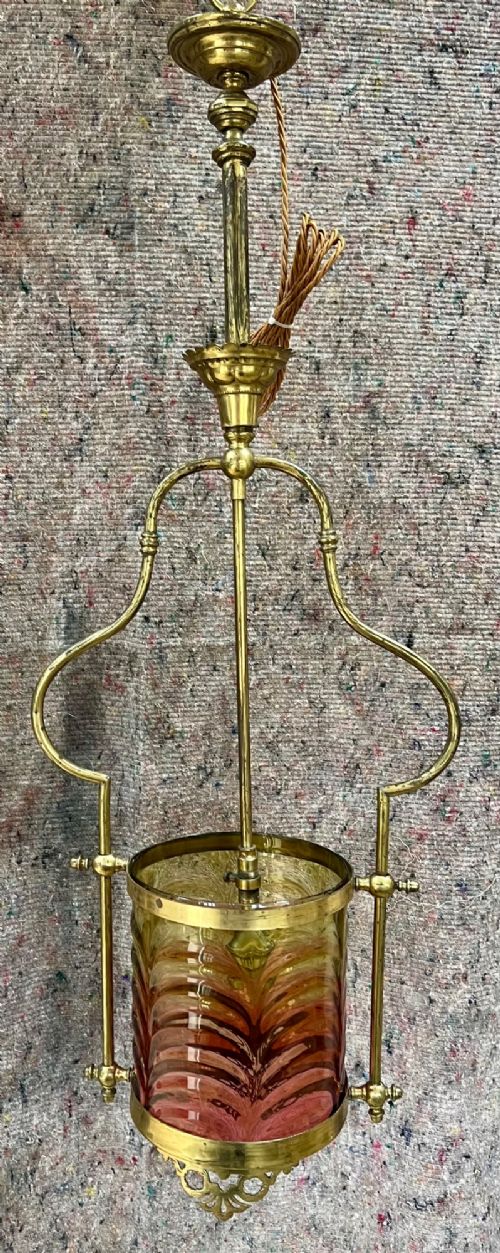
When you search for arts and crafts ceiling shade items, you encounter hanging light fittings, pendant bowls, and lanterns that date primarily from the late nineteenth century through to the nineteen-twenties. These fixtures reflect the hand-wrought ideals of the movement, appearing in styles that span standard Arts and Crafts, Art Nouveau, and even Gothic influences.
The most frequent examples on this page utilise durable metals paired with decorative glass elements. You will readily find pieces featuring beaten copper or brass frames holding opalescent, frosted, or stained glass shades designed to diffuse light softly across a space.
How they were made
Maker workshops constructed these hanging lights using robust base metals such as brass and copper, often employing hand-beaten techniques to create textured surfaces on the metal bodies. Frames were shaped to house heavy glass components securely.
Glass panels and bowls were produced in various finishes, including leaded stained glass, cobalt blue hues, and shimmering opalescent variants. Lead came was utilised to join individual glass segments together within lanterns and pendant shades.
Arts and Crafts Ceiling Shade Retail Price Guide 2026
Typical asking prices for arts and crafts ceiling shade among the pieces listed under this phrase on Sellingantiques today, from the lower quarter to the upper quarter. They describe what is for sale here now, not the wider market.
The listings here draw from materials including brass, copper, and leaded stained glass across several decades.
What varies in quality
The distinction between standard items and the finest examples lies in the dexterity of the metalwork and the character of the glass. Hand-beaten copper displays individuality through visible hammer marks and substantial weight.
Superior pieces often incorporate specialised glass elements, such as multi-coloured opalescent panels or intricate leaded stained glass configurations, rather than plain frosted panes. Provenance and historical association also elevate certain fixtures above domestic counterparts.
The Arts and Crafts Ceiling Shade Glossary
- Opalescent Glass
- Glass that has a milky, iridescent appearance, diffusing light with a soft glow. This material was favoured in period lighting to reduce harsh glare.
- Lead Came
- A slim rod of cast lead with an H-shaped profile used to hold pieces of glass together. It forms the structural grid in stained glass lanterns.
- Beaten Copper
- Metalwork shaped by hand hammering, leaving tactile indentations across the surface. This technique demonstrates the artisan ethos characteristic of the period.
- Pendant Light
- A single light fixture suspended from the ceiling by a chain, cord, or metal rod. These units focus illumination directly downwards into a room.
Arts and Crafts Ceiling Shade: Frequently Asked Questions
What periods do these ceiling shades come from?
These lighting fixtures originate from the Victorian era, the Edwardian period, and the early decades of the twentieth century. Examples span from eighteen-eighty through to nineteen-twenty.
Makers working within the Arts and Crafts and Art Nouveau styles produced these designs during a time of revived handcraft traditions.
What materials distinguish an arts and crafts shade?
The primary materials are brass, copper, and various forms of decorative glass. Metal frames provide the structural support for heavy glass shades.
Glass elements typically include opalescent panes, cobalt blue sections, or leaded stained glass configurations that create coloured light effects.
How do I identify an Art Nouveau influence?
Art Nouveau examples incorporate flowing, organic lines and floral motifs that contrast with the stricter geometric forms of standard Gothic or Victorian design. The metalwork often mimics natural growth patterns.
These stylistic crossovers occurred frequently as workshops blended contemporary aesthetic movements into their lighting fixtures.