



Arts and Crafts Framed Art
These arts and crafts framed art pieces bring handmade metalwork and timber into domestic spaces, offering buyers authentic period character.
Arts and Crafts Framed Art
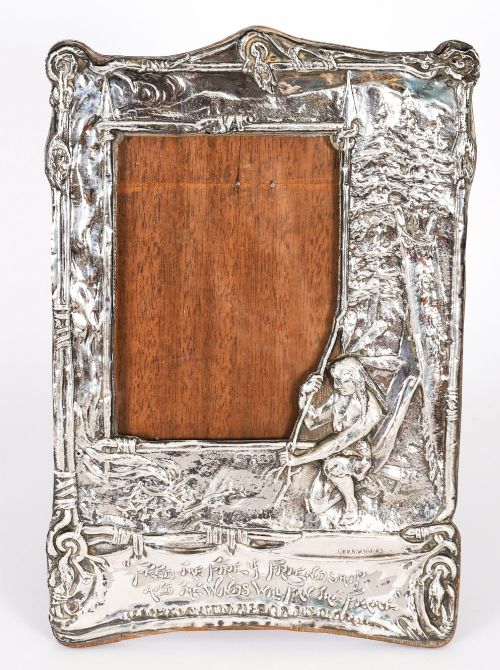
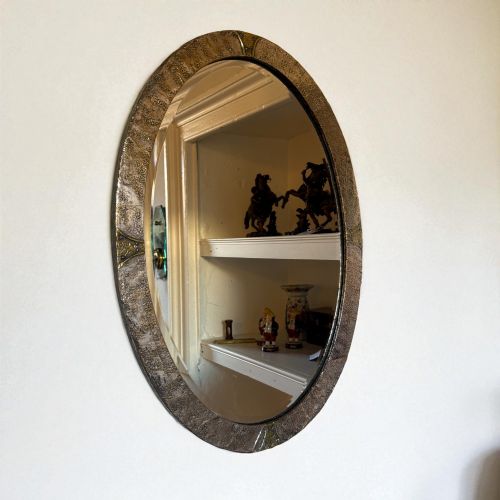
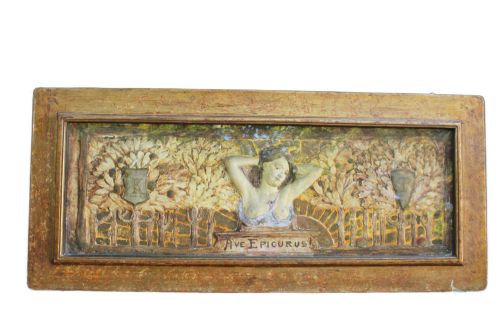
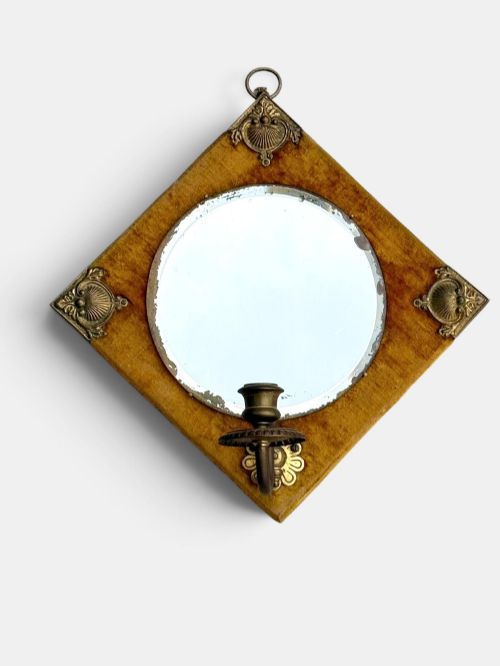
When you search for arts and crafts framed art, you encounter mirrors, plaques, and mounted works created across the late nineteenth and early twentieth centuries. The selection leans heavily towards copper and brass framed wall mirrors, alongside framed tiles, textile panels, and watercolours.
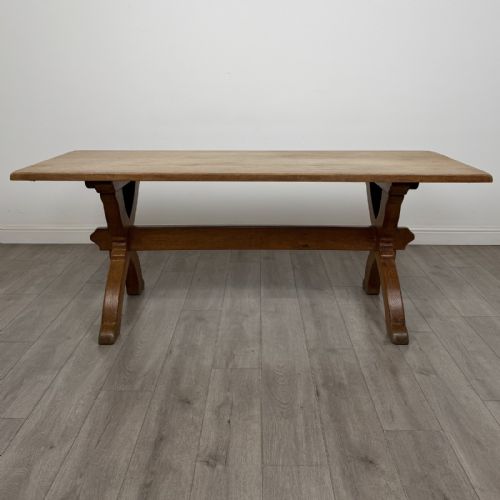
These items emerge from periods spanning Victorian production through to the Edwardian era and the nineteen-twenties. Workshops and makers utilised durable woods like oak alongside beaten metals to produce functional household objects with distinct artistic merit.
The objects serve as focal points for walls and mantels, combining utility with decorative handcraft. Buyers find pieces ranging from simple geometric brass frames to elaborate copper repoussé mirror surrounds featuring stylised natural motifs.
How they were made
Makers shaped sheet copper and brass by hand, employing repoussé and hammering techniques to raise designs from the metal surface. These metal frames often surround bevelled glass or ceramic tiles, secured to solid timber backings.
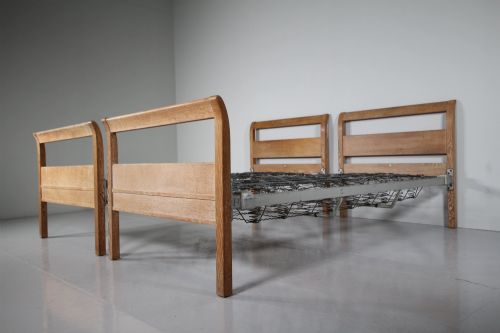
Joinery on wooden components relied on traditional methods, frequently utilising oak, fruitwood, or chestnut. Artisans integrated natural materials such as fabric, glass, and iron into the construction, maintaining a visible connection to the raw medium.
Arts and Crafts Framed Art Retail Price Guide 2026
Typical asking prices for arts and crafts framed art among the pieces listed under this phrase on Sellingantiques today, from the lower quarter to the upper quarter. They describe what is for sale here now, not the wider market.
Listings feature oak, copper, and brass across pieces dated from the nineteenth century through the nineteen-thirties.
What varies in quality
The depth and crispness of the hand-hammered metalwork set superior examples apart from simpler production runs. Skilled artisans achieved complex relief patterns in copper and brass that catch the light with greater nuance.
Construction details in the timber framing and the quality of the glass or ceramic inserts dictate the overall standard. Pieces bearing workshop marks or labels from notable makers demonstrate higher execution levels than unsigned items.
Heals·Stanley Webb Davies·Oliver Morel·Liberty and Company·William Hutton and Sons·Sherwin and Cotton·James Shoolbread and Co·Shapland and Petter·Herbert Charles Nye
The Arts and Crafts Framed Art Glossary
- Repoussé
- A metalworking technique where the artisan hammers the design from the reverse side to form a raised relief on the front. This method defines the decorative borders of many period mirrors.
- Bevelled glass
- Glass with an angled edge cut and polished to a specific angle around the perimeter. This treatment adds depth and refracts light differently than flat plate glass.
- Polychrome
- Painted, printed, or decorated in several colours. Plaster reliefs and ceramic tiles often utilise this finish to highlight figurative details.
- Stained glass
- Glass coloured by the addition of metallic salts during its manufacture, traditionally assembled with lead cording. Panels of this material form decorative wall art and window insertions.
- Stylised
- Representing forms in a non-naturalistic way according to conventional rules or design motifs. Arts and crafts pieces frequently apply this approach to floral and arboreal subjects.
Arts and Crafts Framed Art: Frequently Asked Questions
How do I clean a copper frame?
Dust the metal gently with a soft dry cloth to remove surface particles.
Avoid abrasive polishes that strip away the natural patination built up over decades.
Are these mirrors original to the period?
Most pieces date from the late Victorian era through the nineteen-twenties, matching construction methods of the movement.
Inspect the backing boards and fixings to confirm consistency with the stated manufacturing era.
Can these heavy wall pieces be hung safely?
Solid oak and thick metal frames require sturdy picture wire and appropriate wall fixings.
Verify the condition of the original hanging loops before mounting them on plaster walls.
What is the difference between brass and copper frames?
Copper contains pure metal that develops deep brown and red tones with age.
Brass is an alloy of copper and zinc, yielding a brighter golden hue that responds well to traditional interiors.