



Art Nouveau Stone Bust
These art nouveau stone bust pieces capture organic grace in carved alabaster and marble, offering timeless elegance for any room.
Art Nouveau Stone Bust
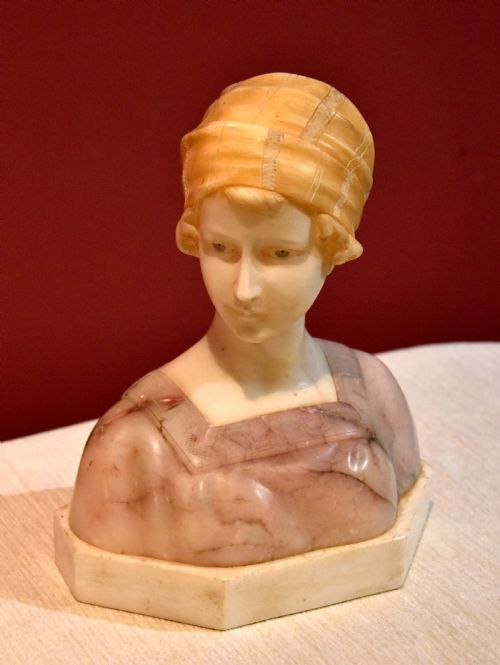
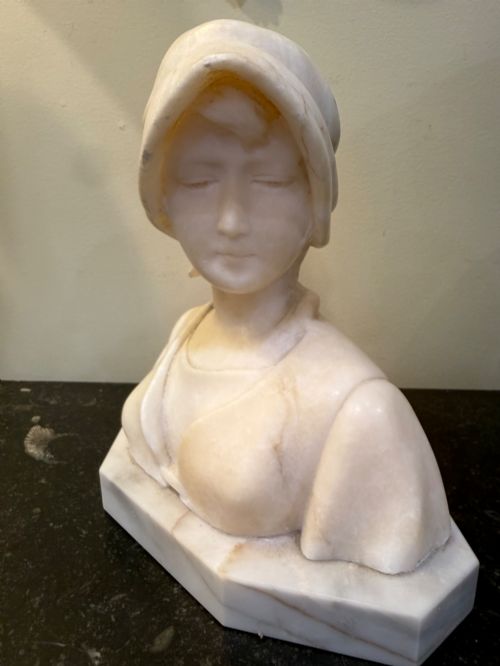
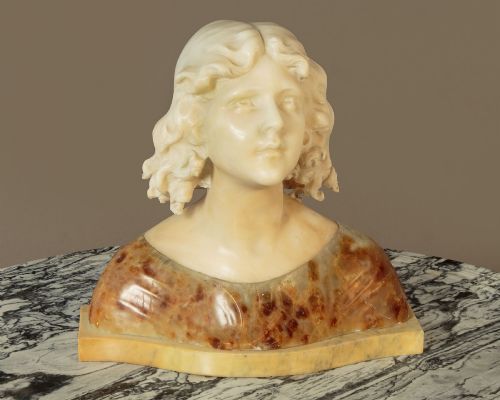
An art nouveau stone bust portrays female figures with flowing hair and naturalistic details, typically produced around the turn of the twentieth century. These sculptural works reflect the international artistic movement that valued fluid lines over rigid classical symmetry.
The pieces on this page most commonly take the form of young women and girls rendered in soft stone. They range from intimate cabinet sculptures to larger decorative portrait works.
Origins span across French and Italian studios of the late nineteenth and early twentieth centuries. Collectors encounter both unsigned decorative pieces and signed works by established sculptors.
Materials and carving techniques
Alabaster serves as the primary material for these sculptures, chosen for its translucent quality and soft texture. Artisans carved the stone by hand, finishing the surfaces to highlight the subtle grain and warmth of the material.
Art Nouveau Stone Bust Retail Price Guide 2026
Typical asking prices for art nouveau stone bust among the pieces listed under this phrase on Sellingantiques today, from the lower quarter to the upper quarter. They describe what is for sale here now, not the wider market.
Current listings feature sculptures dated across the nineteenth and twentieth centuries, spanning the Arts and Crafts, Edwardian, and Art Nouveau styles.
Assessing sculptural quality
Quality in these carvings rests entirely on the sensitivity of the handwork in the hair and facial expression. Superior pieces display fluid, undercut locks and lifelike depth in the eyes, whereas lesser examples remain stiff and shallow.
The choice of stone further dictates the standard of the piece, with translucent alabaster showing even mineral deposits rather than distracting grey veining. Signed works by notable carvers demonstrate a higher tier of anatomical precision and artistic ambition.
Auguste Henri Carli·Auguste Moreau·A. Cipriani
The Art Nouveau Stone Bust Glossary
- Alabaster
- A soft, fine-grained stone prized for its translucency and ease of carving. It allows light to penetrate the surface slightly, giving skin a warm glow.
- Carrara Marble
- A type of white or blue-grey marble from the mountains of Carrara in Tuscany. Sculptors have valued it since antiquity for its purity and fine crystal structure.
- Art Nouveau
- An international style of art and architecture that peaked in popularity around nineteen hundred. It is characterised by intricate linear designs and flowing, organic motifs inspired by climbing plants and natural forms.
- Portrait Bust
- A sculpted representation of a person from the chest up. These works focus on capturing the likeness and character of the subject.
Art Nouveau Stone Bust: Frequently Asked Questions
How should I display my sculpture?
Place the bust on a sturdy console table or pedestal away from direct sunlight and moisture. Soft, directional lighting enhances the translucent quality of the alabaster.
Keep the piece away from high-traffic areas where it might suffer accidental knocks. Gentle dusting with a dry microfiber cloth is all the maintenance required.
How do I date an alabaster bust?
Stylistic clues such as the hairstyle and clothing of the subject offer the clearest indication of age. Figures with elaborate Gibson Girl pompadours or flowing loose hair usually point toward the nineteen hundreds.
Signatures or foundry marks on the base provide further historical context. Material choices also align with specific manufacturing periods across French and Italian workshops.
Are these sculptures fragile?
Alabaster is a relatively soft mineral that can scratch or chip if handled carelessly. Heavy impacts will damage protruding elements like carved fingers or delicate curls.
Lifting the sculpture requires supporting both the main body and the base simultaneously. With sensible placement, the stone remains stable over generations.