




Alabaster Marble Bust
An alabaster marble bust brings the quiet dignity of classical portraiture directly into a room, capturing subjects from young ladies to historical figures in softly translucent stone.
Alabaster Marble Bust
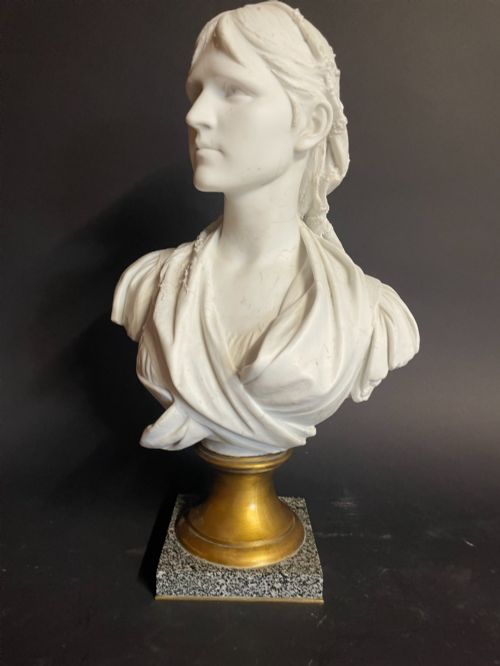
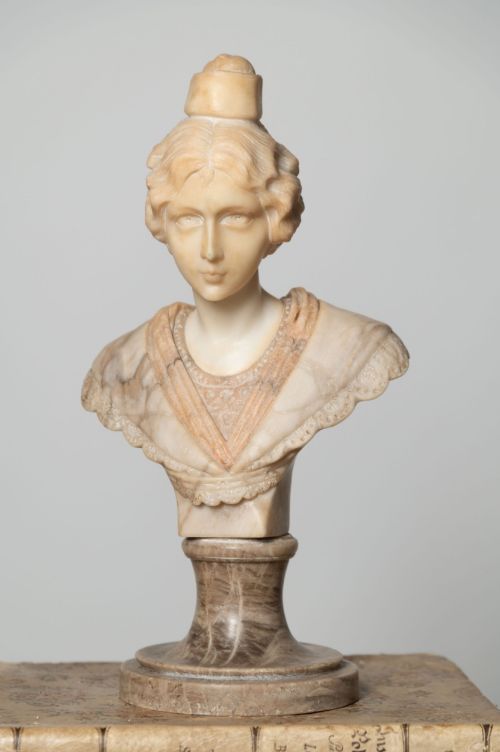
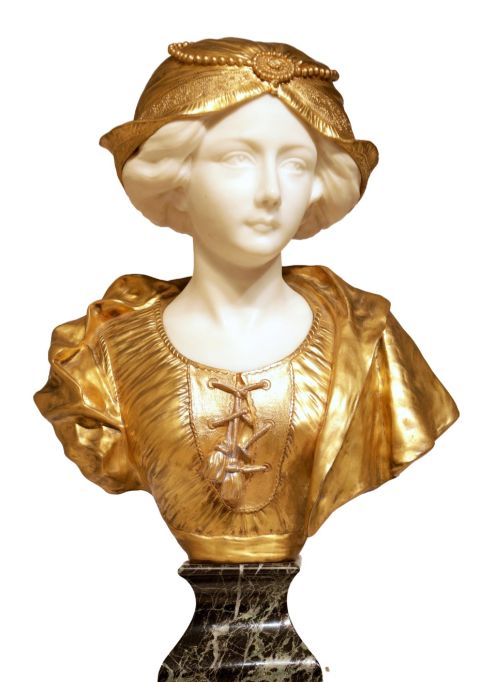
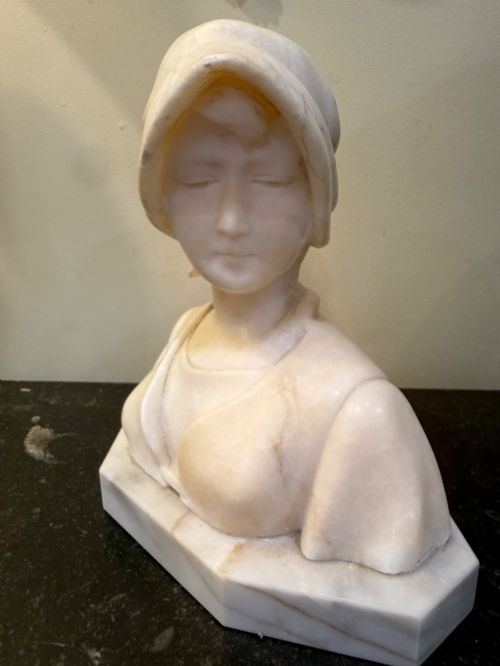
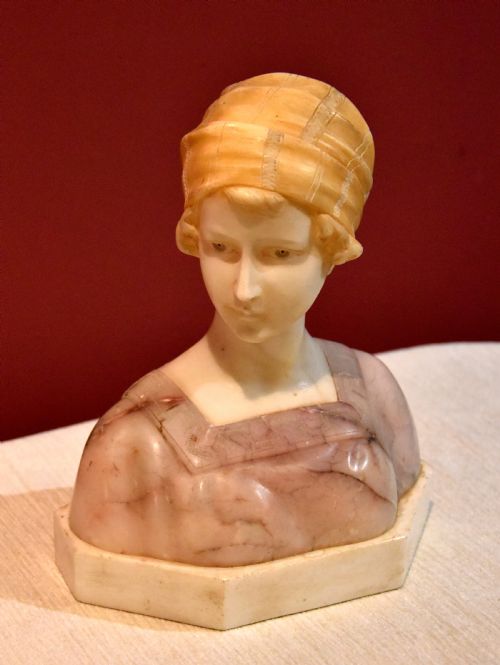
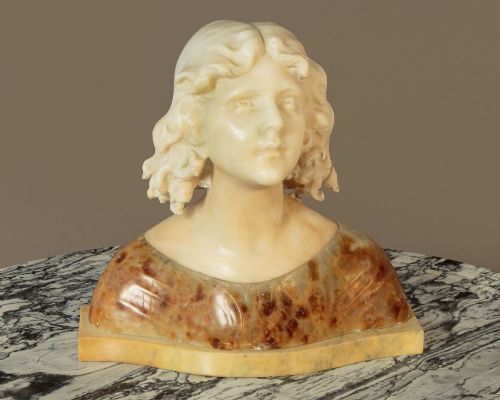
When you search for an alabaster marble bust, you are looking at carved sculptural portraits that emerged primarily during the nineteenth and early twentieth centuries. These pieces range from Neoclassical interpretations of classical figures like Dante and Apollo Belvedere to Art Nouveau depictions of young women adorned with turbans or laurel leaf crowns.
The versions you are most likely to meet on this page span French and Italian workshops from the 1850s to the 1930s. They appear as standalone library busts, wall plaques, and occasionally paired with matching plant stands or pedestals.
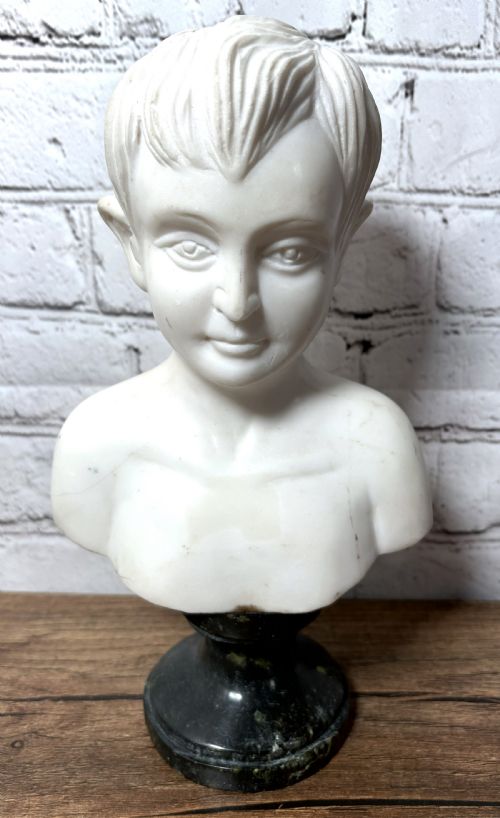
Subjects include anonymous girls and gentlemen alongside identifiable literary and historical characters like Beatrice and Virgil. Most pieces focus on female portraits, often combining white or tinted stone with contrasting bases.
How They Were Made
Carving an alabaster marble bust requires meticulous hand-chiselling and polishing of soft gypsum-based alabaster or harder crystalline marble. Sculptors frequently combined white stone with secondary materials such as gilt bronze, brass, or ormolu to highlight drapery, hair ornaments, and clothing details.
Many works incorporate specimen marble or granite for bases and pedestals, creating a deliberate contrast in colour and texture beneath the main portrait. Signatures and titles were often incised directly into the stone or onto attached metal plaques by the carver.
Materials documented across the inventory include alabaster, white marble, granite, gilt bronze, and multi-coloured specimen marble.
What Varies in Quality
Material selection also dictates quality, with finer pieces utilising flawless, evenly translucent alabaster free from heavy discoloration. The integration of secondary elements like ormolu mounts or multi-coloured specimen marble bases adds depth and sophistication to the composition.
Affortunato Gory·Auguste Henri Carli·G.V. Vaerenbergh·Joseph Gott·R.LUSILI·Mieczyslaw Leon Zawiejski·Pugi·GREUZE·Gustave Van Vaerenbergh·Giuseppe Bessi
The Alabaster Marble Bust Glossary
- Alabaster
- A fine-grained, translucent stone that is softer than marble, making it popular for detailed nineteenth-century portraiture and decorative sculptures.
- Specimen marble
- Polished pieces of various coloured marbles assembled to create decorative bases, pedestals, or architectural elements beneath a main sculpture.
- Ormolu
- Gilt bronze mounted onto furniture and sculptures, providing metallic highlights to contrast against white stone.
- Neoclassical
- A revival style drawing inspiration from the classical art and culture of ancient Greece and Rome, prominent in nineteenth-century portrait busts.
Alabaster Marble Bust: Frequently Asked Questions
Where were these busts made?
Many of these sculptures originated in Italian and French workshops during the nineteenth and early twentieth centuries. Artisans in regions known for stone-carving produced portraits ranging from classical literary figures to contemporary young women.
Export markets across Europe and Britain distributed these decorative works to homes seeking classical refinement. Workshops often signed their output on the reverse or along the base edge.
How do I clean alabaster?
Alabaster is a relatively soft stone that absorbs moisture and is easily scratched by abrasive materials. Dusting gently with a dry, soft brush is the safest method for routine maintenance.
Water and chemical cleaning agents should be avoided entirely because they can stain the porous surface and dissolve the delicate outer finish. Professional conservation advice is recommended for removing ingrained dirt.
Are these pieces signed?
Numerous sculptures feature signatures, monograms, or foundry marks carved directly into the stone or cast into attached metal elements. Identifying marks point to specific makers active in French and Italian studios.
Unsigned works remain common, often reflecting the high volume of commercial sculpture produced during the Victorian and Edwardian periods. Quality and carving technique often take precedence over a signature when evaluating these items.
How do I style a bust at home?
Placing a portrait sculpture atop a wooden sideboard, library table, or dedicated pedestal allows the carved details to catch natural light. Pairing them with complementary items from the same period creates a cohesive interior scheme.
Positioning them away from direct sunlight and heat sources protects the vulnerable stone from temperature shock and drying. Stability is essential, so sturdy surfaces prevent accidental tipping of heavy marble pieces.