


Art Nouveau Pottery Pair
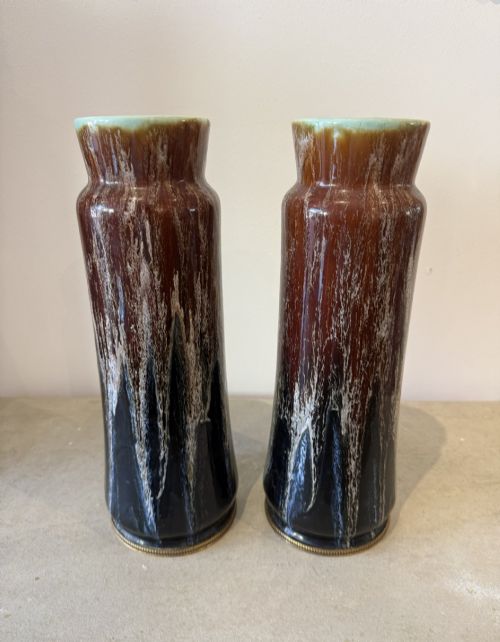
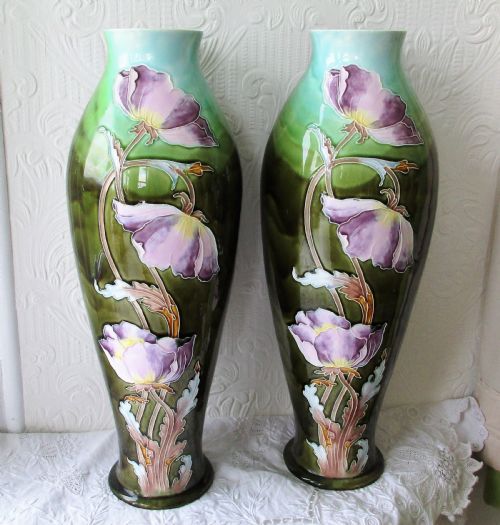
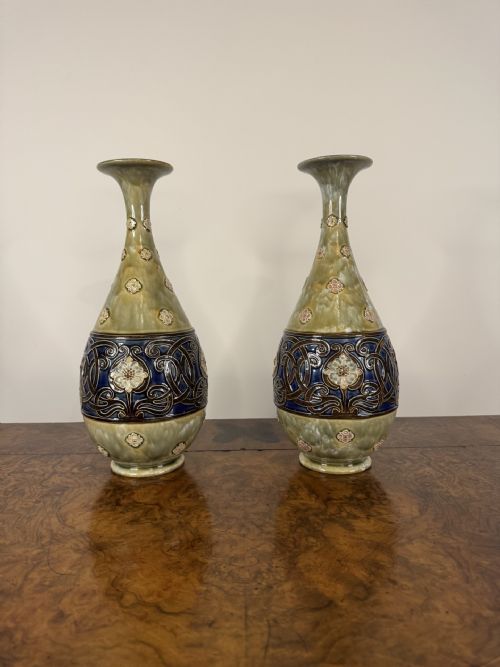
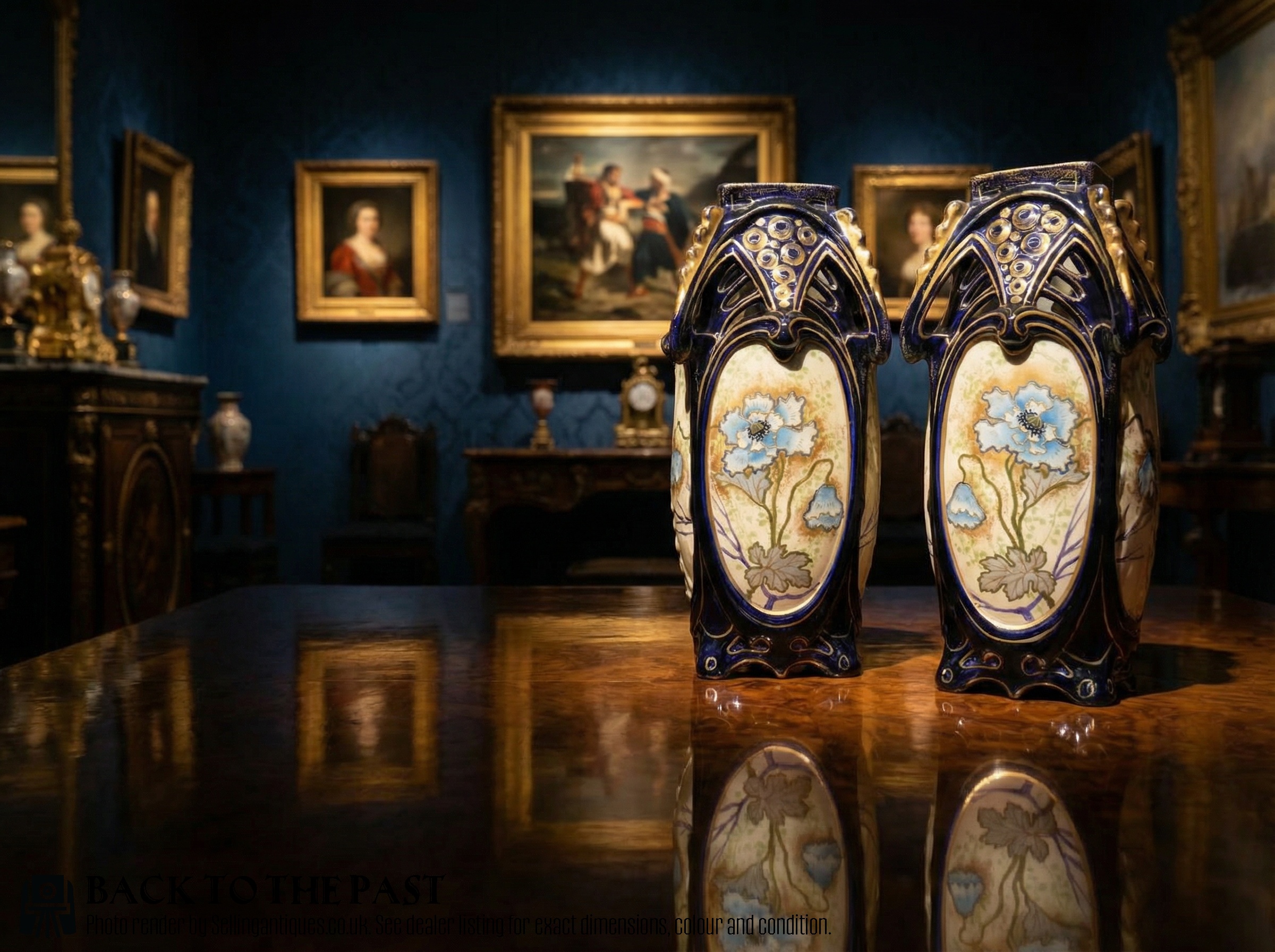
These art nouveau pottery pair selections bring together matched vessels and figures from the late nineteenth and early twentieth centuries.
Art Nouveau Pottery Pair
An art nouveau pottery pair consists of matched vases, jugs, ewers, figures, or candlesticks created during the height of the movement and surrounding decades. Buyers searching for an art nouveau pottery pair look for symmetry and balance in dual decorative objects that display the characteristic organic lines of the era.
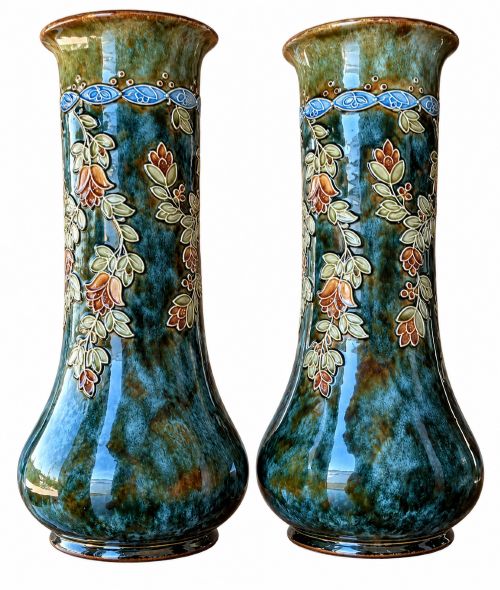
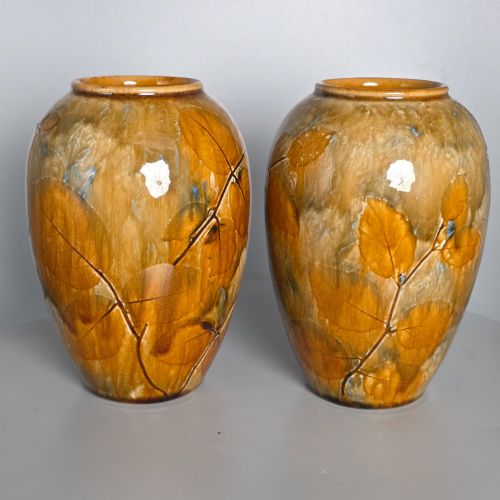
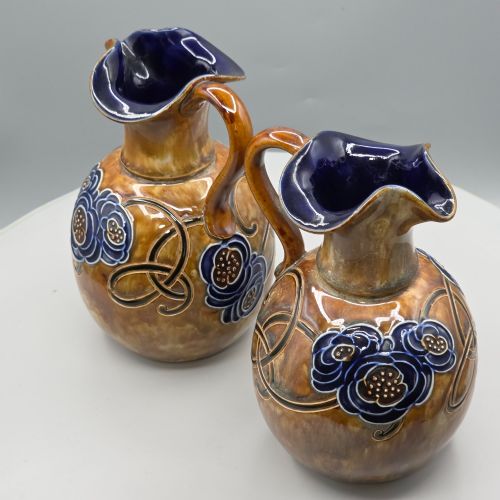
The most common examples on this page are matched pairs of stoneware and earthenware vases, frequently originating from major potteries such as Royal Doulton and various European workshops. These items range from smaller baluster vessels to large decorative pieces shaped with fluid floral and leaf motifs.
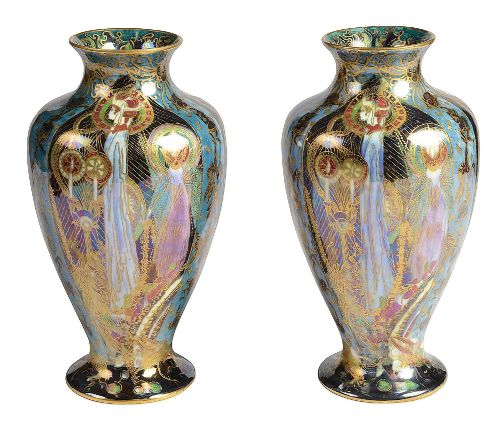
Periods represented stretch from the late nineteenth century through the Edwardian era into the nineteen-twenties, incorporating related styles like Arts and Crafts and early Art Deco. Such pairs were designed to sit symmetrically on mantelpieces, sideboards, or console tables in period interiors.
Materials and methods
Potters utilised stoneware, earthenware, and porcelain as the primary bases, shaping the clay either by throwing on a wheel or by casting in moulds. These ceramic bodies were then finished with specialist glazes, enamel, or occasional touches of gold leaf to accentuate the relief decoration.
Surface decoration relied heavily on hand-painted botanical motifs, slip trailing, and specialised glaze effects that created mottled or lustrous finishes. Workshops combined traditional throwing with applied moulded elements, particularly on larger ewers, jardinières, and sculptural figures.
Several vases carry the distinct thumbprints of nineteenth-century throwers who worked the clay before the kiln fires set the glaze forever.
Understanding quality
Quality in an art nouveau pottery pair rests upon the crispness of the modelled detail and the sophistication of the glaze application. Superior examples display confident, hand-painted decoration and precise control over kiln effects, whereas lesser pieces show mechanical uniformity or muddy glaze pooling.
The reputation of the maker and the specific artist or designer involved elevate certain pairs above standard commercial output. Distinctive forms, complex multi-fired glazes, and well-documented studio signatures separate standard production runs from exceptional workshop achievements.
Royal Doulton·Doulton Lambeth·Royal Dux Bohemia·Moorcroft Macintyre·Ernst Wahliss·Rozenburg·Boch Freres·Wedgwood·TG Green·Decoro England
The Art Nouveau Pottery Pair Glossary
- Stoneware
- A robust, vitrified ceramic fired at high temperatures until non-porous. It accepts rich chemical glazes that produce distinctive tactile surfaces.
- Earthenware
- A porous pottery body fired at lower temperatures which requires a glazed surface to hold liquids. It forms the base for many brightly coloured decorative wares.
- Baluster
- A vase shape with a rounded body that tapers toward the neck, resembling a traditional architectural baluster. This silhouette provides a stable base for flowing organic patterns.
- Jardiniere
- A large decorative ceramic pot designed to hold potted plants or flowers. These items often feature prominent handles and heavy relief modelling.
- Lustre
- A type of ceramic glaze containing metallic salts that produce an iridescent sheen upon firing. It catches the light to create shifting colour effects across the surface.
Art Nouveau Pottery Pair: Frequently Asked Questions
How do I display an art nouveau pottery pair?
Place matched vessels symmetrically on a mantelpiece, sideboard, or large table where both pieces can be seen together without crowding. Ensure they have adequate space to display their characteristic organic profiles and glaze variations.
Keep them away from direct sunlight and areas prone to heavy vibrations to protect the ceramic body and any delicate surface enamels.
Are these pairs actually made together?
Most items listed as pairs were produced at the same time in the same workshop, sharing identical clays, glazes, and decorative motifs. Some represent matched sets brought together later in their history based on size, form, and decoration.
Examine the bases and decoration closely to determine if the pieces share sequential numbering or identical artist marks.
How do I tell Art Nouveau from Art Deco?
Art Nouveau pottery relies on asymmetrical, flowing lines inspired by natural forms like stems, flowers, and winding tendrils. The colour palette tends toward muted autumnal tones, greens, and iridescent lustres.
Art Deco leans toward geometric rigour, symmetry, sharp angles, and stylised sunbursts executed in brighter, more saturated colours.