
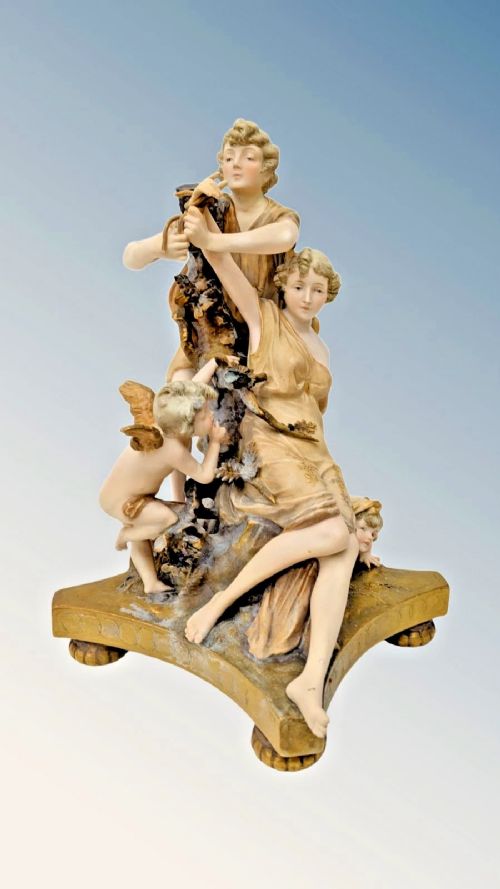


Ernst Wahliss Porcelain
Ernst Wahliss porcelain brings expressive figurative sculpture and fluid vases into a room, defining late nineteenth-century Austrian ceramic design.
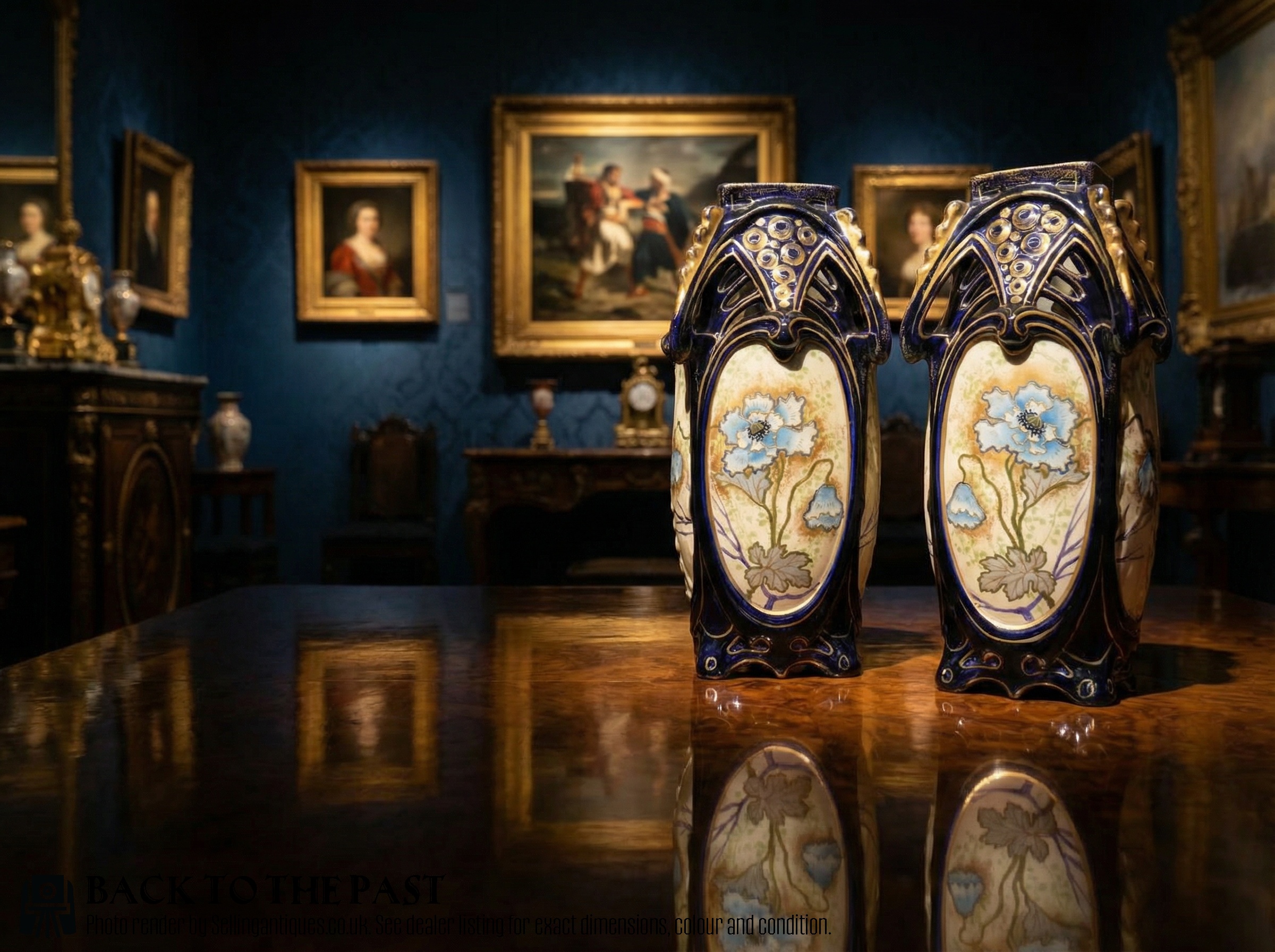
Ernst Wahliss Porcelain
Ernst Wahliss porcelain encompasses sculptural figures, decorative vases, and busts originating from Austria during the late nineteenth and early twentieth centuries. These objects capture the flowing, organic lines characteristic of the period and emerge from the Turn-Teplitz and Vienna traditions.
The most common examples encountered on this page include Art Nouveau figural pieces depicting women, allegorical subjects, and animals alongside vases and cornucopias. Works range from modest spill vases to large sculptural figures and elaborate centrepieces.
How they were made
Potters shaped these pieces using ceramic and porcelain bodies, frequently forming detailed figures and vessels through intricate moulding. Artisans then applied enamel glazes and hand-painted surface decoration to bring depth to the forms.
Gilt, gold leaf, and delicate gilding finish many of the designs, accentuating the contours of robes, hair, and structural details. Earthenware and terracotta also appear alongside porcelain, expanding the textural variety within the production.
Listings feature porcelain, terracotta, and earthenware formed into vases, busts, and figurative sculptures spanning the nineteenth and early twentieth centuries.
What varies in quality
The complexity and execution of hand-painted enamels and gilding determine the refinement of the surface. Rich colour saturation and meticulous detailing on hair, garments, and naturalistic elements elevate an object.
Ernst Wahliss·Alexandra Porcelain Works·Royal Vienna·Teplitz Turn·Turn Wein
The Ernst Wahliss Porcelain Glossary
- Art Nouveau
- A decorative style characterised by sinuous, organic lines and floral motifs, prominent in late nineteenth and early twentieth-century design. It heavily influences the flowing drapery and postures found in these figures.
- Turn-Teplitz
- A region in Bohemia historically renowned for its ceramic production and factories. Many notable Austrian ceramic pieces originated from this industrious centre.
- Cornucopia
- A horn-shaped vessel traditionally symbolising abundance and used as an ornamental vase. These pieces often incorporate figurative elements alongside the horn shape.
- Spill vase
- A small container designed to hold wooden spills used for lighting fires or pipes. They frequently take decorative figural or cylindrical forms on the mantelpiece.
- Enamel
- A glassy substance fused to the surface of porcelain through firing to add colour and decoration. It provides a durable and glossy finish to painted details.
Ernst Wahliss Porcelain: Frequently Asked Questions
How do I identify an Ernst Wahliss piece?
Look for characteristic late nineteenth-century Austrian styling, often combining figurative elements with Art Nouveau floral and linear motifs.
Examine the modelling of the figures and the application of enamel and gilding to match the known output of the Vienna and Turn-Teplitz works.
Where were these ceramics manufactured?
These items were produced in Austria and the wider Austro-Hungarian region, specifically associated with production centres in Vienna and Turn-Teplitz.
Factories in these areas utilised local clays and skilled modellers to create distinctive ornamental porcelain and earthenware.
How should I display a porcelain figure?
Place figures and vases on sturdy surfaces away from high-traffic edges to protect delicate extremities and projecting elements like scarfs or cornucopias.
Ensure they receive balanced ambient light to highlight the nuances of the hand-painted enamel and gold leaf details.
What subjects do the sculptures depict?
The sculptures frequently portray young women, allegorical figures representing concepts like geography, and mythological or literary characters.
Animals, hunters, and nautical scenes also appear, reflecting the diverse decorative repertoire of the period.