


Art Nouveau Maiden Bust
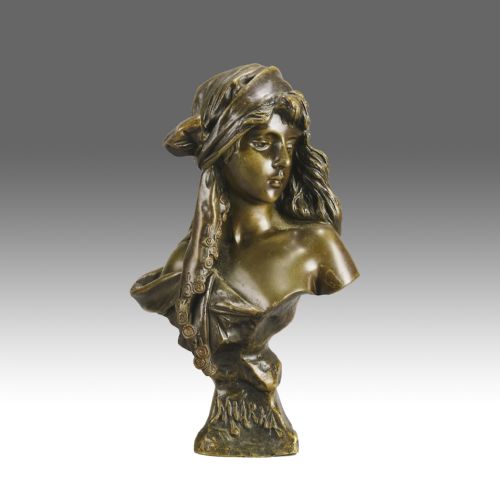
These art nouveau maiden bust sculptures capture the flowing hair, natural forms and ethereal spirit of the turn of the twentieth century.
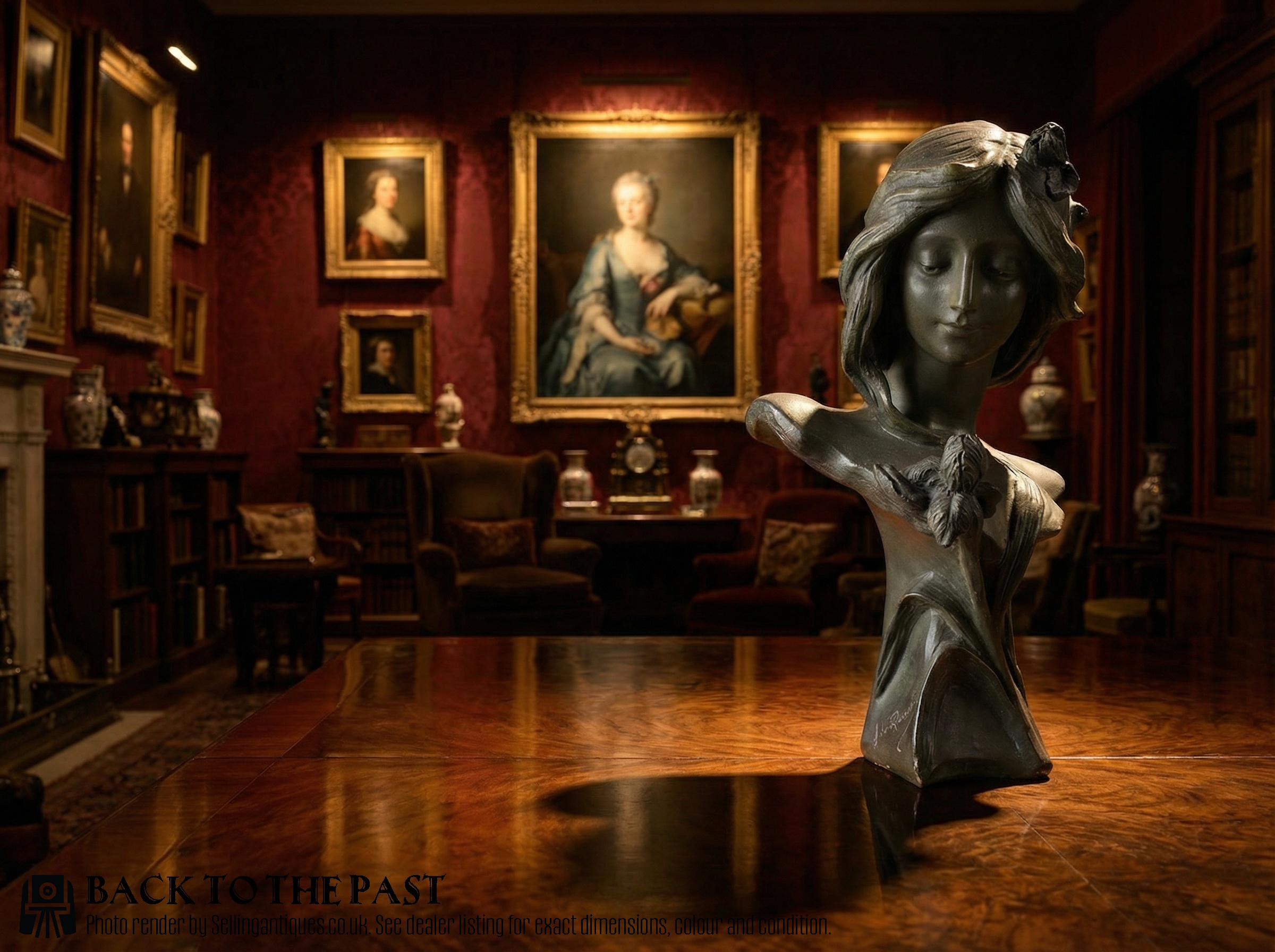
Art Nouveau Maiden Bust
An art nouveau maiden bust presents the head and shoulders of a young woman framed by the flowing lines, organic motifs and floral elements characteristic of the late nineteenth and early twentieth centuries. These sculptures embody allegorical themes, literary heroines or idealized feminine beauty typical of the decorative arts of the period. Buyers most frequently encounter French and Italian examples dating from around eighteen-eighty to nineteen-twenty.
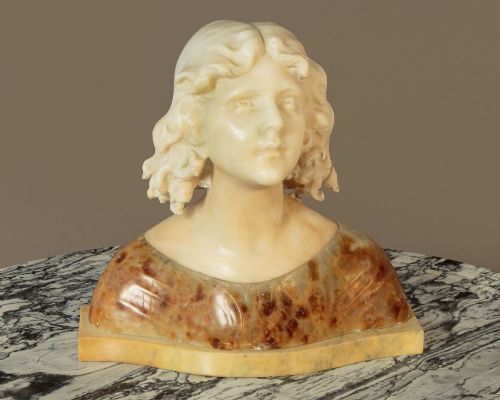
The sculptural forms range in scale from cabinet pieces to large gallery works designed for domestic display on mantelpieces, pedestals and sideboards. Subjects often carry classical or poetic titles such as Daphne, Miarka, Tanagra or Silvia, connecting the visual style to contemporary European sculpture. Many pieces incorporate integral bases of contrasting marble or stone, elevating the profile of the female figure.
Materials and methods
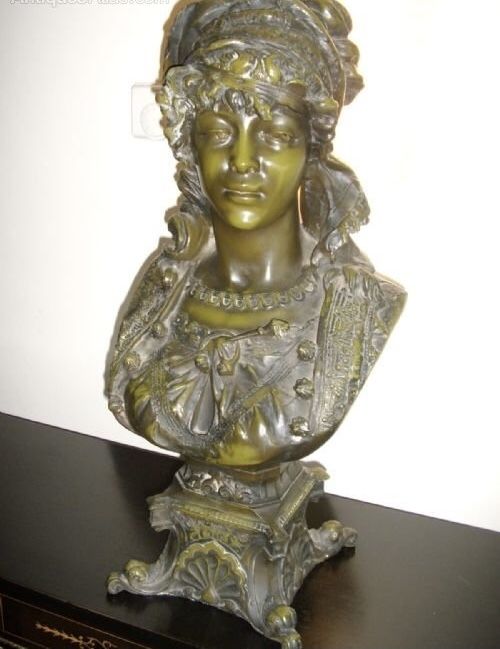
Foundry-cast metals including bronze, patinated bronze, gilt bronze and spelter form the backbone of the sculptural range, often finished with coloured patinas or cold painted surfaces. Bronze casts employ the lost-wax technique to retain fine detail in hair, drapery and facial expressions, whereas spelter serves as a more affordable metallic alternative with similar decorative potential.
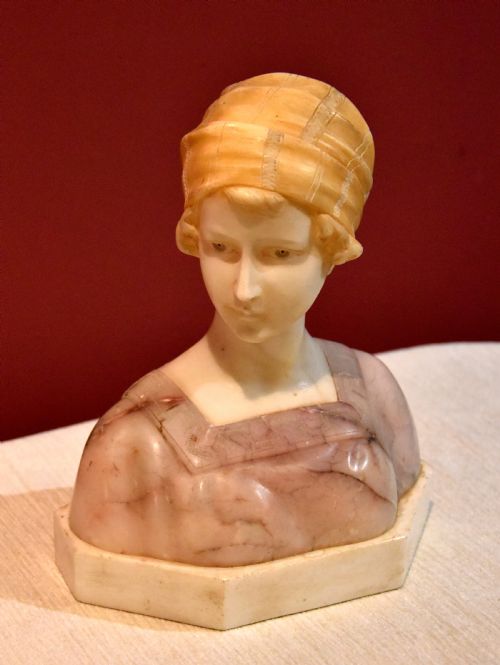
Carved stone works utilise alabaster, Carrara marble and assorted coloured marbles, allowing artisans to exploit the natural translucency and veining of the material for skin and garments. Terracotta and ceramic versions rely on moulded clay fired in kilns, sometimes finished with hand-painted polychrome decoration or lustrous glazes by manufacturers such as Goldscheider.
Several maidens wear remarkably elaborate hats that capture the flamboyant millinery fashions of the Belle Époque.
Judging quality and execution
The reputation of the artist or foundry elevates certain works, distinguishing signed pieces by known sculptors from anonymous factory productions. Original patination and untouched surfaces hold greater aesthetic merit than later repaintings or heavy restoration.
Emmanuel Villanis·Hans Müller·Auguste Henri Carli·Auguste Moreau·A. Gory·A. Cipriani·Goldscheider
The Art Nouveau Maiden Bust Glossary
- Spelter
- A zinc alloy commonly used in the manufacture of decorative sculptures and figures during the late nineteenth century. It frequently received bronze-coloured or painted surface treatments to imitate more expensive metals.
- Patina
- The surface coloration, sheen or oxidation acquired by bronze and other metals over time or applied chemically by the artist. It enhances the visual depth and highlights the contours of the casting.
- Polychrome
- The practice of decorating sculptural surfaces in multiple colours using paints, enamels or glazes. This technique appears frequently on terracotta and ceramic busts from the period.
- Allegory
- The representation of abstract ideas or seasonal concepts through human form and symbolic attributes. Titles such as Summer or specific literary names often denote these thematic works.
Art Nouveau Maiden Bust: Frequently Asked Questions
What materials are used for these busts?
The pieces utilise a diverse range of media including cast bronze, spelter, carved Carrara marble, alabaster and terracotta. Many works also incorporate mixed media bases made from contrasting green or dark marbles.
Selection of material often dictates the weight and appearance of the sculpture, with stone and bronze representing the most enduring mediums.
Where were these sculptures made?
Production was centred primarily in France and Italy, with notable contributions from Austrian ceramic manufacturers. Workshops in Paris and Florence dominated the output of metal castings and carved stone figures during the peak of the movement.
Signatures on the base or truncation often indicate the nationality of the sculptor or the foundry responsible for the edition.
How do I identify a signed piece?
Signatures typically appear incised into the shoulder, base or back of the metal casting or stone carving. They may include the artist's full name alongside foundry stamps or cachets that verify the manufacturing origin.
Familiarity with the distinct script of sculptors helps distinguish authentic signatures from later additions or cast-in facsimile marks.