




Art Nouveau Flower Vase
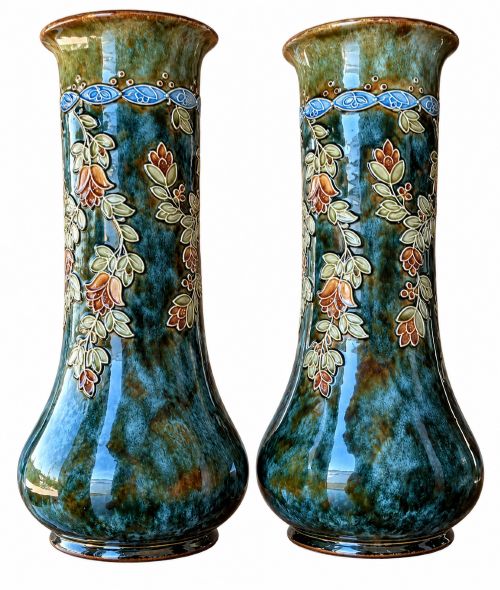
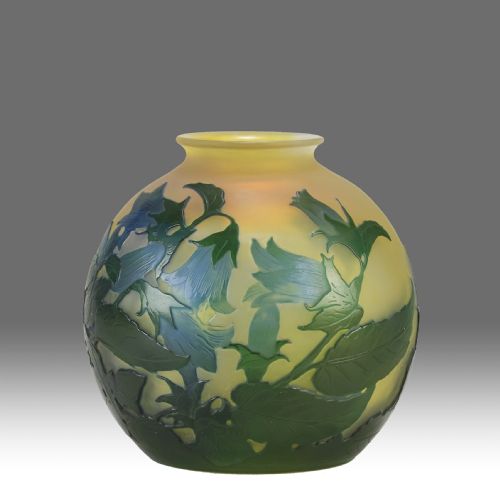
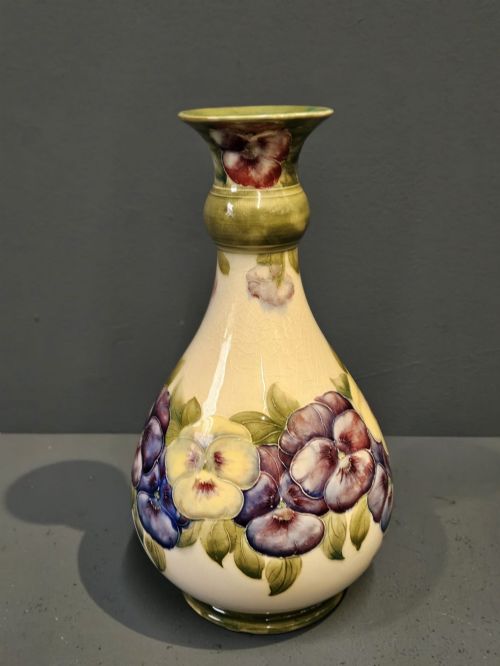
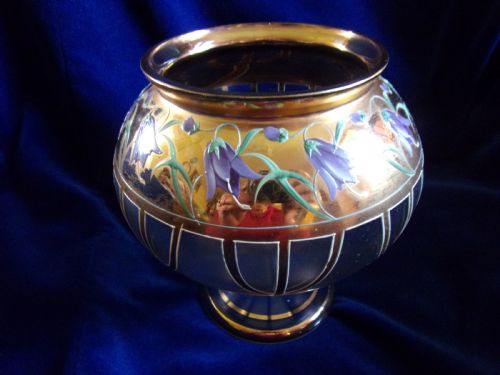
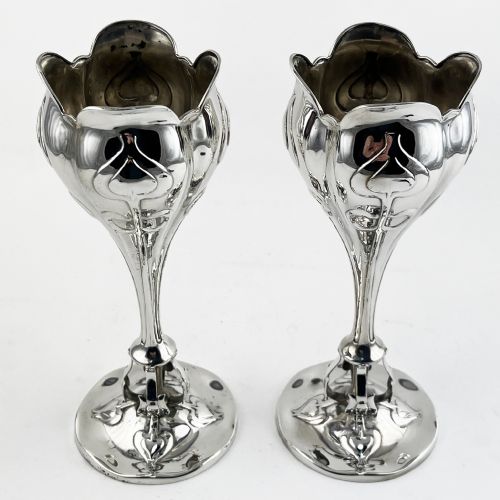
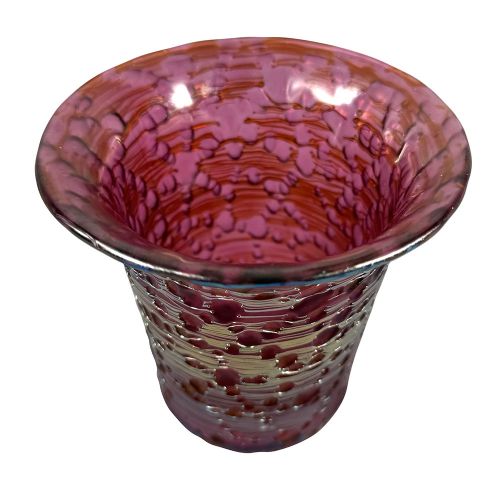
These art nouveau flower vase examples capture the fluid botanic lines of the turn of the twentieth century in glass, ceramic and metal.
Art Nouveau Flower Vase
An art nouveau flower vase brings organic forms and botanical motifs into domestic spaces through flowing lines and asymmetrical shapes. Collectors meet these vessels in various mediums, from blown glass and glazed earthenware to patinated metals.
The objects span production from continental European workshops and British potteries alike. Pieces often take botanical cues from flowers like cornflowers, pansies and lilies, echoing the natural world in their contours.
How they were made
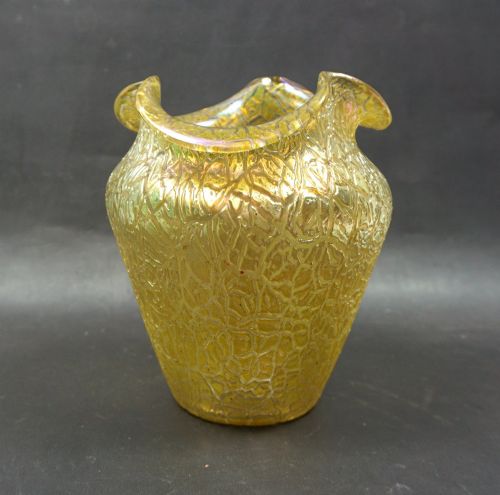
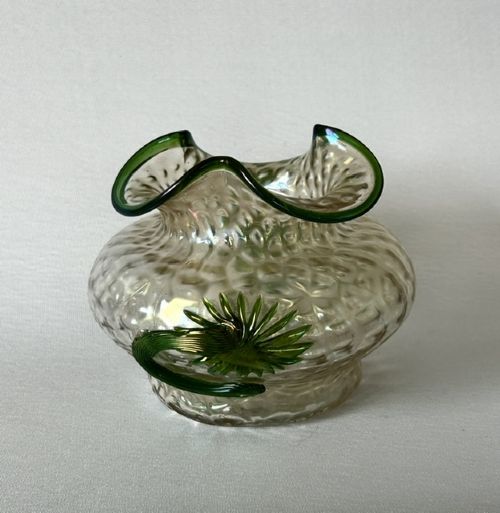
Glassmakers utilised iridescent treatments, cameo layering, and optical blowing to create shifting colour effects across the surface. Ceramic pieces combined earthenware or stoneware bodies with hand-painted glazes, slip trailing, and enamel detailing.
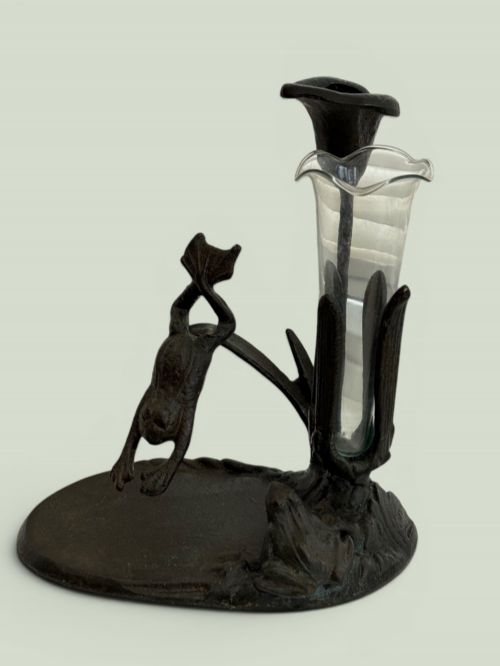
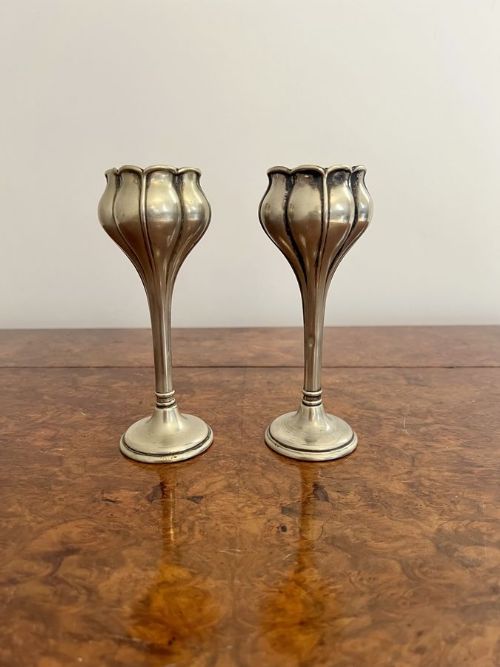
Metalworkers employed silver plating, pewter casting, and bronze patination to fashion sculptural holders and vases with integrated plant motifs. Artisans achieved distinct textures through acid etching, gilding, and applied glass threads.
Several frogs resting on these antique vessels prove that metal amphibians made excellent companions for nineteenth-century flora.
What varies in quality
Quality rests in the harmony of form and surface treatment rather than mere scale or ornamentation. A successful piece demonstrates deliberate control over hot-worked glass or fluid ceramic glazes, where the decoration complements the structural profile.
Makers known for experimental chemistry and design innovation achieve greater depth in iridescent surfaces and multi-layered cameo glass. The precision of hand-painted floral motifs and the crispness of metal casting separate standard production from exceptional studio output.
Emile Gallé·Loetz Witwe·Kralik glassworks·Legras·Daum Frères·Ernst Wahliss·William Moorcroft·Kayserzinn
The Art Nouveau Flower Vase Glossary
- Cameo glass
- A vessel formed of multiple fused layers of glass that are acid-etched or carved away to create a raised design. This technique allows for multi-toned botanical scenes.
- Iridescent glass
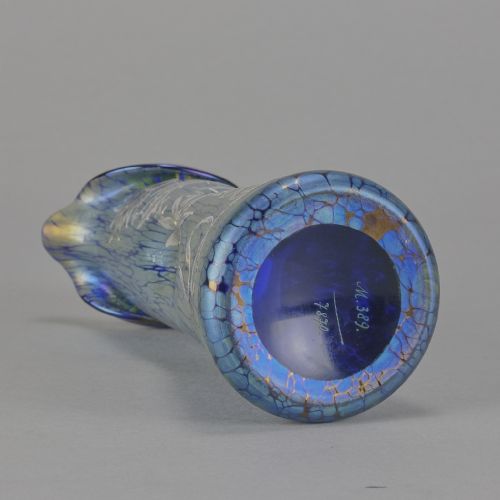
- Glass treated with metallic salts while hot to produce a shimmering, rainbow-like surface effect. Loetz and Kralik frequently utilised this finish.
- Jugendstil
- The German-language manifestation of the Art Nouveau movement, often seen on pewter vessels and continental ceramics. It shares the same organic vocabulary.
- Earthenware
- Porous pottery fired at lower temperatures, commonly used for British art pottery vases decorated with hand-painted floral slips. Royal Doulton and Moorcroft employed this medium.
- Spill vase
- A tall, slender vessel originally designed to hold wooden spills used for lighting fires or pipes. Many examples survive as decorative floral holders.
Art Nouveau Flower Vase: Frequently Asked Questions
How do I identify Loetz glass?
Look for distinctive iridescent finishes, organic bulbous shapes, and subtle optic ribbing in the body. Many pieces also feature polished pontil marks on the base.
The glass often displays metallic sheen effects mimicking butterfly wings or oil slicks, characteristic of Bohemian production from this period.
Were these vases meant for daily use?
Most served as decorative mantel or table centerpieces rather than utilitarian water holders. Their delicate glass bodies and applied metallic details required careful handling.
Owners typically placed potted plants inside or used metal flower frogs to keep stems arranged securely without risking damage to the antique material.
What is cameo glass?
Cameo glass involves layering two or more contrasting colours of glass while molten. The outer layer is then painstakingly carved or acid-etched away to reveal the design beneath.
French makers like Gallé and Daum utilised this labour-intensive method to render intricate floral motifs such as clematis and sweet peas.