
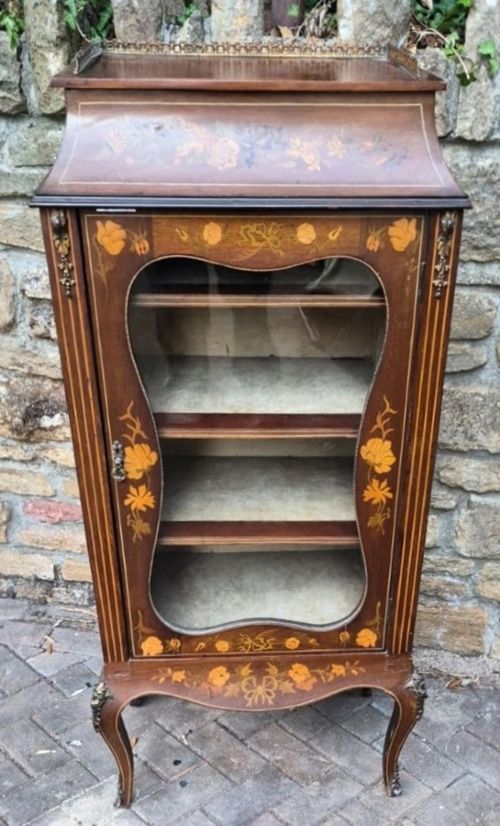
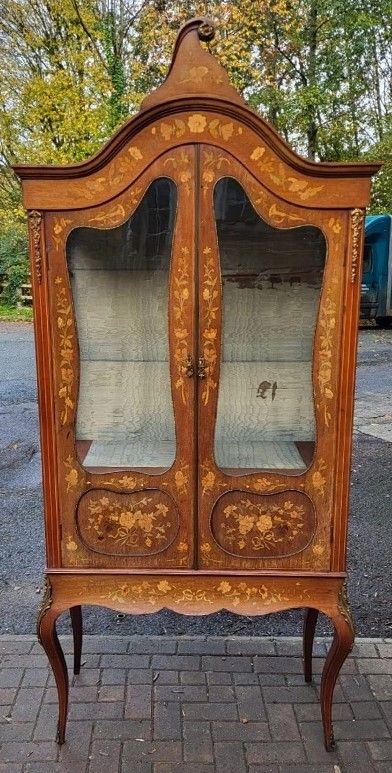
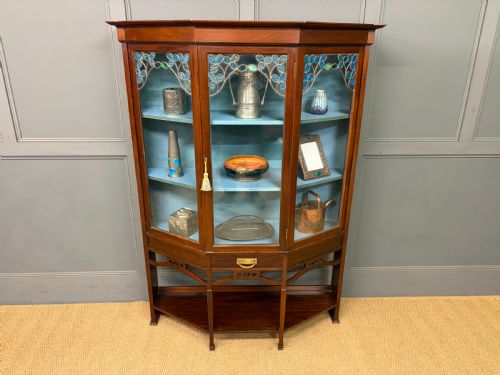


Art Nouveau Display Cupboard
An art nouveau display cupboard brings together flowing organic lines and fine cabinet-making, offering a striking showcase for treasured collections.
Art Nouveau Display Cupboard
An art nouveau display cupboard combines functional storage with the sinuous, nature-inspired motifs characteristic of the turn of the twentieth century. These pieces emerge predominantly from the Edwardian period and the late nineteenth century, spanning Victorian and early twentieth-century workshops.
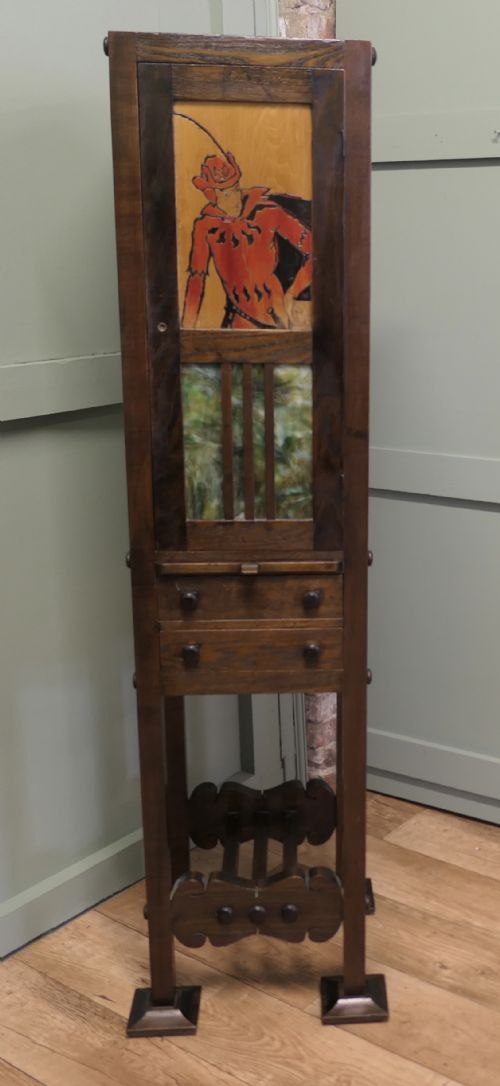
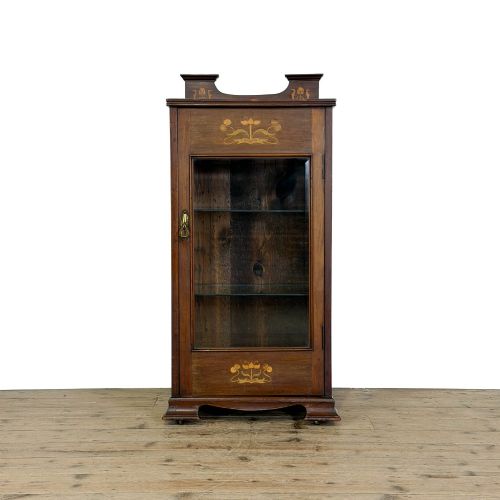
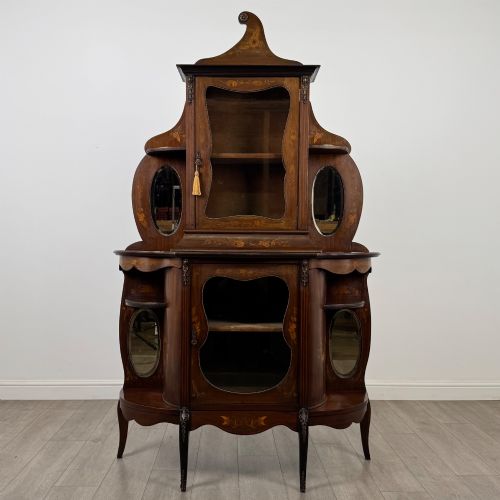
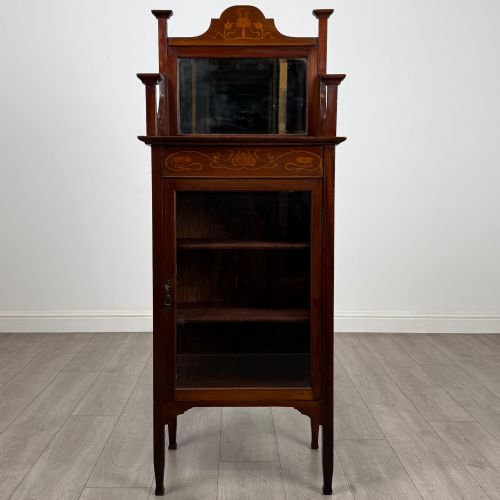
You will most frequently encounter standing mahogany display cabinets and glazed bookcases featuring delicate wood inlay. Forms range from compact wall cupboards and music cabinets to grander double-height corner units and sideboards with integrated display space.
How they were made
Cabinet-makers relied heavily on solid and veneered mahogany, alongside oak and Swedish birch, constructing carcases designed to display precious objects behind glazed panels. Brass hardware and mirrored backs provide internal reflection and structural detail.
Decoration centres on intricate wood inlay and floral marquetry, translating organic flora and flowing whip-lash curves directly into the timber surface. Fabric linings occasionally complement the interior display areas of china and music cabinets.
Several pieces double as music cabinets, proving that Victorians needed a stylish place to store sheet music alongside their porcelain.
What varies in quality
The distinction between standard production and exceptional work lies in the precision of the marquetry and the fluidity of the carved or inlaid motifs. Finer pieces demonstrate meticulous hand-cut wood inlay using varied timbers that articulate the characteristic curves without rigidity.
Proportion and structural harmony also separate ordinary items from superior examples. Cabinets retaining original glazed doors, polished brass fittings, and integrated mirror work represent the higher tier of period craftsmanship.
Shapland & Petter
The Art Nouveau Display Cupboard Glossary
- Marquetry
- Decorative patterns created by fitting together thin veneers of various woods onto a structural surface. This technique allows intricate floral and geometric designs to adorn cabinet doors.
- Secessionist
- A stylistic offshoot of the period that favoured more geometric forms alongside organic lines. It represents a continental European approach closely linked to the broader movement.
- Arts and Crafts
- A design movement emphasising traditional craftsmanship and simple utility, frequently overlapping with the aesthetic of these cabinets. Pieces often highlight honest construction and visible material grain.
- Veneer
- A thin layer of choice wood applied over a secondary timber base to provide a decorative exterior. This method prevents warping while showcasing rich grain patterns.
Art Nouveau Display Cupboard: Frequently Asked Questions
What fits inside an art nouveau display cupboard?
These cabinets suit delicate ceramics, glassware, china, and small collected objects behind their glazed doors. Deeper sideboards and bookcases accommodate larger volumes and mixed decorative items.
The glass panels and optional mirrored backs allow light to circulate around displayed items, making them prominent focal points in a room.
How do I date an art nouveau cabinet?
Dating relies on examining the timber, construction methods, and stylistic markers such as floral marquetry and hardware. Pieces generally fall between the late nineteenth century and the Edwardian era.
Cabinet construction techniques and specific regional influences, such as continental Amsterdam School designs, help narrow down the production period further.
Where should I place a display cabinet?
Position these cabinets away from direct sunlight to protect interior fabrics and polished timber surfaces from fading. Placing them in principal living spaces or dining rooms highlights their decorative cabinetry.
Ensure the floor is level so the glazed doors hang true and open smoothly within their frames.
How do I care for inlaid wood?
Maintain the timber by dusting regularly with a soft, dry cloth and applying traditional wax polish sparingly. Avoid liquid cleaners that can damage delicate marquetry and veneer.
Keeping the room at a stable humidity prevents the solid woods and inlays from expanding or contracting.