


Art Nouveau China Cabinet
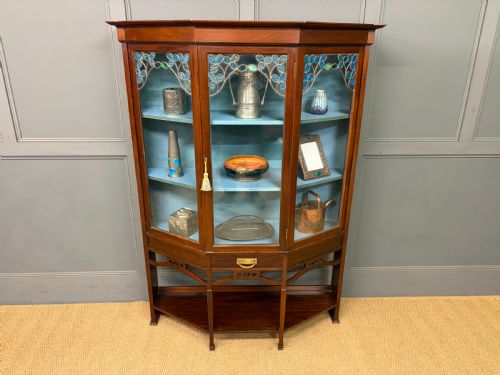
An art nouveau china cabinet brings organic lines and fine cabinetwork together to house precious ceramics.
Art Nouveau China Cabinet
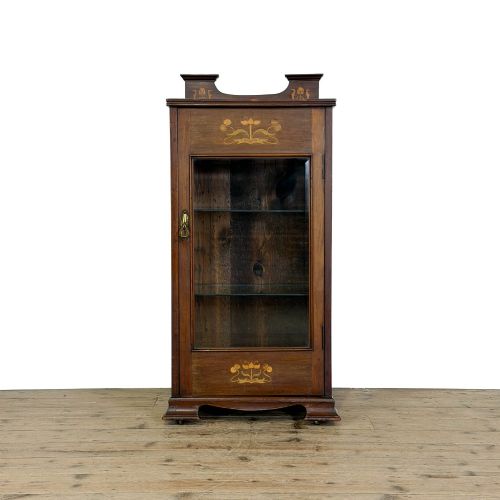
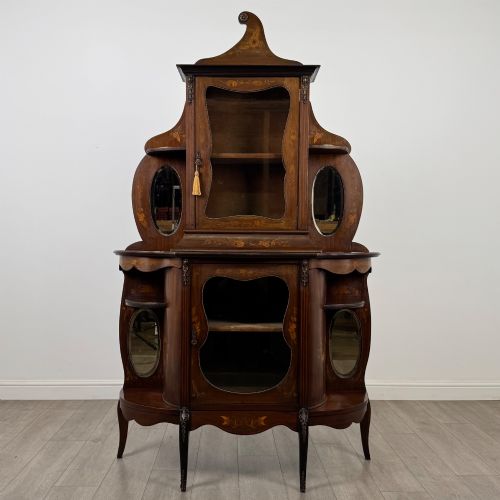
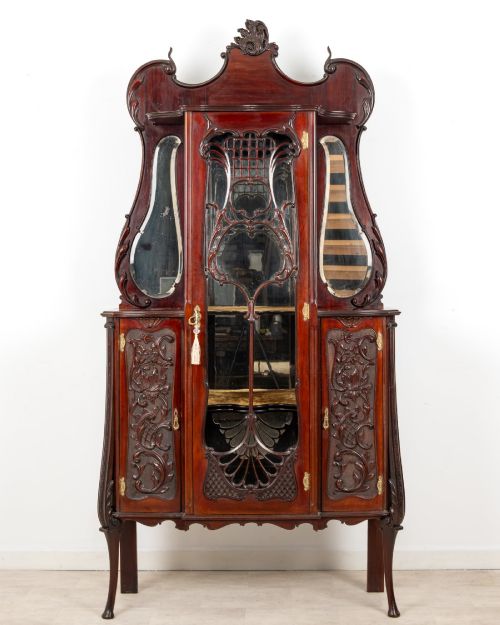
An art nouveau china cabinet is a storage and display piece originating primarily from the late nineteenth and early twentieth centuries, spanning Victorian, Edwardian and Arts and Crafts periods. These pieces combine functional shelving with glazed display areas, designed specifically to showcase decorative china and glassware.
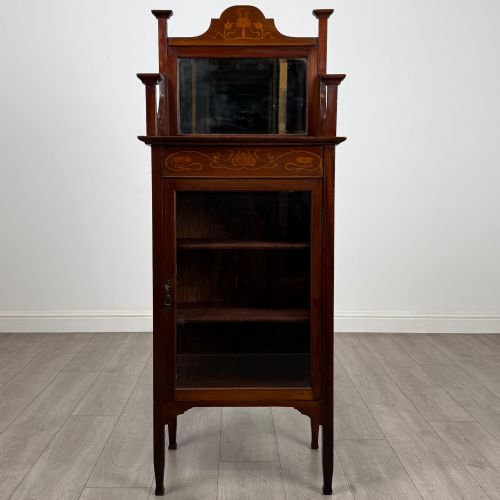
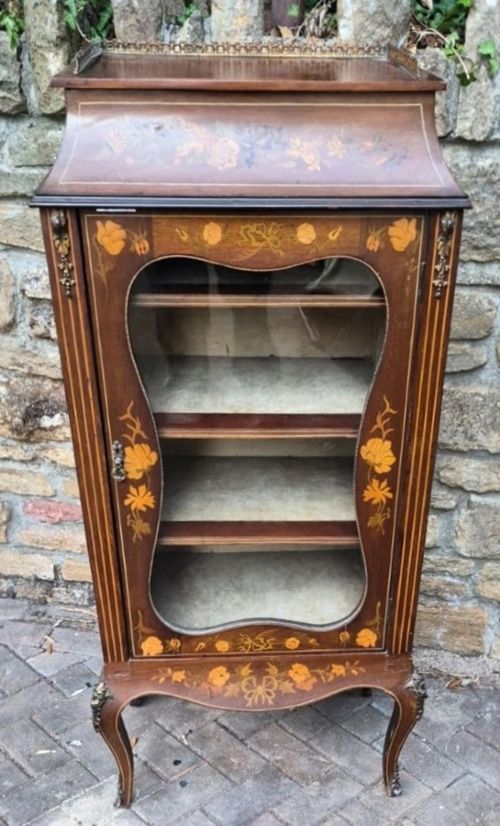
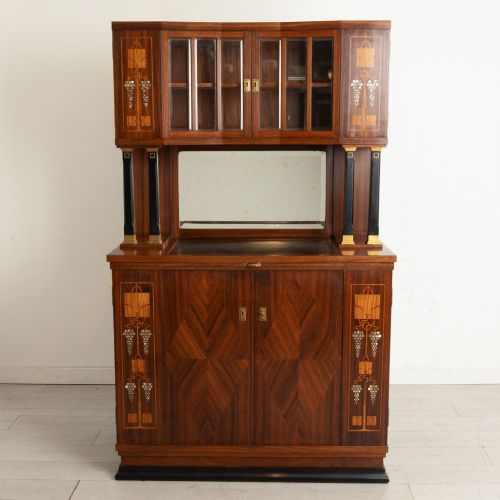
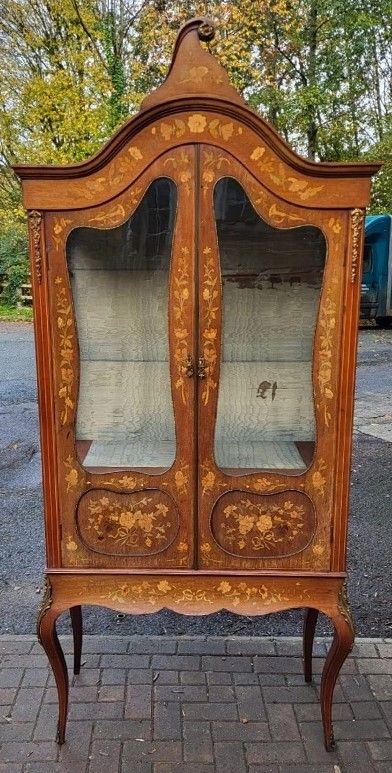
Most examples found here are constructed from mahogany, often enhanced with intricate marquetry and wood inlay, reflecting the dominant styles of the era. Forms range from bow front cabinets to mirror back designs and bookcase hybrids, showing the stylistic crossover between Viennese Secessionist and British design influences.
How they were made
Makers relied heavily on solid and veneered mahogany as the primary timber, complemented by satinwood and diverse wood inlay to create floral and curvilinear motifs. Structural integrity depended on traditional joinery, whilst glass panes were fitted into doors to protect the contents.
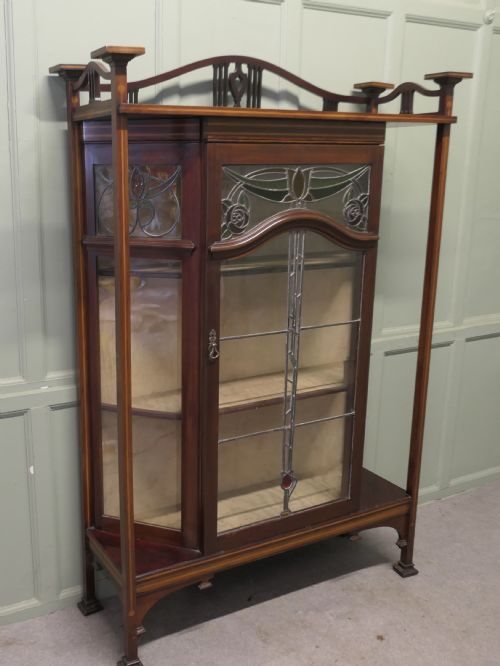
Decorative detailing frequently incorporated brass hardware, mirror glass panels, and occasional stained glass accents. Marquetry techniques allowed artisans to picture natural forms directly onto the wood grain, capturing the essence of the design movement.
Every cabinet holds the quiet ghost of Victorian tea parties behind its glass.
What varies in quality
The standard of a cabinet rests on the precision of its marquetry and the choice of timbers, where varied grains and contrasting woods create depth. Simpler pieces rely on clean proportions, whilst elevated examples demonstrate meticulous hand-carving and thoughtful integration of brass and stained glass.
Construction methods also divide standard production from exceptional works, visible in the smoothness of drawer operations and the integrity of the glazed doors. The attribution to known designers or workshops elevates the significance of certain pieces above standard vernacular items.
Shapland and Petter·August Ungethüm
The Art Nouveau China Cabinet Glossary
- Marquetry
- Decorative woodwork where pieces of veneer are fitted into a ground to form floral or geometric patterns. This technique defines the surface decoration of many Edwardian and late nineteenth-century cabinets.
- Bow front
- A convex, curved front section of a cabinet that softens the rectangular geometry of the room. It appears frequently on mahogany display pieces from this era.
- Viennese Secessionist
- An artistic movement associated with Austrian makers that influenced clean lines and geometric floral stylisation in furniture. Pieces from this tradition often display a distinct continental sensibility.
- Mirror back
- A configuration where silvered glass lines the interior rear of the display space to reflect light through the stored ceramics. This addition brightens dark corners and doubles the visual impact of the contents.
Art Nouveau China Cabinet: Frequently Asked Questions
What is an art nouveau china cabinet?
An art nouveau china cabinet is a glazed wooden display piece designed to hold and exhibit porcelain, typically featuring the flowing, organic lines characteristic of turn-of-the-century design. These pieces emerged during the late nineteenth and early twentieth centuries.
They combine practical storage with decorative glass fronts, often incorporating detailed wood inlay and brass fittings. The form bridges traditional Victorian furniture and modern Edwardian aesthetics.
How were these cabinets used?
These cabinets served primarily to protect and display prized ceramic collections, porcelain tea sets and glassware in formal dining rooms or parlours. The glazed doors kept dust away while allowing owners to exhibit their social standing through fine objects.
Some variations included mirror backs to amplify candlelight or daylight within the display chamber. Lower cupboards often provided additional enclosed storage for table linens or extra china.
How do I date an Edwardian cabinet?
Dating an Edwardian cabinet involves examining construction methods, secondary timbers used in the interior, and stylistic markers such as floral marquetry and brass hardware. Pieces from this period generally date between nineteen hundred and nineteen ten.
Hardware styles, dovetail construction precision, and maker marks or paper labels can also narrow down the manufacturing window. Comparing the design motifs to dated design catalogues provides further chronological context.