



Art Nouveau Glass Cabinet
An art nouveau glass cabinet brings flowing lines and natural motifs into a room, holding china or books behind glazed doors.
Art Nouveau Glass Cabinet
When you search for an art nouveau glass cabinet, you encounter refined display furniture built to showcase precious objects. These pieces date across the late nineteenth and early twentieth centuries, spanning Victorian, Edwardian, and Secessionist periods.
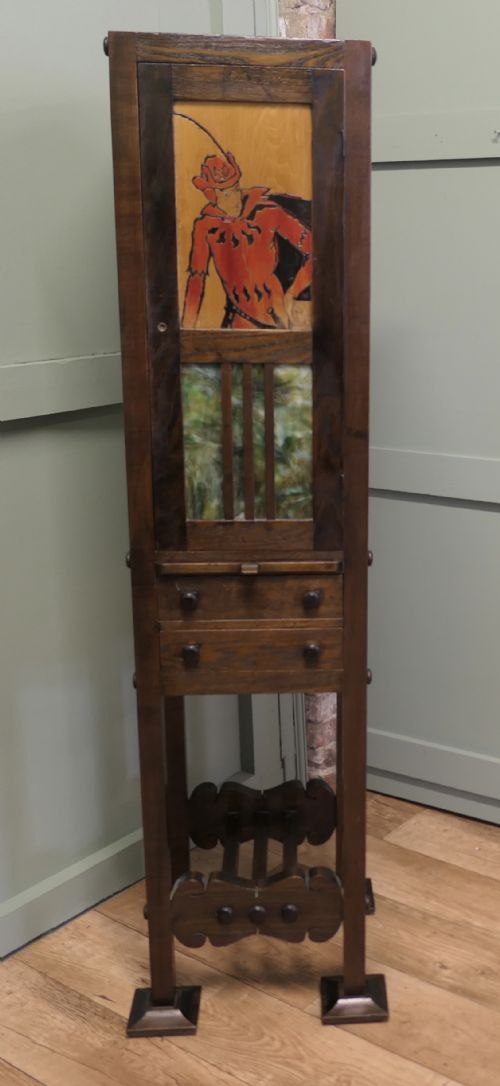
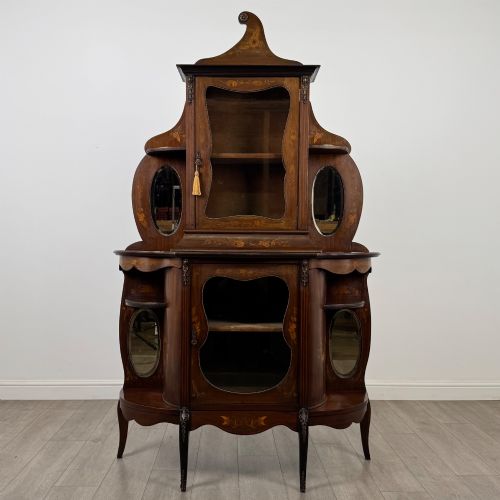
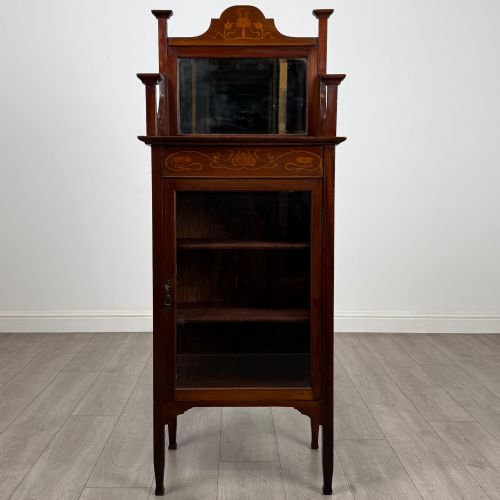
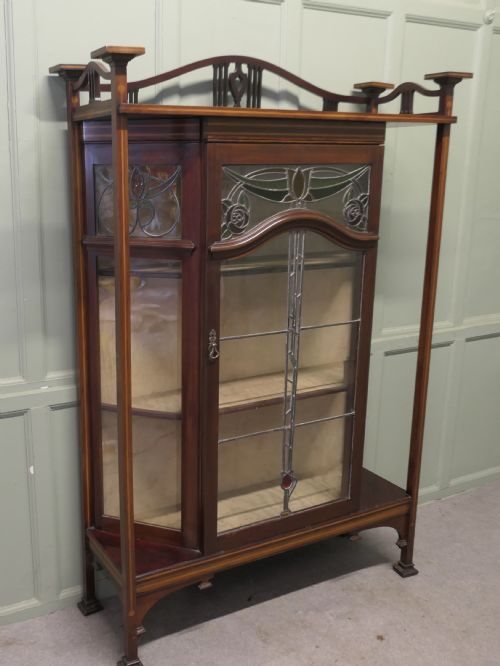
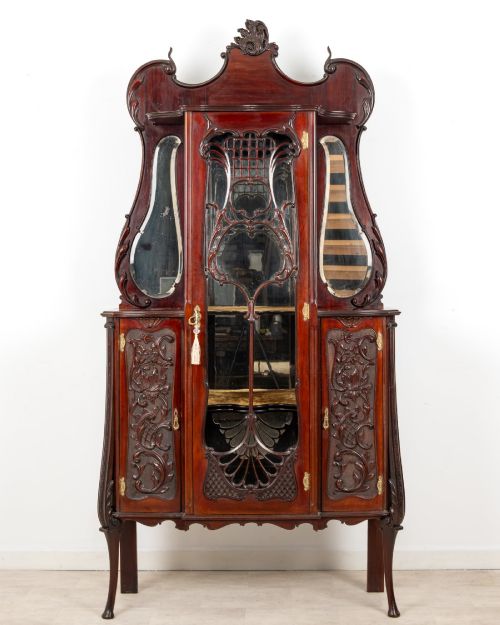
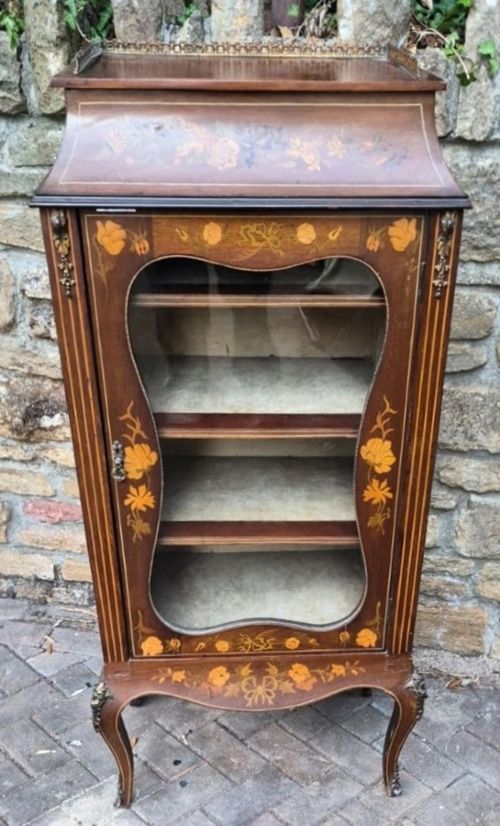
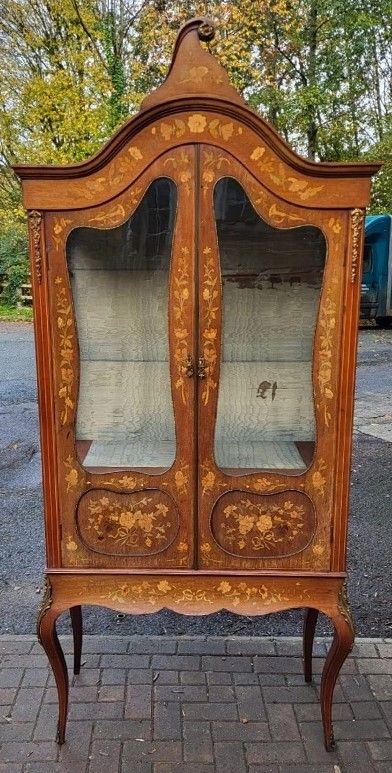
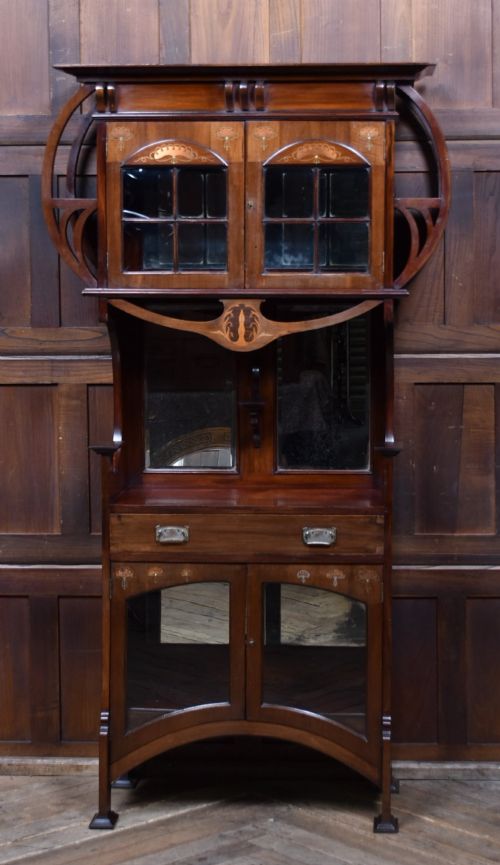
The version you are most likely to meet on this page is a mahogany display cabinet featuring inlaid wood and glazed doors. Alongside these, related forms such as bureau bookcases, writing desks, and sideboards appear.
Makers and designers of the era utilised natural plant forms, whiplash lines, and stylised floral marquetry to break away from rigid historical revivals. These cabinets served both practical storage and aesthetic display functions in period interiors.
How they were made
Cabinetmakers relied heavily upon solid mahogany and oak as structural timbers, often applying intricate wood inlay, marquetry, and satinwood details to the exterior surfaces. Brass hardware, lead, and mirror glass complete the construction of these glazed display pieces.
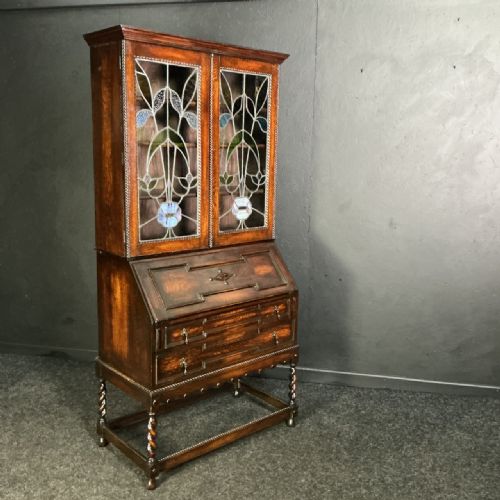
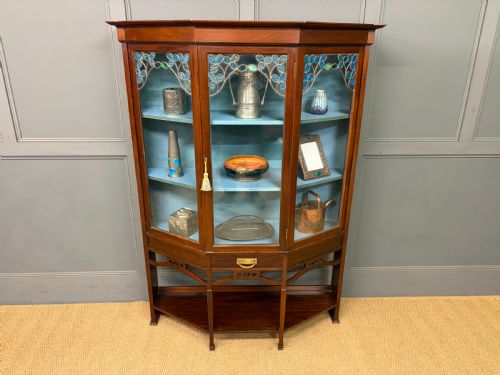
Glazing techniques included standard sheet glass alongside leaded and stained glass panels configured in geometric or organic plant motifs. Woodworking joinery remained traditional, supporting carved elements and curved bow fronts.
Some cabinets hid their cocktail bottles behind leaded glass while pretending to be standard domestic bookcases.
What varies in quality
Quality in an art nouveau glass cabinet rests upon the ambition of the design and the precision of the marquetry inlay. Cabinets carrying documented workshop attributions or specific maker marks separate themselves from anonymous workshop production.
The choice of timbers and the finesse of carved wooden details dictate the upper tiers of the range. Furthermore, integrated elements such as leaded glass panels and original brass fittings elevate the integrity of the piece.
Shapland and Petter·Maple and Co.·D. Hill Carter and Co.
The Art Nouveau Glass Cabinet Glossary
- Marquetry
- Decorative patterns formed by inserting pieces of veneer into a wood foundation. This technique allows for intricate floral and organic designs characteristic of the period.
- Secessionist
- An artistic movement running parallel to Art Nouveau, particularly influential in Austria and Germany. It favoured clean geometries alongside organic motifs.
- Bow front
- A convex curved cabinet front that softens the linear profile of the furniture. This shape requires advanced woodworking skill to execute properly.
- Bijouterie cabinet
- A specialised display case designed specifically for small, precious collector items rather than large ceramics or books. These often feature glass tops and upper viewing panels.
- Jugendstil
- The German manifestation of the Art Nouveau movement, named after the Munich periodical Jugend. It shares the characteristic whiplash curves and natural forms.
Art Nouveau Glass Cabinet: Frequently Asked Questions
What periods do these cabinets cover?
These pieces date predominantly from the late nineteenth century through to the Edwardian era and the 1920s. They encompass Victorian, Edwardian, and Art Nouveau stylistic movements.
Production spans from the 1880s up to the early twentieth century, reflecting shifting tastes in domestic design and cabinetmaking.
How were glass cabinets used originally?
Original owners utilised these cabinets in drawing rooms and parlours to display fine china, glassware, and decorative objects. The glazed doors kept dust away from delicate possessions.
Some variants incorporated writing surfaces or shelving for books, doubling as small bureau bookcases or writing desks.
How do I care for mahogany and inlaid wood?
Protect the wood and delicate marquetry inlay by keeping the cabinet away from direct sunlight and sudden temperature changes. Consistent indoor humidity prevents the veneer from lifting.
Apply traditional wax polish sparingly and buff with a soft cloth to maintain the natural sheen of the timber.
How do I distinguish Art Nouveau from Edwardian pieces?
Art Nouveau pieces feature organic whiplash lines, stylised floral marquetry, and asymmetrical plant motifs. They reject strict historical revival styles in favour of natural abstraction.
Edwardian pieces often retain lighter inlay work and symmetrical proportions, frequently blending traditional cabinet forms with subtle Art Nouveau decorative details.