




Stained Glass Display Cabinet
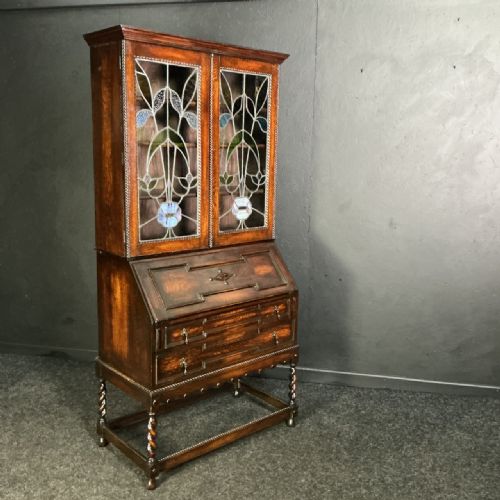
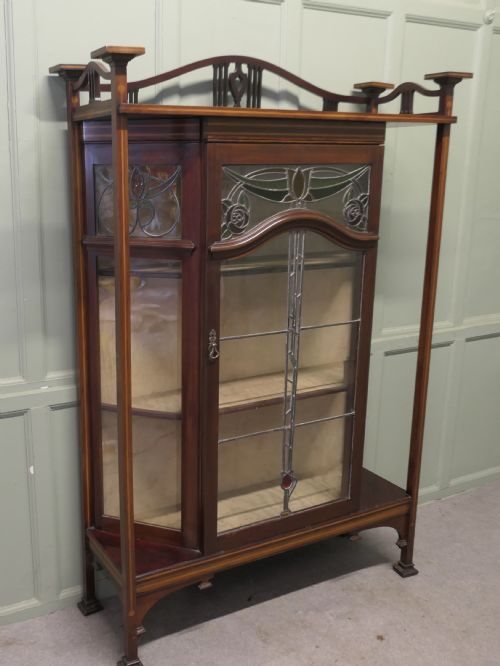
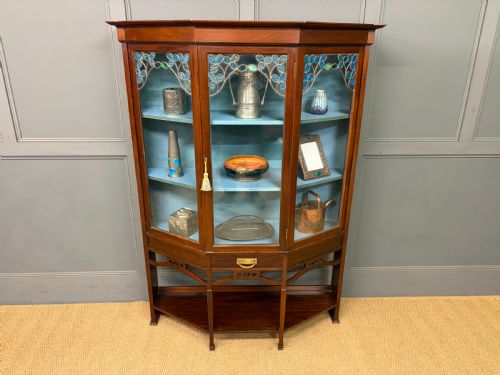
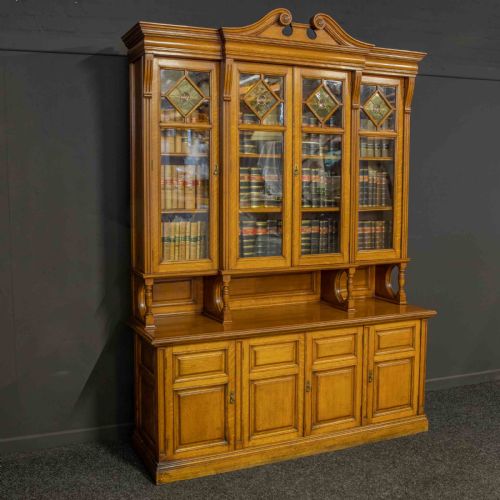
These stained glass display cabinets combine leaded panels with timber frames to showcase treasured items.
Stained Glass Display Cabinet
A stained glass display cabinet brings colour and craftsmanship into a room while keeping collections secure behind glazed doors. These pieces emerge from periods spanning the Victorian era through the Edwardian years up to the nineteen-twenties.
Art Nouveau and Arts and Crafts designs dominate the visual styles, alongside Flemish Revival and standard Victorian interpretations. Buyers encounter everything from simple Edwardian oak cabinetry to elaborate inlaid mahogany works.
How they were made
Cabinet makers constructed these pieces using solid oak, mahogany, and walnut, frequently incorporating fruitwood inlay for decorative contrast. Joinery methods relied on traditional techniques suited to heavy timber frameworks and glazed apertures.
Coloured glass panes were joined using lead cording to form intricate floral or geometric patterns typical of the period. Brass hardware, including hinges and handles, completed the construction alongside fabric-lined interiors.
Design styles represented include Art Nouveau, Arts and Crafts, and Flemish Revival, incorporating leaded stained glass and brass hardware.
What varies in quality
Quality rests in the precision of the timber joinery and the complexity of the leaded glass designs. Finer examples display meticulous fruitwood marquetry and well-figured mahogany or oak grain.
The integrity of the lead cording and the clarity of the coloured glass panels distinguish standard production pieces from higher-tier artistic commissions. Original brass fittings and balanced proportions further elevate the standing of a cabinet.
Shapland and Petter
The Stained Glass Display Cabinet Glossary
- Art Nouveau
- A style characterised by flowing, organic lines and floral motifs popular around nineteen hundred. This aesthetic heavily influences the leaded glass patterns seen on these cabinets.
- Arts and Crafts
- A design movement emphasising handcraftsmanship and simple, honest construction using natural materials. Cabinets from this tradition often feature solid oak and unpretentious brass hardware.
- Bureau Bookcase
- A dual-purpose piece combining a sloping desk flap with upper shelving or display space behind glass doors. These items provide both workspace and storage within a single timber frame.
- Fruitwood Inlay
- Decorative wood veneer pieces set into a contrasting primary timber background. Makers used this technique to create delicate botanical or geometric pictures on cabinet doors and panels.
- Lead cording
- Flexible channels of lead used to hold individual pieces of coloured glass together in a window or cabinet door. This material forms the structural grid of the stained glass design.
Stained Glass Display Cabinet: Frequently Asked Questions
What periods do these cabinets come from?
The available pieces date from the nineteenth century through the Victorian and Edwardian eras up to nineteen twenty. This encompasses periods strongly influenced by Art Nouveau and Arts and Crafts ideals.
Buyers will find that construction details and timber choices reflect these specific decades of manufacture.
What timbers were used for the frames?
Cabinet makers predominantly utilised oak and mahogany, with occasional examples in walnut. Fruitwood inlay frequently appears on the surfaces of more decorative pieces.
Brass hardware and glass panels complete the primary material palette across all listed styles.
How do I identify an Art Nouveau cabinet?
Art Nouveau examples feature distinctive flowing lines, stylised floral motifs, and organic shapes within the stained glass panels. These pieces often include marquetry or inlay work depicting natural forms.
The overall aesthetic prioritises artistic expression over rigid historical revivalism.
Can these cabinets hold heavy books?
Many items in this category function as bookcases as well as display cabinets, constructed from sturdy oak or mahogany. Solid timber framing allows them to support substantial volumes when placed on level floors.
Internal shelving varies by piece, so verifying the depth and shelf support is advisable for heavy collections.