
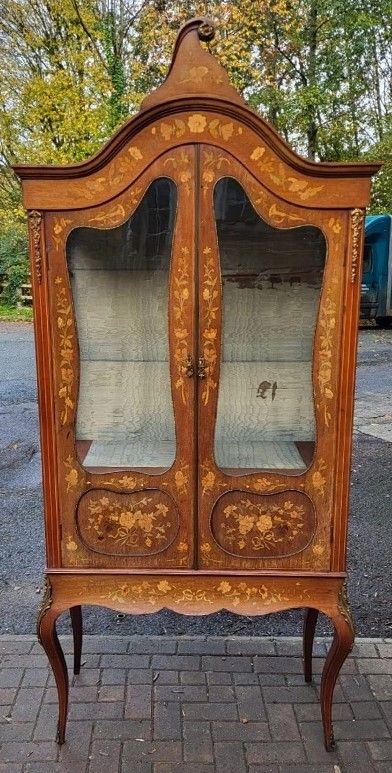
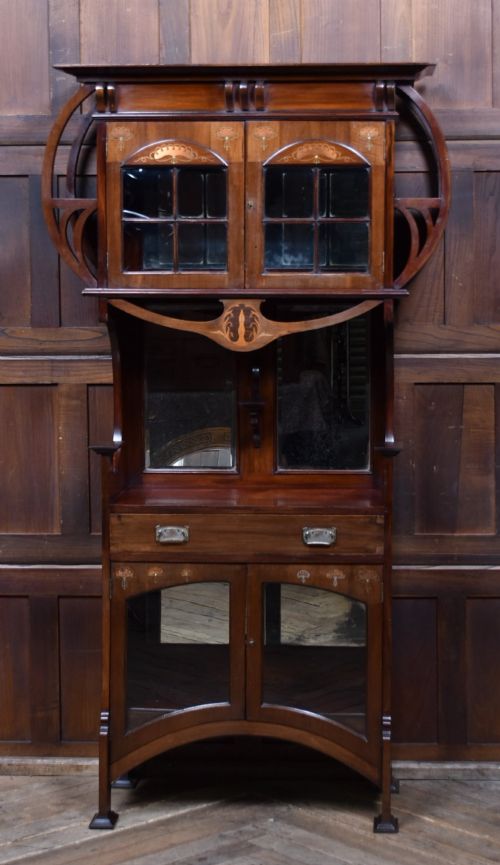

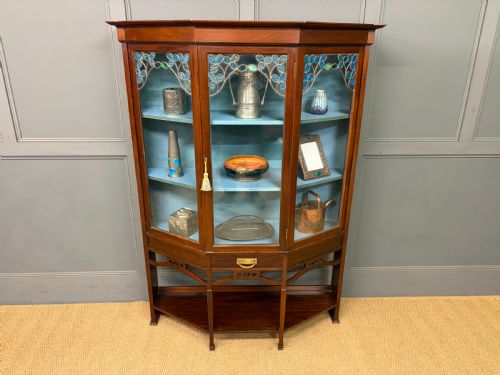


Art Nouveau Bookcase Cabinet
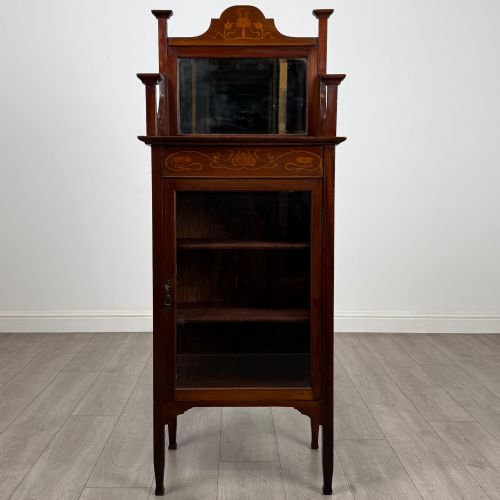
These art nouveau bookcase cabinet pieces bring sweeping floral lines and rich timber into a room, offering both display space and shelving.
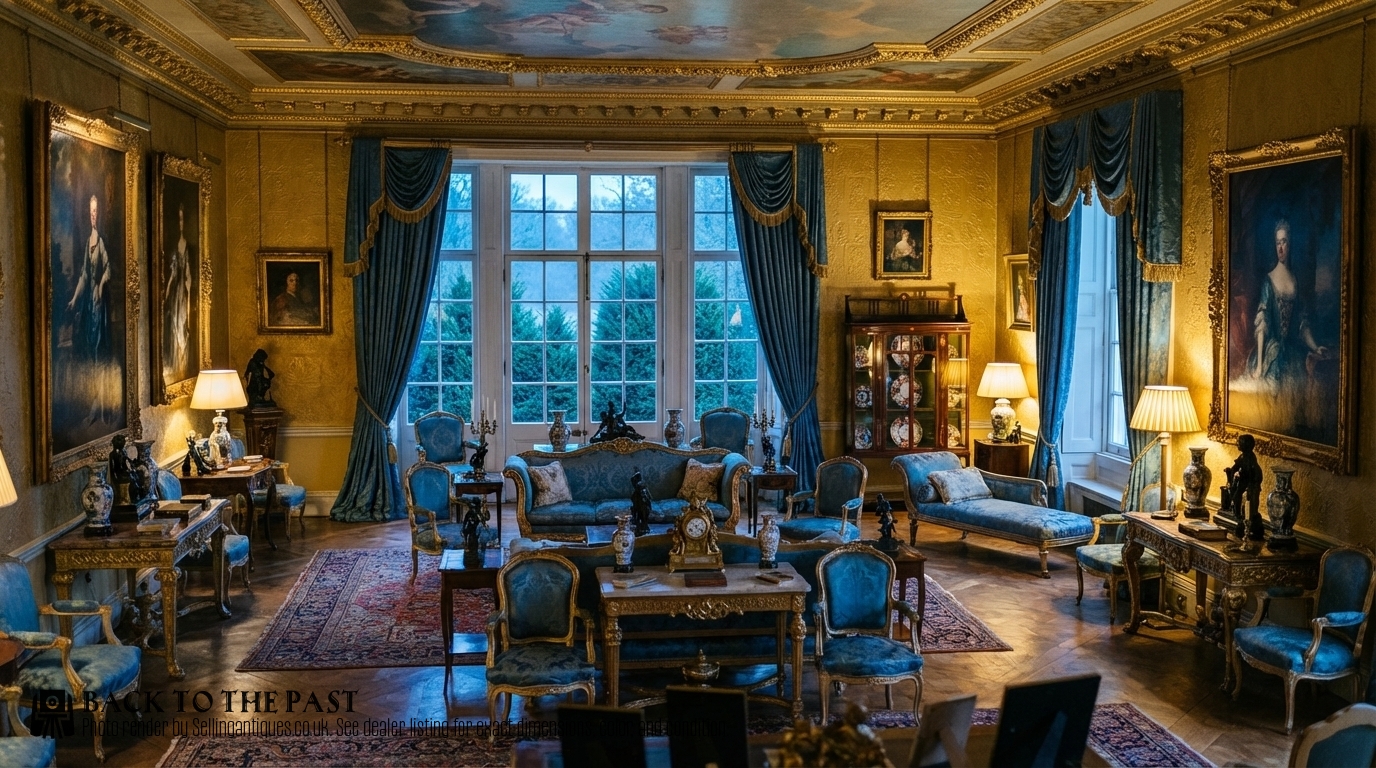
Art Nouveau Bookcase Cabinet
An art nouveau bookcase cabinet combines shelving for books with enclosed display space for ceramics and glassware. You are most likely to meet mahogany or oak examples, often fitted with glass doors and internal mirrors.
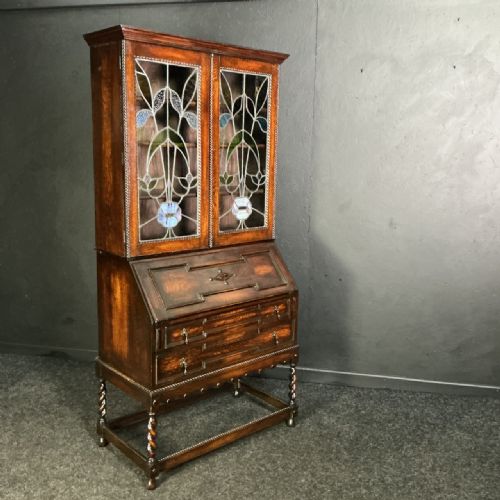
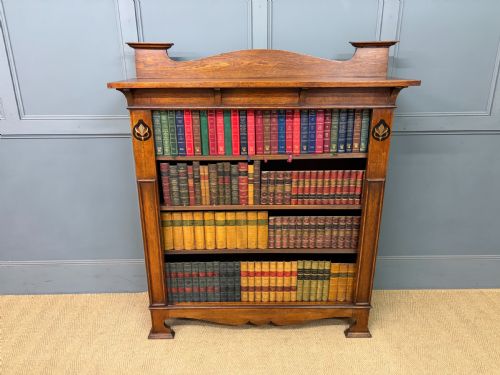
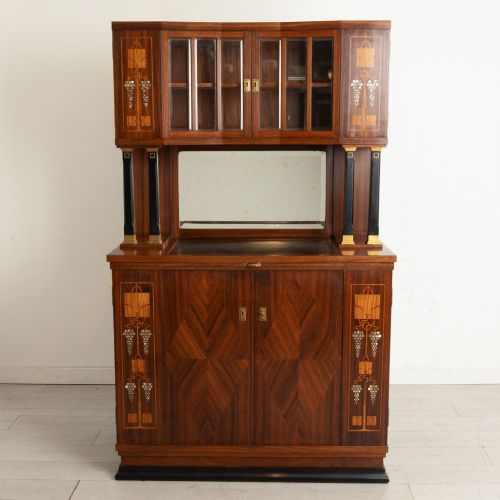
The pieces on this page span the late nineteenth century through the Edwardian era, taking the form of tall display cabinets, bureau bookcases, and open shelves. Makers from Vienna to London shaped these hybrid forms to suit the domestic interiors of the period.
Makers blended utility with organic ornament, resulting in furniture that served as a central focal point in a reception room or study. The combination of glazed upper sections and lower cupboards provides varied storage across a single footprint.
What varies in quality
Quality rests in the crispness of the hand-cut wood inlay and the fluidity of the carved botanical details rather than standard mechanical finish. Superior cabinets display thoughtful timber selection where grain patterns follow the sweeping lines of the design.
The integration of original brass fittings and leaded or astragal glazed glass elevates the standing of a piece. Finer examples balance structural proportion with delicate ornamentation, whereas lesser items rely on surface decoration alone.
Listings feature mahogany and oak predominantly, alongside brass, lead, and mirror glass across the nineteenth and twentieth-century periods.
August Ungethüm·Maple and Co·Shapland and Petter
The Art Nouveau Bookcase Cabinet Glossary
- Marquetry
- Decorative woodwork where pieces of veneer are fitted into a ground to form floral or geometric patterns. This technique defines the surface ornamentation on many cabinet doors.
- Astragal
- A small moulding framing the glass panes within a door. These wooden strips often trace subtle curves in this style.
- Secretaire
- A desk form featuring a pull-down writing flap concealing small drawers and pigeonholes. It frequently forms the central section of a combination bookcase.
- Secessionist
- An artistic movement originating in Vienna that favoured geometric forms alongside stylised naturalism. Austrian pieces on this page reflect this distinct regional approach.
Art Nouveau Bookcase Cabinet: Frequently Asked Questions
How do I clean the wood?
Dust regularly with a soft dry cloth to prevent a buildup of grit on the polished surfaces. Avoid silicone sprays which can damage the traditional finish.
Apply a quality beeswax sparingly once or twice a year to nourish the mahogany or oak. Buff gently with a clean cloth to maintain a natural lustre.
Can I adjust the shelves?
Many period bookcases feature fixed wooden shelving integral to the internal structure. Later Edwardian iterations sometimes include traditional shelf racks allowing height adjustment.
Check the interior supports before arranging larger volumes to ensure the timbers take the weight evenly.
How do I spot an original piece?
Examine the interior construction, drawer linings, and backboards for timber shrinkage, tool marks, and consistent ageing. Original hardware and hand-blown glass panes provide further confirmation of period manufacture.
Compare the proportions and joinery methods against standard cabinet-making practices of the early twentieth century.