
Art Glass Vessel
An art glass vessel brings colour and texture into a room, capturing the artistic experiments of the Victorian and modern periods.
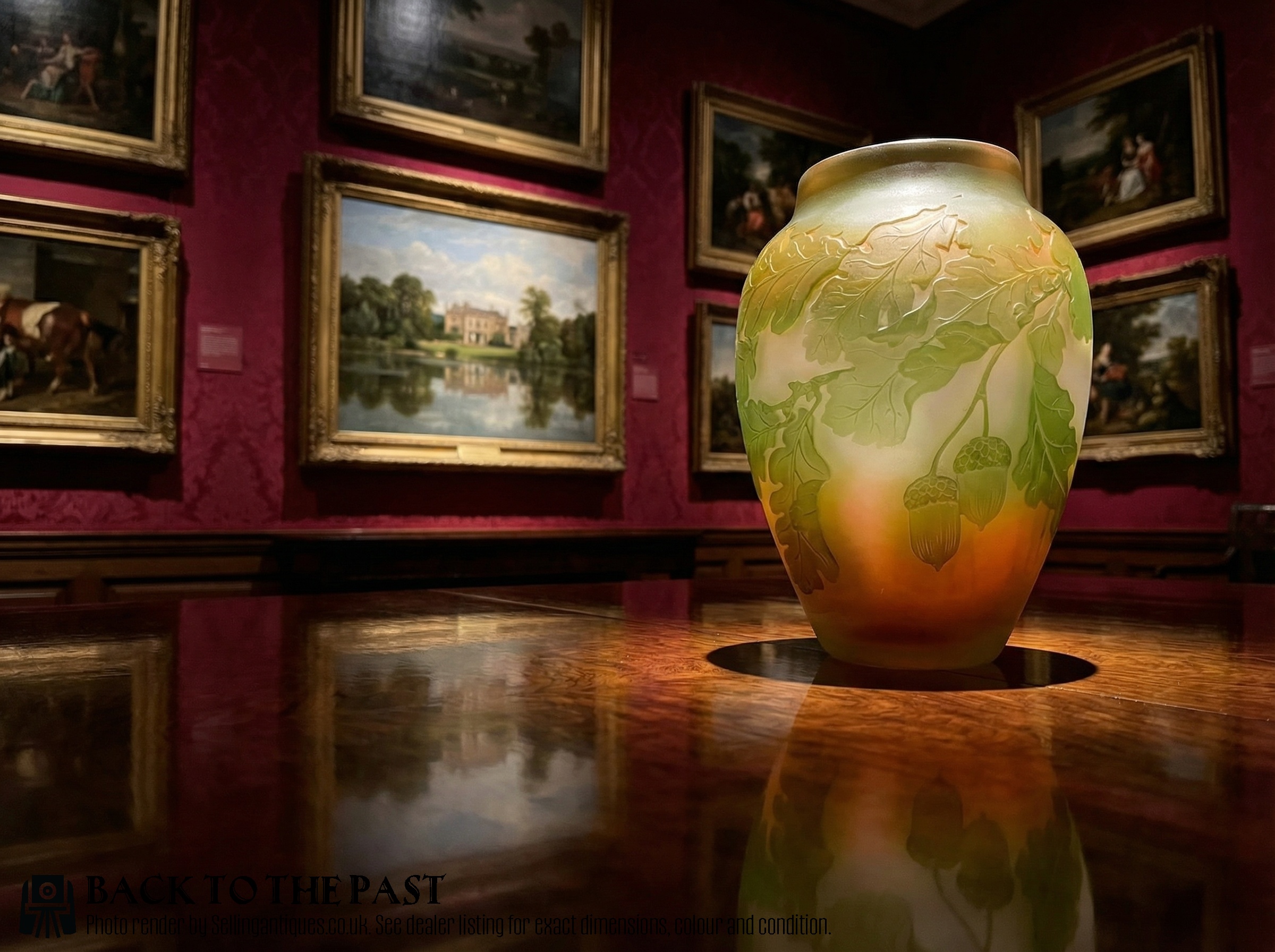
Art Glass Vessel
When you search for an art glass vessel, you encounter a diverse range of decorative objects, primarily vases, decanters, and bowls originating from the nineteenth and twentieth centuries. These pieces reflect distinct aesthetic movements, spanning Victorian opulence, Art Nouveau fluidity, and Art Deco geometric precision.
The selections available on this page predominantly date from the late nineteenth century through to the 1930s. Alongside standard glass vases, the listings occasionally incorporate related decorative pieces featuring enamel, sterling silver mounts, and wood elements.
Makers from Britain, France, Belgium, and Austria dominate the selection, bringing varied regional techniques to the formation of each vessel. Buyers find both delicate, acid-etched cameo glass and robust, cased crystal formations among the offerings.
How they were made
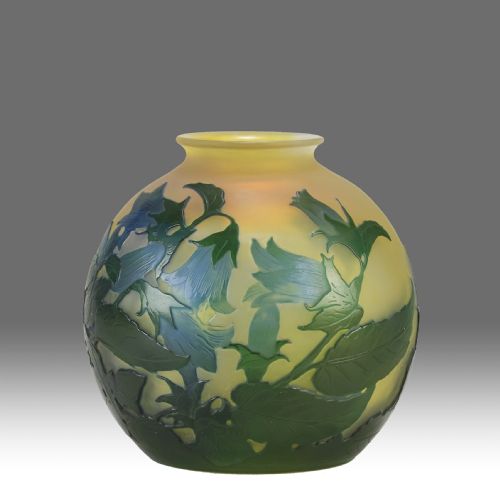
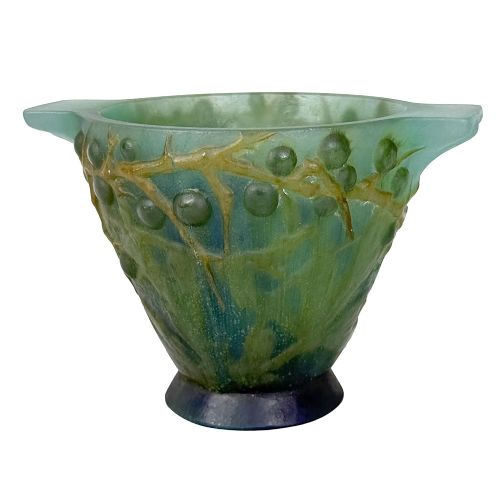
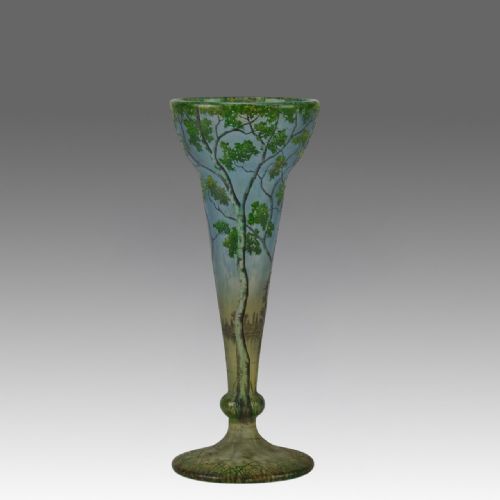
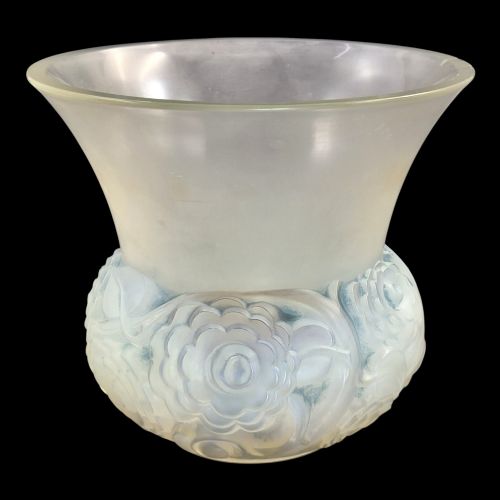
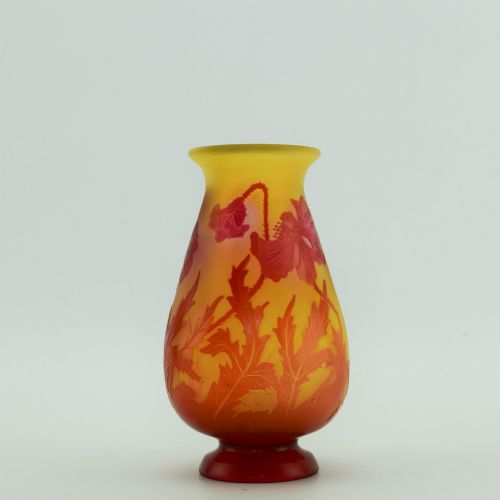
Glassmakers utilised specialised techniques such as cameo carving, where multiple layers of coloured glass are etched away to reveal a contrasting design. Pâte de verre, a form of kiln-cast glass, allowed artisans to create dense, textured vessels with granular colouration.
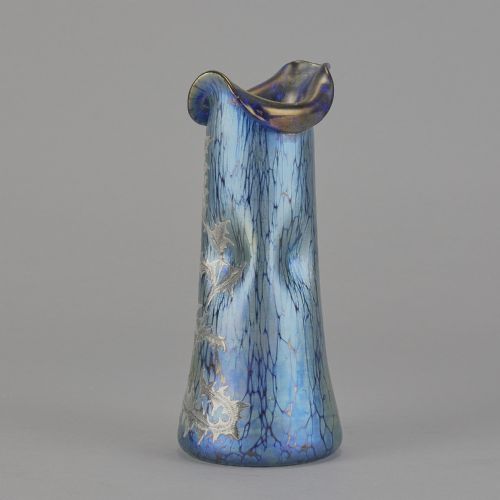
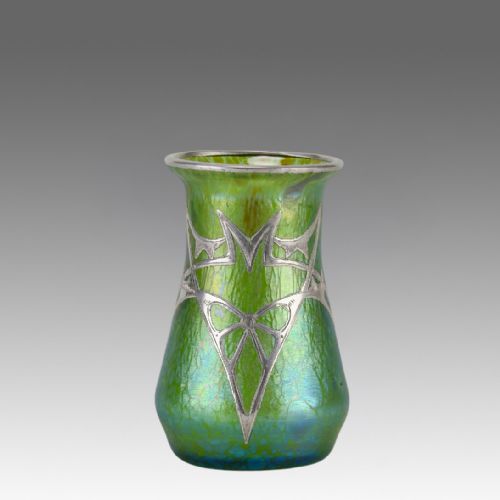
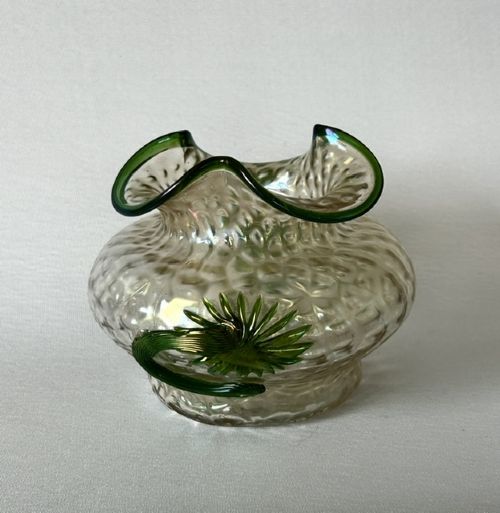
Makers also applied metallic oxides while the material was molten to achieve striking iridescent finishes, as seen in the papillon and spider surface effects. Enamel and gilding were frequently added to the cooled surface and fired again to secure the decorative motifs.
Materials represented across the selection include cameo glass, iridescent glass, frosted glass, and sterling silver mounts.
What varies in quality
The distinction between standard production and exceptional quality lies in the depth of execution and the complexity of the glass body. Superior vessels display meticulous control over layered colours, deep acid etching, and precise hand-applied details such as silver mounts or enamelling.
Design pedigree significantly shapes the standing of a piece, with works attributed to renowned artists or specific glassworks exhibiting greater artistic ambition. The harmony between the glass form and the surface decoration determines the overall visual success of the vessel.
Emile Gallé·Rene Lalique·Daum Frères·Loetz Witwe·Val St Lambert·Kralik Glass·Legras
The Art Glass Vessel Glossary
- Cameo Glass
- A vessel formed of two or more distinct layers of coloured glass fused together, where the outer layer is carved or acid-etched away to leave a raised design.
- Iridescent Glass
- Glass treated with metallic salts while hot to produce a shimmering, rainbow-like sheen across the surface of the vessel.
- Pâte de verre
- A glass-casting method where finely crushed glass is packed into a mould and fused in a kiln, resulting in a frosted, sugar-like texture.
- Cased Glass
- Glass made up of separate layers of different colours, sometimes called overlay, allowing the topmost layer to be cut through for contrast.
- Jugendstil
- The continental European manifestation of Art Nouveau, characterised by organic plant motifs and flowing, asymmetrical lines.
Art Glass Vessel: Frequently Asked Questions
How do I clean my glass vessel?
Dust the surface gently with a soft, dry cloth to maintain the finish. Avoid using harsh chemical detergents or submerging mounted pieces in water.
For internal cleaning, use lukewarm water and a mild soap solution without abrasive brushes. Dry thoroughly with a lint-free cloth to prevent water spots.
How can I tell Art Nouveau from Art Deco?
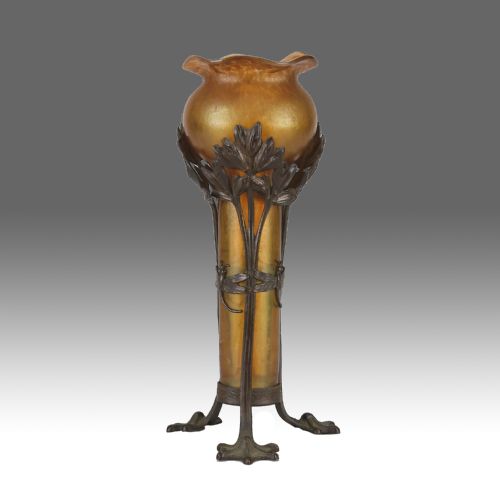
Art Nouveau pieces, produced around 1900, feature flowing, organic lines inspired by nature and plant forms. Surfaces often display iridescent sheens or cameo plant motifs.
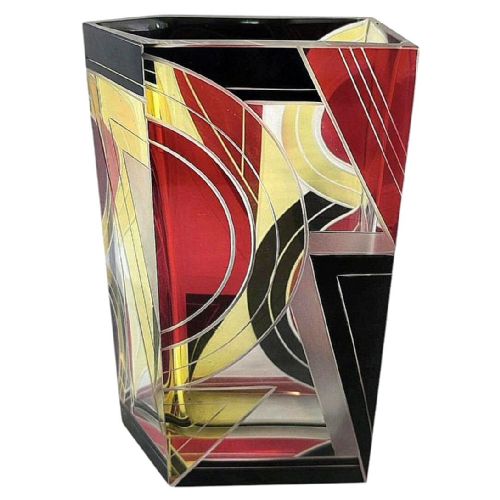
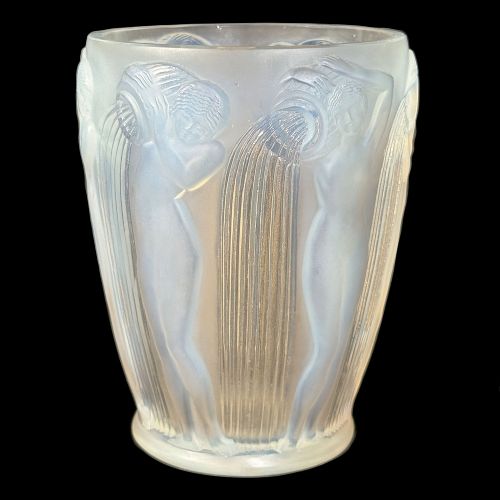
Art Deco items, dating towards the 1930s, favour strict geometry, symmetry, and stylised motifs. They frequently utilise clear, frosted, or deeply etched glass.
Are these vessels signed?
Many art glass vessels carry signatures, etchings, or moulded factory marks left by the maker or designer. These marks can appear on the base or along the lower edge of the body.
Unsigned pieces still occur, identified instead by their distinctive forms, colour combinations, and manufacturing techniques characteristic of specific workshops.