



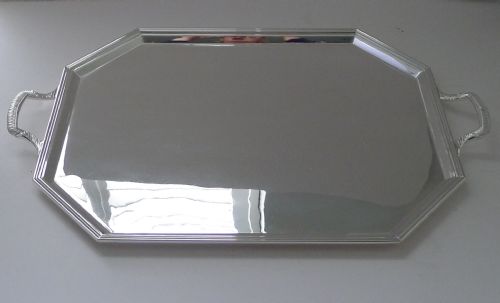


Art Deco Tea Tray
An art deco tea tray brings geometric precision and polished metal into daily service, prized by collectors for period style.
Art Deco Tea Tray
An art deco tea tray represents the distinct design language of the 1920 and 1930 decades, combining utility with sleek modernism. These serving pieces typically manifest as serving trays, drinks trays, or cocktail trays designed for entertaining.
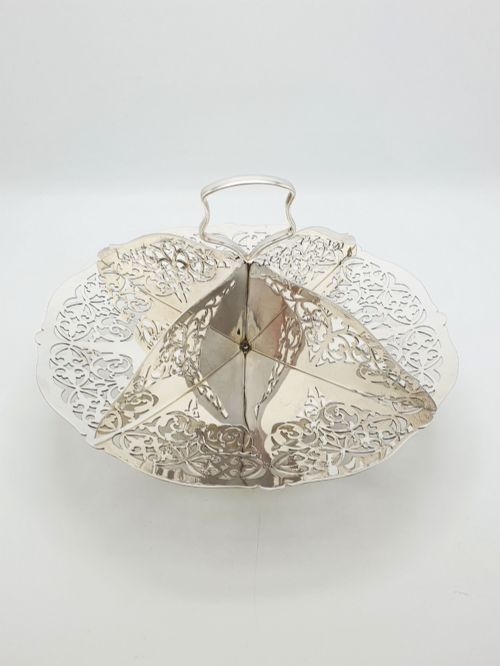
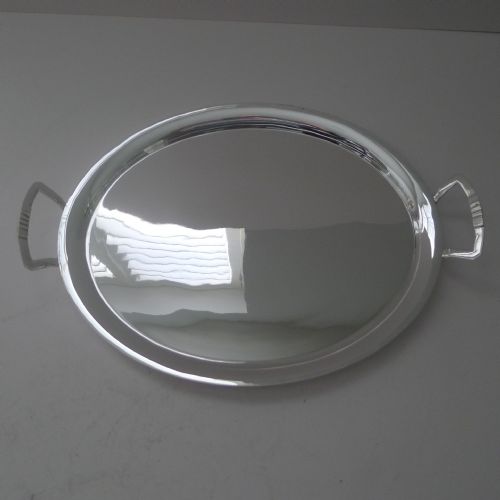
Buyers browsing this selection encounter pieces originating predominantly around 1930, alongside examples from the 1920 period. The forms vary from round serving trays to square cocktail trays fitted with handles.
Makers in this category frequently extended their output into tea and coffee sets, sugar and creamer sets, and complete sandwich sets. Each art deco tea tray serves as a functional centrepiece reflecting the streamlined aesthetic of the interwar years.
Materials and construction
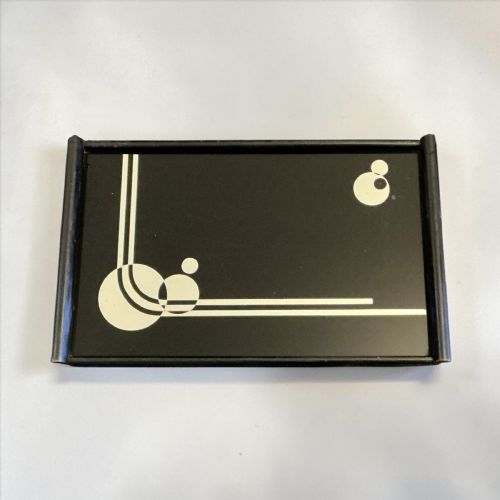
Metalwork dominates the construction of these items, with silver plate and sterling silver forming the primary surfaces for luxury examples. Workshops also utilised nickel silver, chrome, pewter, and ebonised wood to achieve striking contrasts.
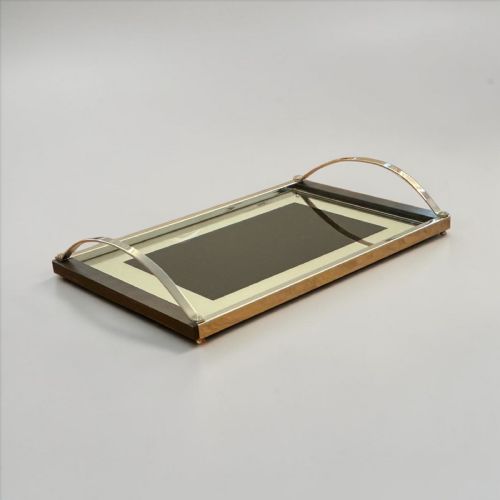
Manufacturers applied plating over base metals or shaped solid silver into geometric handles and raised rims. Glass inserts and wooden accents occasionally complemented the polished metal frameworks.
Art Deco Tea Tray Retail Price Guide 2026
Typical asking prices for art deco tea tray among the pieces listed under this phrase on Sellingantiques today, from the lower quarter to the upper quarter. They describe what is for sale here now, not the wider market.
Armada Pewter apparently decided that a household needed its tea, coffee, and cocktails handled by the exact same tray.
Evaluating quality and execution
Quality in an art deco tea tray rests upon the crispness of the geometric detailing and the structural integrity of the handles. Superior examples maintain a heavy gauge of metal that resists bending during service.
The finish of the silver plate or polished chrome dictates visual appeal, where even patination and intact plating separate standard production from high workshop output. Maker marks stamped into the metal further anchor the provenance and grade of the piece.
Asprey London·Armada Pewter·Mappin & Webb·J B Chatterley & Sons·Walker & Hall·James Dixon & Sons·Roberts & Belk·Atkin Brothers
The Art Deco Tea Tray Glossary
- Silver plate
- A thin layer of silver fused to a base metal such as copper, nickel silver, or brass. This technique allowed makers to produce luxurious serving wares at a lower cost than solid silver.
- Sterling silver
- An alloy consisting of silver and other metals, usually copper, standardised for purity. Pieces made from this material carry official hallmarks indicating silver content.
- Pewter
- A malleable metal alloy traditionally composed of tin alloyed with copper and antimony. It yields a softer lustre compared to silver and suits tactile domestic vessels.
- Ebonised wood
- Timber treated with a dark stain or finish to imitate ebony wood. It provides a sharp black contrast against polished metal surfaces in interwar design.
- Salver
- A flat tray, typically made of metal and supported on feet, used for presenting food or drinks. The form often overlaps with heavier serving trays.
Art Deco Tea Tray: Frequently Asked Questions
How do I clean a silver plated tray?
Use a soft microfiber cloth and a mild silver polish formulated specifically for plated items. Avoid abrasive pads that can strip the thin silver layer from the base metal.
Rinse the tray gently in warm water and dry it immediately with a lint-free cloth to prevent water spots and tarnishing.
Can I use these trays for daily service?
These trays handle regular use well, provided you protect the surface from acidic liquids and sharp impacts. Many were built for hosting cocktails and afternoon tea.
Lift heavy items rather than sliding them across the tray to preserve the silver plate or polished chrome finish over time.
How do I date an art deco tray?
Examine the piece for stamped maker marks, registration numbers, or silver hallmarks that correspond to assay office date letters. The presence of chrome and ebonised wood strongly points toward the interwar decades.
Stylistic cues such as stepped geometric handles and linear engraving also narrow the production window to the 1920 and 1930 periods.
What is the difference between a cocktail tray and a tea tray?
Cocktail trays generally feature specialised handles and slightly deeper rims to secure glassware during lively gatherings. They frequently incorporate contrasting materials like chrome and ebonised wood.
Tea trays often present broader surfaces designed to accommodate teapots, sugar bowls, and cream jugs as matching service sets.