



1920s Cocktail Tray
A 1920s cocktail tray brings period glamour to a room, offering the polished silver plate and geometric lines that defined the jazz age.
1920s Cocktail Tray
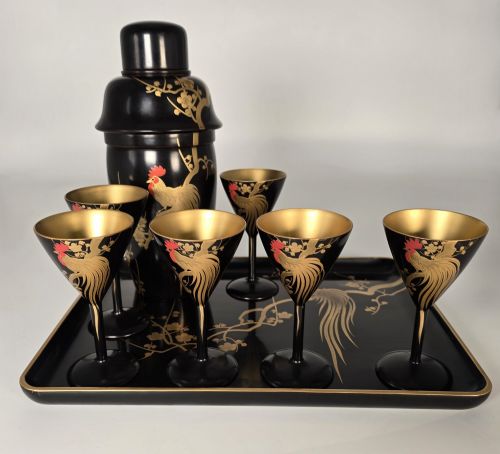
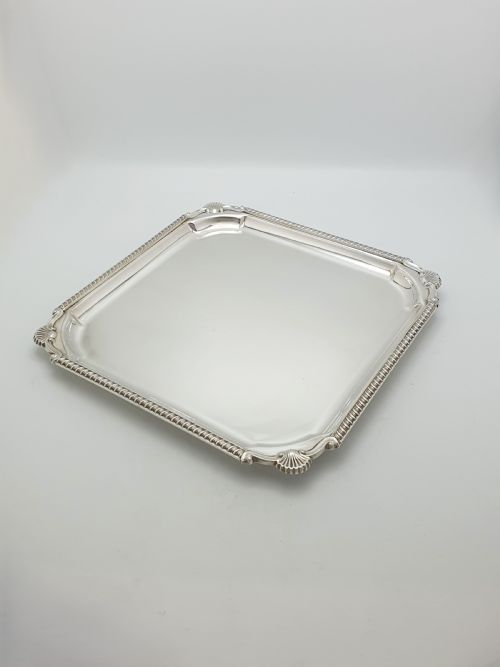
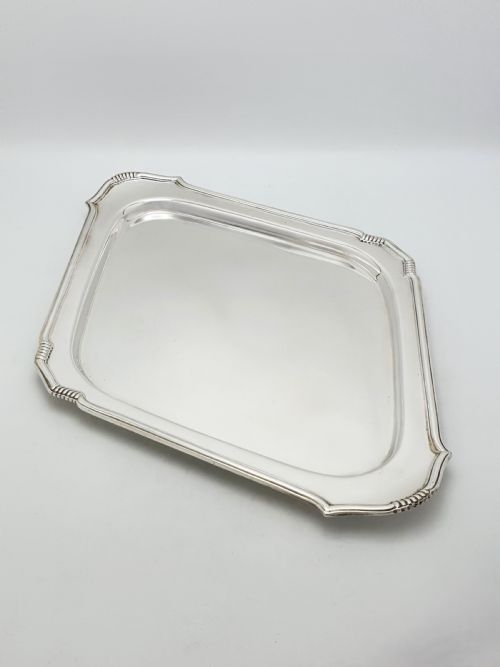
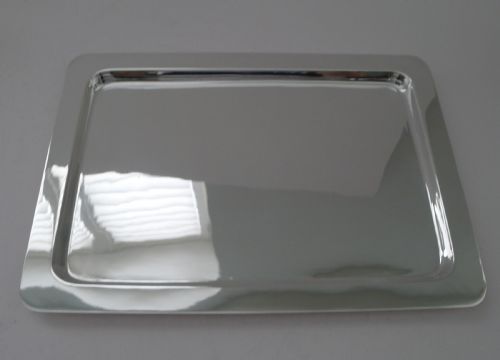
A 1920s cocktail tray is an entertaining accessory designed for serving drinks during the interwar years, appearing frequently in Art Deco styles alongside occasional Taisho period lacquer and Colonial walnut forms. These serving pieces take round, square, diamond, and oval shapes, often incorporating handles or raised borders to contain glassware during use.
The objects on this page span silver plate, EPNS, base metal, wood, walnut, glass, gold leaf, and lacquer, reflecting both domestic English production and international manufacture. Most examples encountered here date from the 1920 period, carrying the characteristic aesthetic of the decade.
How they were made
Makers utilised silver plating over base metal or EPNS to achieve a bright, reflective surface suitable for frequent use in the home. Many pieces incorporate glass inserts, such as cobalt blue mirror glass, fitted securely within metal frames.
Wooden examples utilise walnut and applied lacquer, sometimes enhanced with gold leaf and hand-painted details. Metal workers shaped borders through stamping or casting, creating distinct shell motifs and geometric edges.
Listings on this site feature silver plate, lacquer, wood, gold leaf, EPNS, walnut, glass, and base metal.
What varies in quality
The standard of a 1920s cocktail tray depends heavily on the crispness of its decorative borders and the integrity of the silver plating. Better examples maintain even reflectivity across the surface without thinning or heavy base metal showing through.
Construction quality shows in the weight of the metal and the secure fitting of inset glass panels or wooden bases. Pieces bearing recognised maker marks demonstrate greater attention to detail in their handles and edge work.
Walker & Hall·John Collyer & Co.·Roberts & Belk
The 1920s Cocktail Tray Glossary
- Silver Plate
- A thin layer of silver bonded to a base metal core. This technique provided the appearance of solid silver at a lower cost for domestic items.
- EPNS
- Electroplated nickel silver. A common base metal alloy used beneath a silver coating during this period.
- Art Deco
- A design style characterised by sleek geometric shapes, streamlined forms, and stylised ornamentation. It dominated decorative arts throughout the 1920s.
- Taisho Period
- The period in Japanese history spanning from 1912 to 1926. Pieces from this era often feature traditional hand-painted lacquer techniques.
- Base Metal
- An inexpensive metal such as brass, copper, or nickel used as the structural foundation for silver-plated items.
1920s Cocktail Tray: Frequently Asked Questions
What is a 1920s cocktail tray used for?
These items served spirits, glassware, and mixing equipment during the rise of home cocktail culture in the interwar period. They provided a stable, decorative surface for transporting drinks from a cabinet to guests.
Today, buyers use them in living spaces and home bars for displaying glassware, decanters, or bar accessories while adding period character to a room.
How do I identify Art Deco style?
Art Deco design relies on geometric symmetry, clean lines, and stylised motifs rather than ornate Victorian curves. Look for diamond shapes, stepped edges, and stylised border patterns.
On trays from this era, the aesthetic appears in handle design, edge engraving, and the overall silhouette of the metalwork.
What materials were used?
Makers relied primarily on silver plate and EPNS over base metal to create reflective serving surfaces. Glass inserts, including coloured mirror glass, frequently formed the base of the tray.
Wooden variations also appear, utilising walnut and hand-painted lacquer with gold leaf details, particularly in pieces originating from Japan.
How do I care for silver plated trays?
Silver plate requires gentle cleaning with non-abrasive cloths and specialised polish to maintain the shine without wearing through the thin metal layer. Avoid harsh chemical cleaners that can damage vintage plating or underlying base metals.
Keep glass inserts dry and clean using standard glass cleaner applied to a cloth rather than sprayed directly near metal mounts.