


Black Serving Tray
A black serving tray brings dark gloss and gilded detail to a room, offering a functional surface rooted in Georgian, Regency and Victorian craftsmanship.
Black Serving Tray
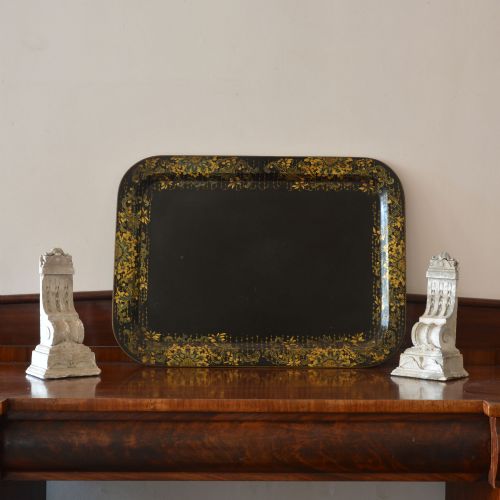
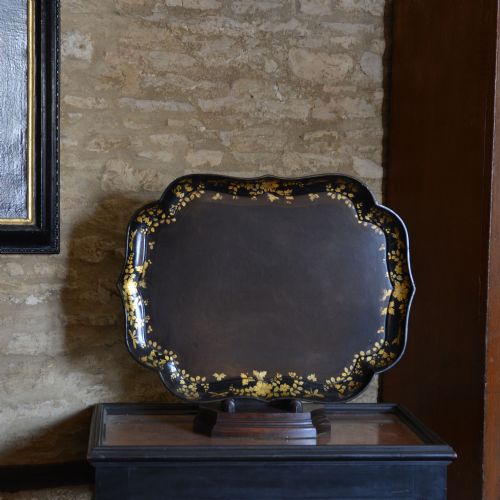
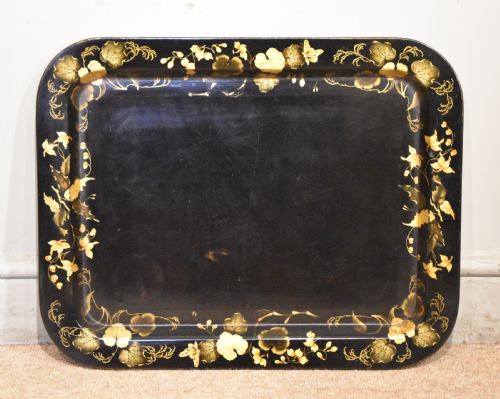
A black serving tray most commonly appears as a sturdy papier-mâché or toleware piece from the Georgian, Regency or Victorian periods. These pieces range from simple butler forms to large decorative platters and trays mounted on folding stands as tables.
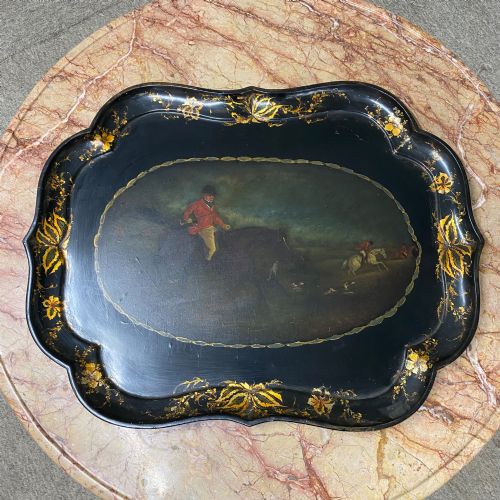
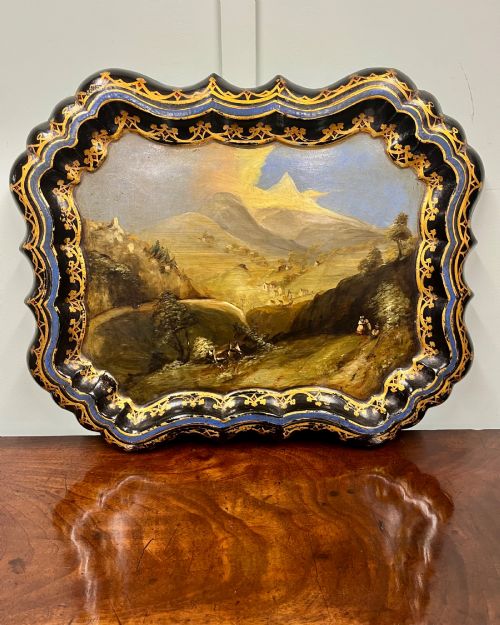
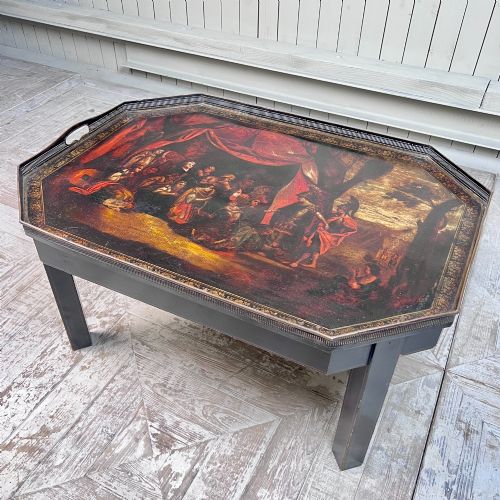
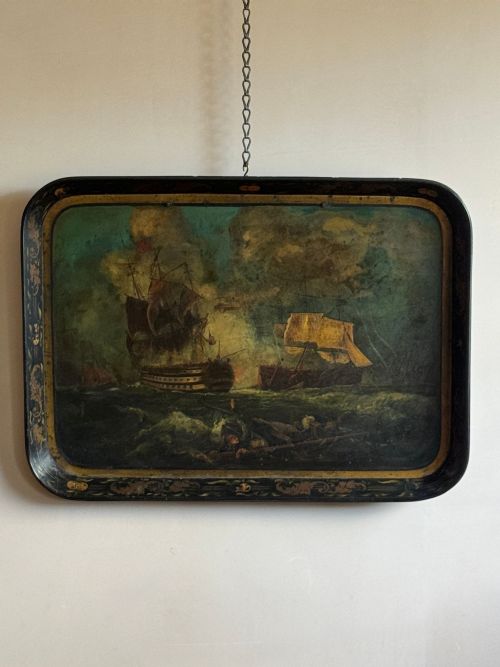
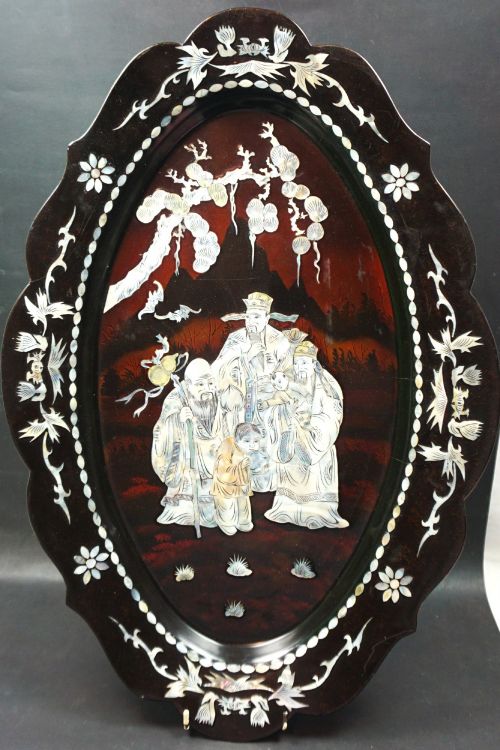
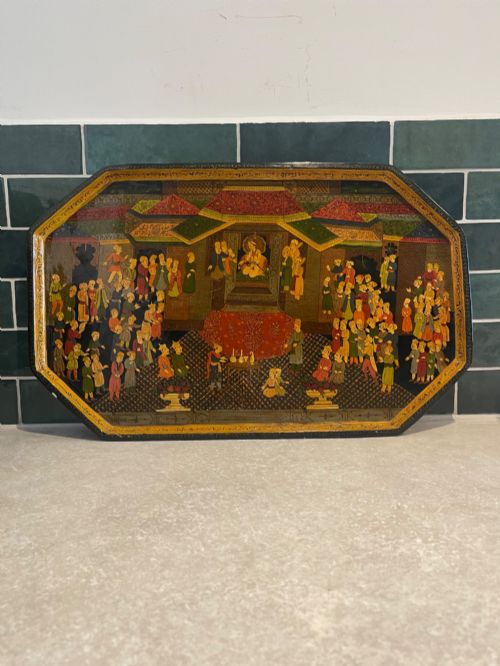
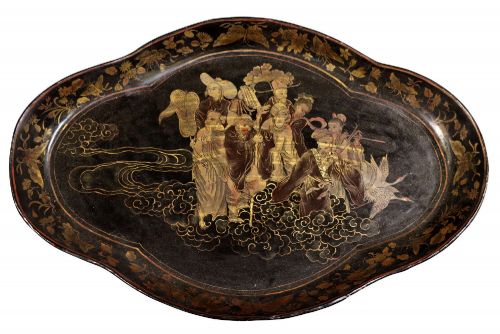
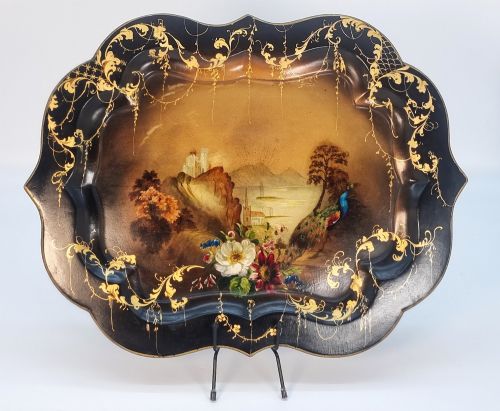
Makers shaped these surfaces in rectangular, oval, octagonal or kidney contours, often finishing them with deep ebonised grounds. Many examples display orientalist Chinoiserie motifs, floral arrangements or narrative figural scenes derived from European painting.
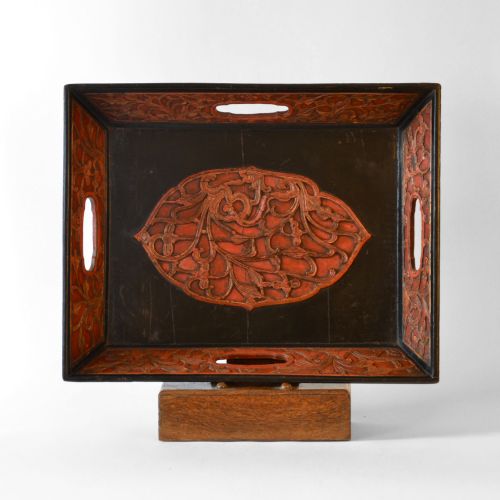
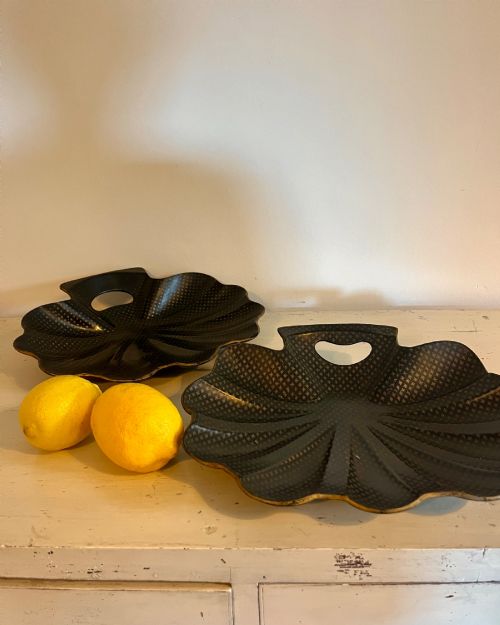
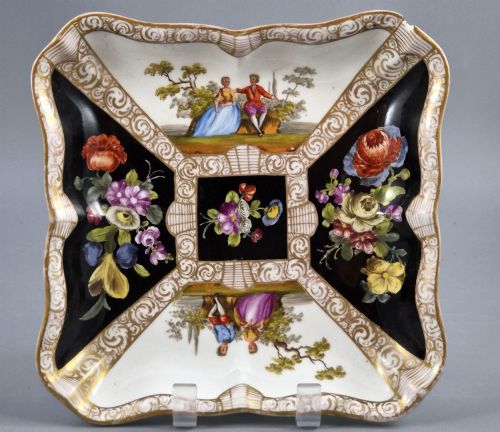
The selection includes lacquered wood, porcelain dishes with black grounds, and mirrored Art Deco variants alongside traditional japanned papier-mâché. Buyers encounter everything from small hand-held waiters to massive proportions intended for heavy hospitality use.
How They Were Made
Papier-mâché trays were built from layers of paper pulp or sheets pressed with glue and heavy pressure, then baked and coated in thick layers of black lacquer or japan varnish. This process yielded a surprisingly tough material that withstood heat and moisture better than plain timber.
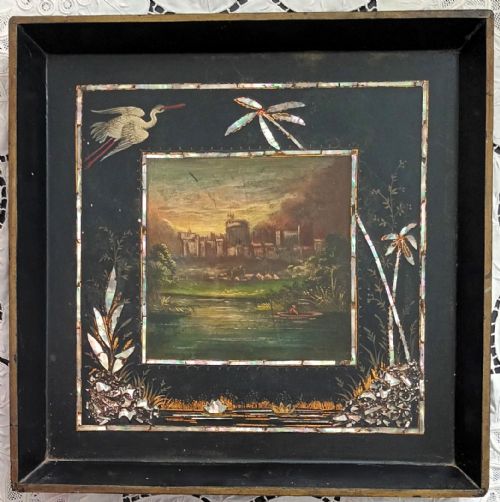
Toleware pieces relied on sheet metal, usually iron or tinplate, which was beaten to shape, primed, painted and baked in kilns to set the smooth dark finish. Craftsmen added decoration using gold leaf, bronze powders, hand-painted pigments and occasional mother-of-pearl inlay.
Black Serving Tray Retail Price Guide 2026
Typical asking prices for black serving tray among the pieces listed under this phrase on Sellingantiques today, from the lower quarter to the upper quarter. They describe what is for sale here now, not the wider market.
Listings feature black serving trays spanning the eighteenth, nineteenth and twentieth centuries, using papier-mâché, metal, wood and glass.
What Varies in Quality
Quality rests in the crispness of the hand-painted brushwork, the depth of the polished lacquer and the complexity of inlaid mother-of-pearl details. Trays bearing stamped or signed maker marks from established workshops generally command greater attention from collectors.
The integrity of the core material dictates longevity, with superior papier-mâché resisting warping and heavy metal toleware maintaining rigid edges. Finer examples retain their original gilding and surface sheen without excessive flaking or crude later repainting.
Jennens & Bettridge·Clay
The Black Serving Tray Glossary
- Japaning
- A European imitation of East Asian lacquerwork achieved through layers of dark varnish hardened by heat. It created the durable glossy black surfaces seen on many Georgian and Victorian trays.
- Toleware
- Painted or lacquered sheet metal items produced in workshops such as Pontypool. The metal was shaped into trays and dishes before receiving decorative finishes.
- Papier-mâché
- A composite material made from paper pulp or layered paper mixed with glue and resin. Pressed into moulds, it formed a lightweight yet rigid base for lacquering.
- Chinoiserie
- European artistic style reflecting Chinese and East Asian motifs. It appeared frequently on trays through golden pagodas, exotic figures and landscapes.
- Ebonised
- Wood or other materials treated to imitate ebony. This dark finish provided a sombre backdrop for gilded borders and painted scenes.
Black Serving Tray: Frequently Asked Questions
How were black serving trays used?
These trays served drinks, tea and food in formal rooms, carried by butlers or passed among guests. Many larger versions later found new life mounted on wooden folding frames to function as occasional tables.
In period households, they protected fine wooden furniture from hot vessels and spilled liquids while adding a decorative flash of gold and black to the interior.
How do I clean an antique papier-mâché tray?
Maintenance requires only a soft, dry cloth to remove dust from the surface. Moisture and chemical cleaning agents damage the historic lacquer and lift fragile gold leaf.
Keeping the tray away from direct sunlight and damp environments preserves the deep black ground and prevents the paper core from deteriorating over time.
How can I tell Regency trays apart from Victorian ones?
Regency trays often feature restrained neoclassical motifs, sharper Chinoiserie detailing and Pontypool metalwork alongside early papier-mâché forms. Their decoration tends to emphasise crisp linework and restrained gold leaf embellishments.
Victorian pieces frequently embrace bolder floral arrangements, mother-of-pearl inlay and heavier ebonised finishes, reflecting changing domestic tastes and manufacturing techniques later in the century.
Are these trays strong enough for daily use?
Papier-mâché and metal toleware were engineered to be remarkably tough and resistant to light heat. However, centuries of ageing mean modern owners generally treat them with care rather than subjecting them to heavy modern hospitality.
Displaying them on stands or using them for light service prevents accidental knocks to the delicate painted borders and historic lacquer.