


Art Deco Table Box
An art deco table box brings geometric symmetry and striking materials to a desk or dressing table.
Art Deco Table Box
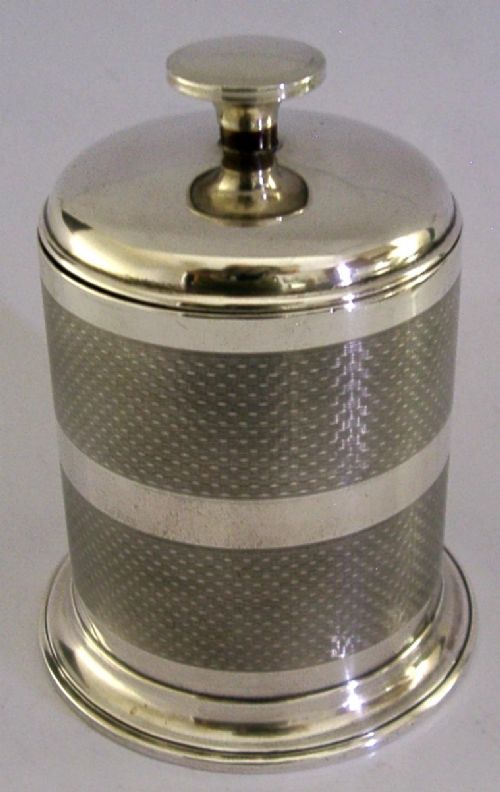
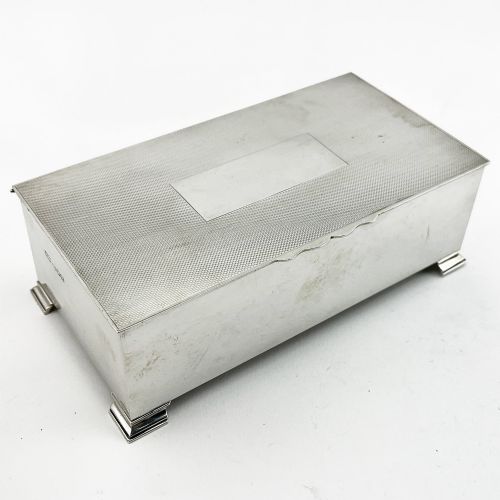
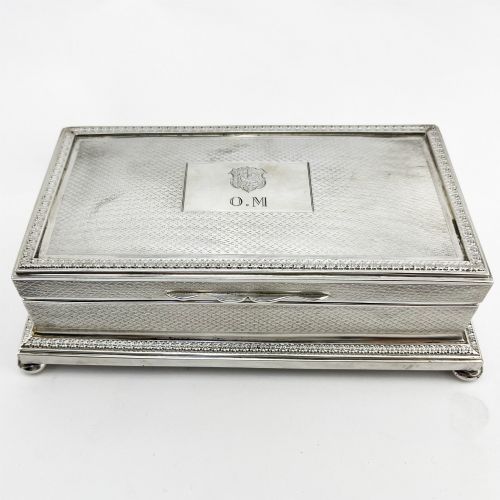
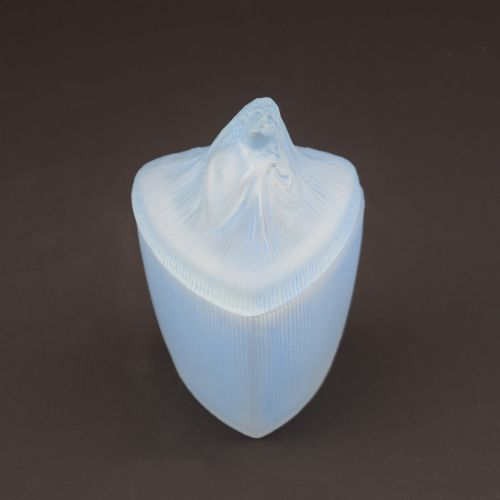
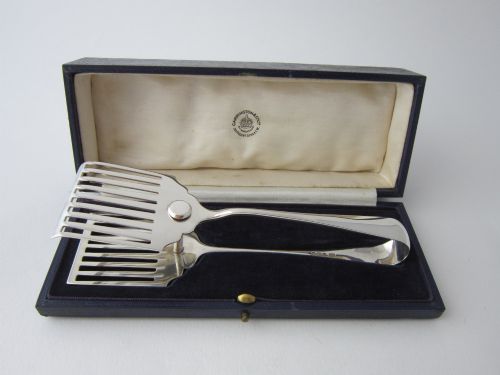
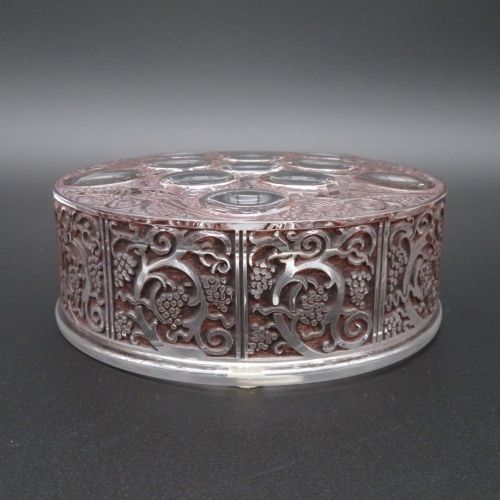
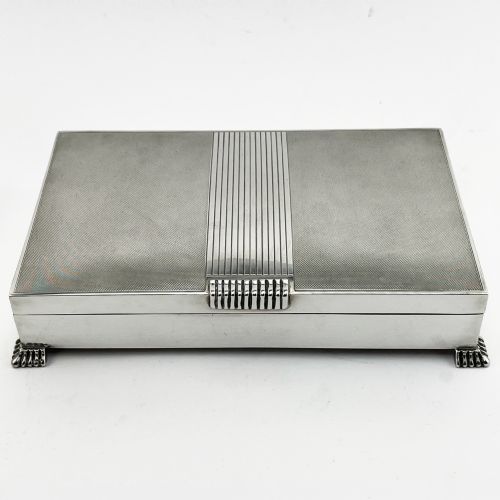
An art deco table box serves as a functional container for cigarettes, trinkets, stamps, or dressing table items. The versions most commonly found here combine structured metalwork with glass, ceramic, or enamel panels. These containers range from small vanity jars to substantial cigar boxes designed to sit openly on furniture.
Most pieces date from the interwar decades, showing the characteristic straight lines, sunburst motifs, and stylized ornamentation of the period. Makers utilised precious metals alongside exotic woods and shagreen to create distinct desk accessories. Their survival in domestic settings reflects the popularity of personal grooming sets and smoking paraphernalia during the era.
Materials and methods of construction
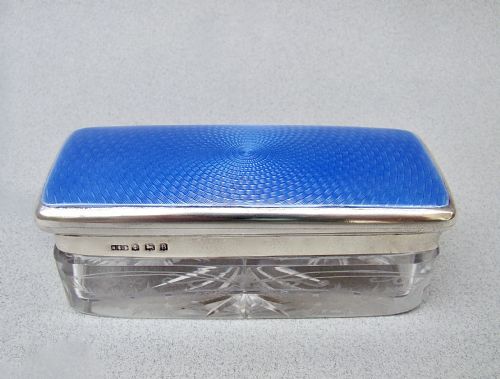
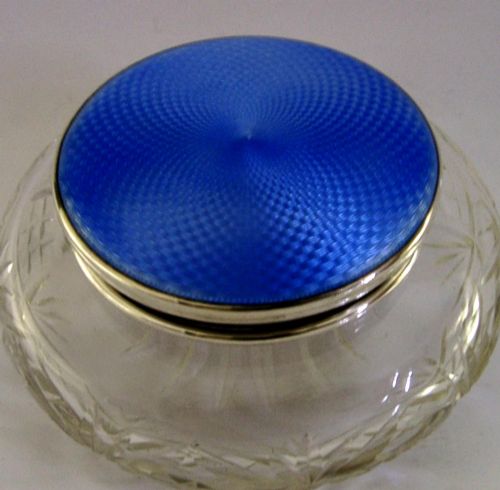
Silversmiths constructed foundational bodies from sterling silver, shaping them through pressing, folding, and soldering before applying hallmarks. Lids frequently incorporate translucent guilloché enamel machine-engraved beneath coloured resin layers. Glass bodies are often heavy and press-molded, pairing with fitted metal rims and hinged fastenings.
Woodwork editions rely on veneers such as walnut, satinwood, and burr walnut applied to stable carcases. Some specialised examples employ panels of polished sharkskin shagreen or copper accents. Ceramic and porcelain variations involve slip-casting followed by hand-painted or glazed surface decoration.
Listings feature sterling silver, glass, porcelain, enamel, ceramic, glaze, and velvet across the 1920s, 1930s, and 1940s periods.
Distinctions in construction and finish
The weight of the metal chassis and the thickness of the silver plate or solid gauge establish the foundational standard of a box. Superior enamel work shows crisp, even engine-turning beneath the glaze without chipping, crazing, or stress fractures. Precision in the hinge action and tight closure of the lid mark superior manufacturing standards.
Artisanal provenance elevates specific items, particularly when marked by recognised silversmiths or esteemed glass houses. The complexity of material combinations, such as integrated shagreen panels or carved crystal, distinguishes standard commercial pieces from elite commissions.
Henry Clifford Davis·Mappin And Webb·Sigvard Bernadotte·Georg Jensen·Wilmot Manufacturing Co·Adie Brothers·Rene Lalique·William Griffiths
The Art Deco Table Box Glossary
- Guilloché enamel
- A decorative technique where a mechanical pattern is engraved into metal before translucent enamel is applied over the top. This method creates a shimmering, patterned depth beneath the coloured surface.
- Shagreen
- Rawhide leather prepared from the skin of sharks or rays, sanded down to reveal a pebbled, granular texture. It gained immense popularity on luxury desk boxes during the interwar period.
- Hallmark
- A series of stamped official marks applied to precious metals indicating the standard of purity, the assay office, and the year of manufacture. British silver items rely heavily on these to confirm date and origin.
- Dressing table jar
- A small lidded container designed to hold cosmetics, pins, or hairpins on a vanity. These frequently feature glass bases paired with sterling silver and enamel lids.
- Engine-turning
- The mechanical process of cutting precise geometric patterns into metal surfaces using a lathe. It provides the textured base for transparent enamel layers.
Art Deco Table Box: Frequently Asked Questions
What were art deco table boxes used for?
These containers held cigarettes, cigars, stamps, or small personal trinkets on desks and sideboards.
Many specific variants functioned as powder jars or vanity containers for dressing tables.
How do I date an art deco silver box?
British silver boxes carry clear hallmarks indicating the assay office and the exact year letter.
Stylistic markers such as geometric motifs or applied enamel help narrow down pieces lacking standard stamps.
Are glass and enamel lids fragile?
Guilloché enamel can crack or chip if subjected to sharp impacts or sudden temperature changes.
Careful handling protects the delicate glass bodies and fitted hinges from unnecessary strain.
How do I clean a silver table box?
Gentle wiping with a soft microfiber cloth removes dust without wearing down raised details.
Harsh chemical dips must stay away from enamel panels and wooden surfaces to prevent permanent damage.