





Silver Cigarette Casket
A silver cigarette casket keeps your smokes protected in proper style, combining sturdy metalwork with refined period design.
Silver Cigarette Casket
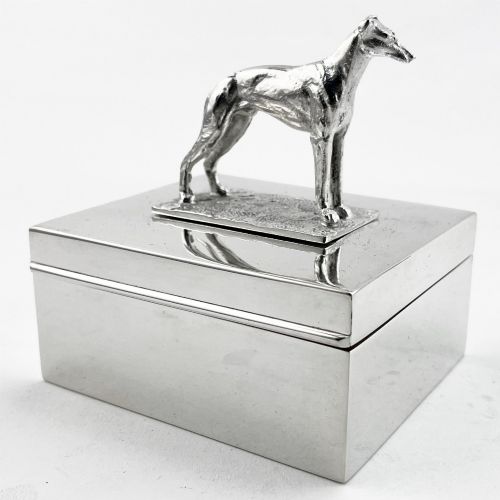
When you search for a silver cigarette casket, you encounter desk and table boxes designed to hold smoking paraphernalia during the late nineteenth and twentieth centuries. These pieces serve primarily as functional tabletop containers, often doubling as trinket or jewellery storage today.
The versions you meet on this page span from Victorian examples to mid-century modern designs, reflecting changing domestic habits. You will find rectangular boxes intended for cigarettes, cigars, or cards, produced across various international workshops and British makers.
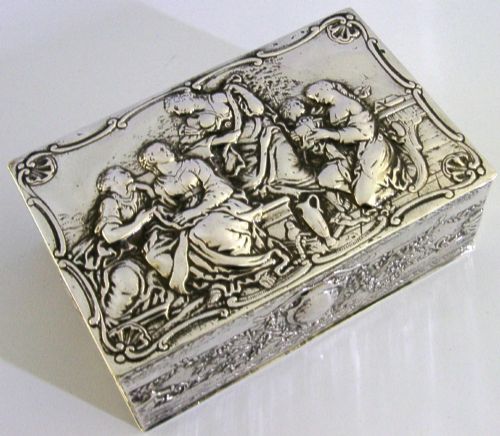
Origins range from English provincial centres to continental European makers and Chinese export workshops. The forms vary from plain geometric shapes to heavily ornamented floral and figural motifs.
Materials and construction
Makers utilised sterling silver, solid silver, and 800 silver, frequently pairing the metal body with wooden linings such as oak to keep tobacco fresh. Some items incorporate base metal or silver plate, while others feature decorative accents of white onyx and lapis lazuli.
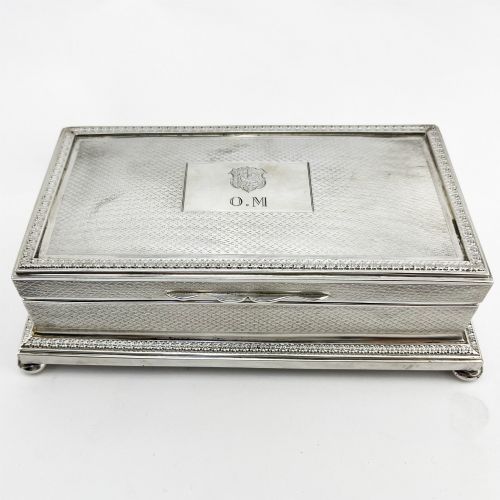
Techniques combine traditional silversmithing methods like repousse work, engine turning, and hand engraving with specialised treatments such as niello decoration. Boxes often feature hinged lids, secure closures, and fitted wooden or fabric interiors designed to partition cigarettes.
Silver Cigarette Casket Retail Price Guide 2026
Typical asking prices for silver cigarette casket among the pieces listed under this phrase on Sellingantiques today, from the lower quarter to the upper quarter. They describe what is for sale here now, not the wider market.
Some boxes double as card holders, proving that Victorians took their parlour games as seriously as their smoking habits.
Markers of standard and build
The quality of a silver cigarette casket rests on the thickness of the metal plate and the precision of the hinge mechanism. Heavier metal gauge prevents denting and gives the box a substantial feel in the hand.
Execution of detail separates standard production from superior craftsmanship. Crisp hand engraving, tight lid alignment, and the integrity of internal wooden linings indicate higher workshop standards.
Mappin & Webb·Wang Hing & Co·Jane Brownett Alexander Jones·A & J Zimmerman Ltd
The Silver Cigarette Casket Glossary
- Sterling silver
- A silver alloy containing 925 parts of pure silver per thousand. This standard metal mark provides durability for functional daily items.
- Niello
- A black metallic alloy used as an inlay on engraved metal. It creates sharp contrast against the bright silver background.
- Repousse
- A metalworking technique where the artisan hammers the design from the reverse side to form a raised relief on the front. This method creates dimensional floral and scroll decoration.
- Assay mark
- Official stamps indicating the purity of the metal, the maker, and the year of testing. These marks help verify the origin of the piece.
Silver Cigarette Casket: Frequently Asked Questions
What is a silver cigarette casket?
A silver cigarette casket is a lidded box designed to hold and protect cigarettes on a desk or table. They were standard accessories in smoking rooms and drawing rooms.
Most examples date from the Victorian period through the mid-twentieth century. Interiors are often lined with wood to preserve the contents.
How were silver cigarette caskets used?
Owners placed these boxes on dining tables, desks, or smoking stands for guests to help themselves. They kept tobacco fresh and protected from dust.
Today, buyers use them for storing modern cigarettes, business cards, or small jewellery items. The sturdy lids keep contents secure.
How do I date a silver box?
Dating relies on reading the hallmarks stamped onto the metal. These marks identify the assay office, the maker, and the exact year of testing.
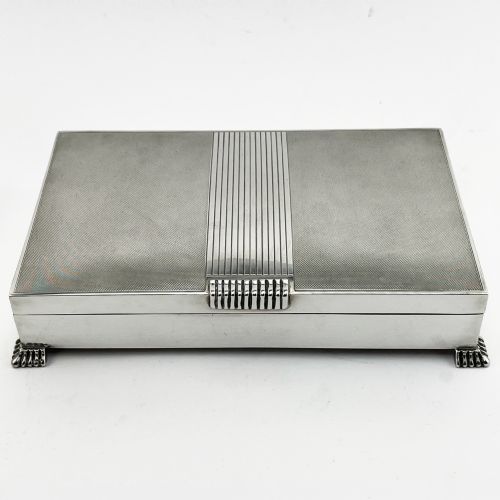
Stylistic cues also help, as clean geometric lines point to the Art Deco period while heavy scrolls suggest Victorian manufacture.