
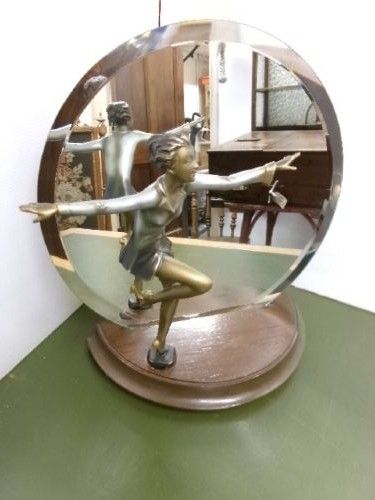

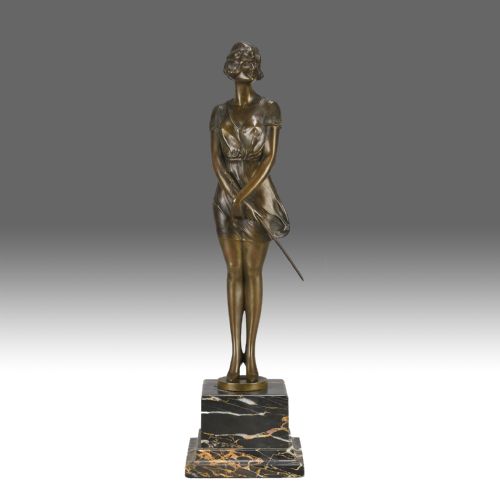
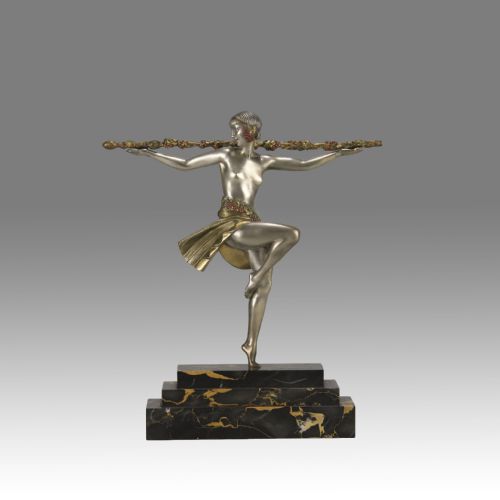
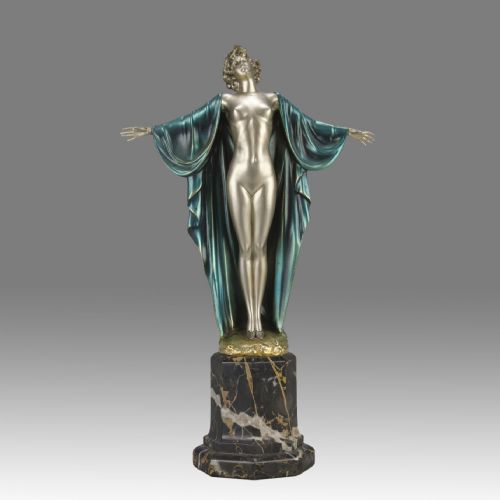



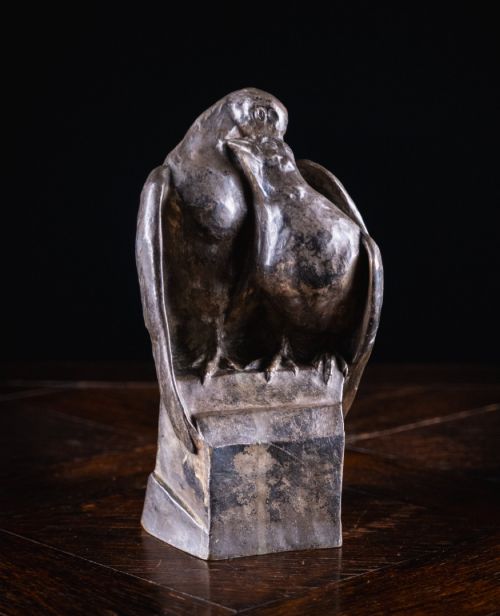
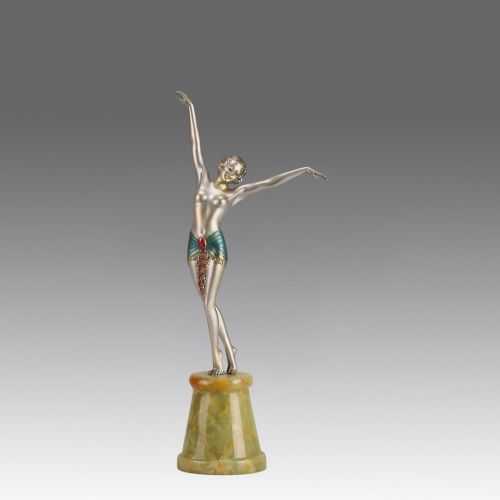

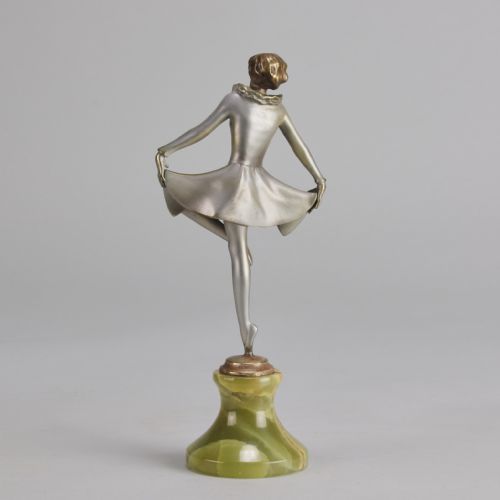
Art Deco Statue
When buying an art deco statue, collectors seek sculptural figures that capture interwar dynamism through distinct period forms.
Art Deco Statue
An art deco statue comprises sculptural figures and decorative figurines produced primarily during the 1920s, 1930s, and 1940s, embodying the distinct visual vocabulary of the period.
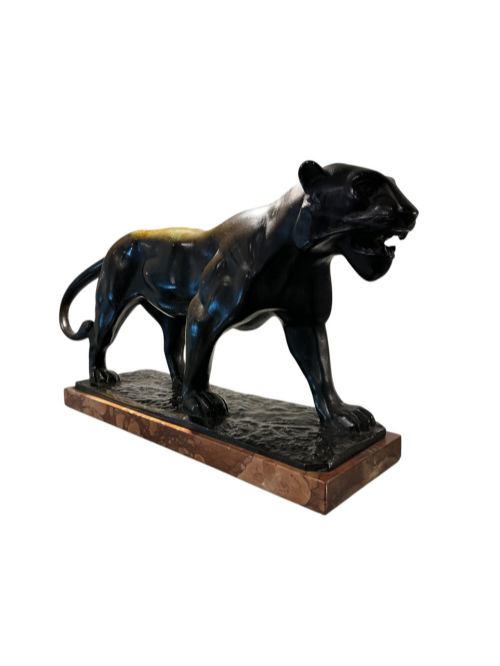
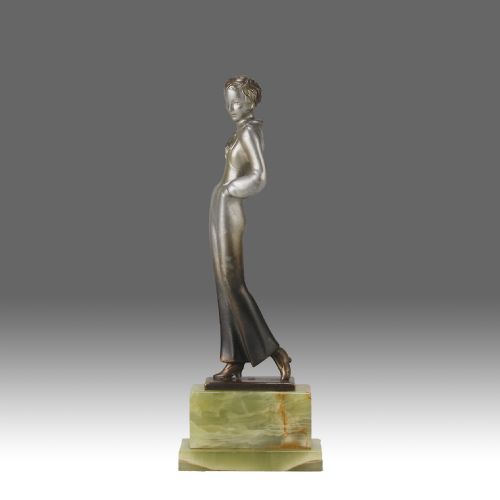
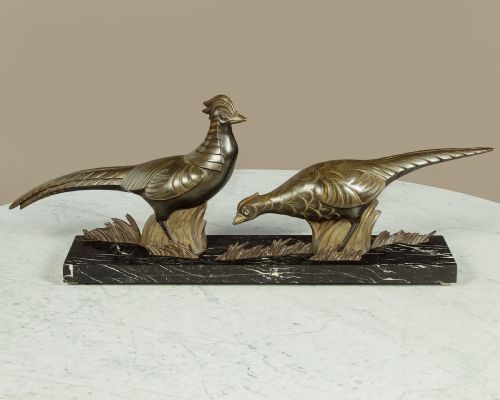
The versions most commonly met on this page include bronze, spelter, and porcelain dancers, athletes, and animals, alongside studio pottery and carved wood models.
Originating predominantly from French and Austrian studios, these sculptures draw stylistic influence from Egyptian revival and Balinese art deco motifs.
Materials and methods
Foundry techniques utilise bronze and spelter, often enhanced with cold-painted surfaces or gilding to accentuate intricate drapery and posture.
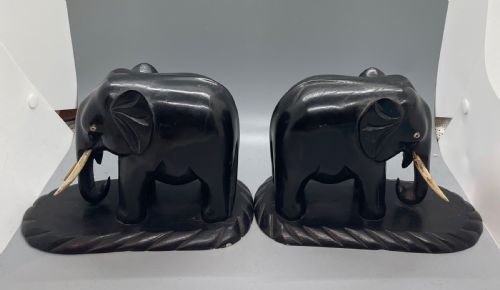
Ceramic and porcelain examples employ detailed glazes, while alternative constructions combine carved wood with brass elements.
Listings feature sculptures spanning the 19th century through to the 1940s, executed in bronze, marble, onyx, glaze, spelter, wood, glass, and ceramic.
Judging execution
Quality rests upon the crispness of the casting detail and the fidelity of the cold-painted or patinated surface application.
Sculptures signed by established European artists command greater distinction than anonymous workshop pieces or unsigned attribution figures.
The integration between the primary figure and its material base - whether marble, onyx, or carved wood - determines the structural harmony of the piece.
Bruno Zach·Pierre le Faguays·Ferdinand Preiss·Josef Lorenzl·Alexandre Ouline·Demetre Chiparus·Charles Vyse·Berthe Savigny·Raymond Leon Rivoire·Andre-Vincent Becquerel
The Art Deco Statue Glossary
- Spelter
- A zinc alloy frequently used as a cost-effective alternative to bronze in interwar European manufacturing. It takes patination well but requires careful handling to prevent surface damage.
- Cold-painted
- A method where paint is applied to metal sculpture without subsequent high-temperature firing. This delicate surface finish appears widely on figurative bronzes from the period.
- Blanc de Chine
- A white porcelain glaze originating from Chinese kilns that gained popularity among European manufacturers for classical and figurative models. It highlights pure form without distracting surface decoration.
- Stoneware
- A vitreous ceramic pottery fired at high temperatures to achieve a dense, impermeable body. Pieces produced in this medium display durable structural qualities and rich textural glazes.
Art Deco Statue: Frequently Asked Questions
What defines an art deco statue?
These sculptures embody the streamlined elegance, rhythmic movement, and geometric styling characteristic of design from the 1920s and 1930s.
They encompass human figures such as dancers and athletes, alongside stylised animal studies rendered in metal, ceramic, or carved materials.
How were these figures displayed originally?
Statues from this era served as interior decorative ornaments, positioned on mantelpieces, sideboards, or bespoke pedestals within contemporary homes.
Larger architectural figures and bookends functioned both as practical room accessories and focal artistic displays.
How do I distinguish bronze from spelter?
Bronze is a heavy, copper-alloy metal that develops a stable natural patina and yields a clear metallic ring when tapped gently.
Spelter is lighter, softer, and more brittle, frequently showing underlying grey metal where the painted or patinated surface has worn away.
How should I care for a cold-painted sculpture?
Cold-painted metal surfaces require gentle dusting with a soft, dry cloth and protection from direct sunlight and moisture.
Cleaning products and excessive handling must be avoided to preserve the fragile, unbaked paint layer.