

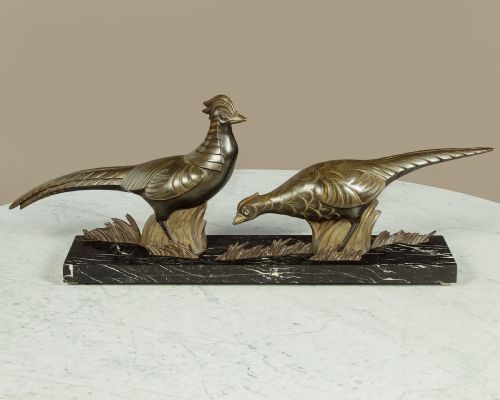




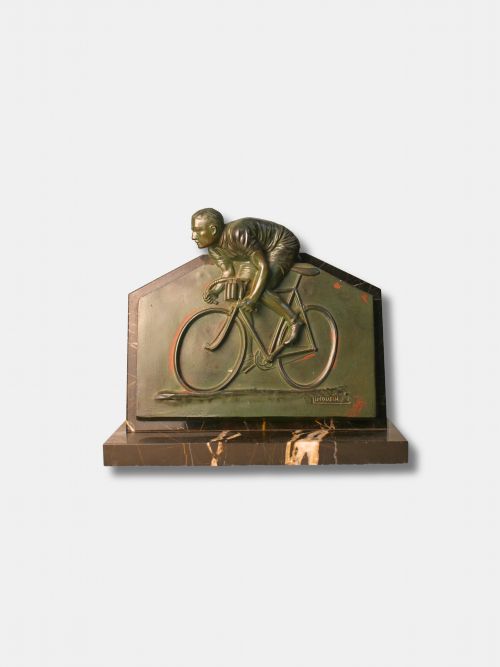


Art Deco Spelter Statue
An art deco spelter statue brings the sleek geometry and dynamic movement of interwar design directly into your interior.
Art Deco Spelter Statue
When searching for an art deco spelter statue, buyers encounter figures originating predominantly from the 1920s and 1930s. These pieces manifest as dancers, athletes, animals, and figural groups cast in metal and mounted on substantial stone plinths.
The versions met most frequently on this page combine cast metal bodies with bases formed from marble or onyx. They function variously as standalone sculptures, table lamps, bookends, and functional lighters.
Materials and construction methods
Foundry workers cast these figures using spelter, an affordable zinc alloy that absorbed surface treatments readily. They applied patinated finishes, cold paints, or metallic gilding to simulate more expensive bronzes.
Finished metal castings were secured onto heavy bases of black marble, onyx, or alabaster. Many examples integrate glass elements, such as lamp shades or mirrors, directly into the composition.
Art Deco Spelter Statue Retail Price Guide 2026
Typical asking prices for art deco spelter statue among the pieces listed under this phrase on Sellingantiques today, from the lower quarter to the upper quarter. They describe what is for sale here now, not the wider market.
Dogs featured in the collection range from wolfhounds and spaniels to prowling panthers.
Distinctions in quality
Quality rests heavily upon the crispness of the casting and the fidelity of the surface finish. Superior pieces retain intricate details in facial expressions, drapery, and animal musculature without surface pitting.
The choice and integration of the plinth matter significantly. Finer statues feature substantial, well-polished marble or onyx bases that complement the proportions of the metal figure above.
Josef Lorenzl·P. Sega·Geo Maxim·C Masson·H. Bal·Chiparus·M. Font
The Art Deco Spelter Statue Glossary
- Spelter
- A zinc-based alloy commonly utilised as a cost-effective alternative to bronze in interwar European sculpture. It takes patination and cold painting exceptionally well.
- Patinated Metal
- Metal treated with chemical solutions to produce a specific surface colour or aged finish. This process highlights the sculptural contours and shadows.
- Onyx
- A banded variety of chalcedony frequently used for sculptural plinths and lamp bases. Its natural translucency and distinct striping provide a luxurious contrasting mount.
Art Deco Spelter Statue: Frequently Asked Questions
What is spelter metal?
Spelter is a zinc-based alloy that found widespread use among European foundries during the early twentieth century. It offered a practical and economical medium for producing decorative figures.
Foundries often gave spelter a bronze-like appearance by applying surface patination or metallic paint. This made stylish decorative art accessible to a broader interwar public.
How do I clean my statue?
Maintenance requires only a soft, dry cloth to remove dust from the metal surface and the stone plinth. Avoid using commercial cleaning liquids or abrasive cloths.
Moisture and harsh chemicals can damage cold painted finishes and discolour patinated metal. Treating the piece gently preserves its original factory finish.
Why are they mounted on marble?
Heavy stone bases provided essential stability for top-heavy zinc alloy castings. Onyx and marble also added visual weight and a luxurious finish.
These plinths frequently incorporate geometric steps typical of interwar design aesthetics. The stone serves both a structural purpose and an artistic framing role.
Are these figures French?
Many surviving figures originate from French foundries and artists working during the interwar decades. France was a primary epicentre for this sculptural style.
French pieces often reflect contemporary fascinations with sports, wildlife, and modern dance. Foundries in Paris produced a vast array of these decorative objects.