



Art Deco Silver Condiment
Art deco silver condiment sets and vessels bring sharp geometry and polished metal to the dining table.
Art Deco Silver Condiment
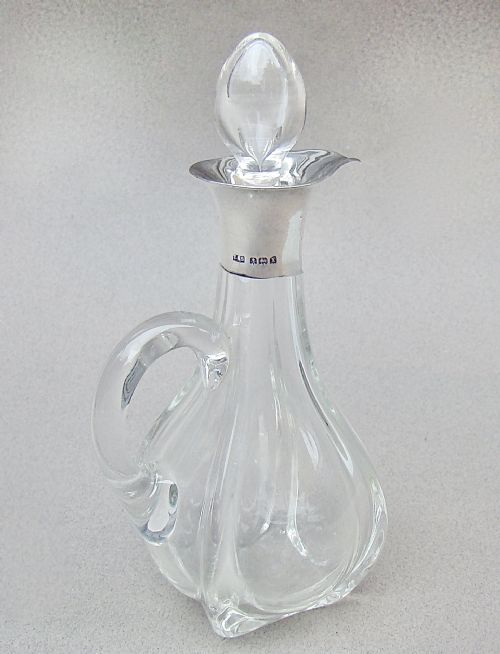
Art deco silver condiment items encompass cruet sets, oil or vinegar bottles, pepper grinders, and preserve dishes designed in geometric styles. These tablewares emerge primarily from the nineteen twenties and nineteen thirties, reflecting the streamlined aesthetics of the period.
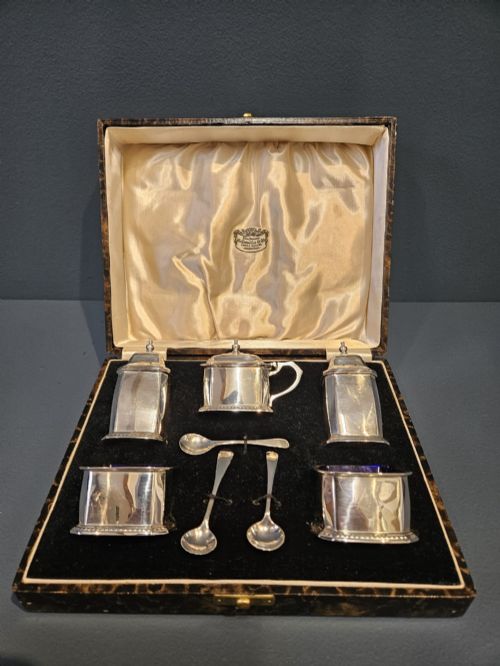
The pieces on this page include multi-piece cruet sets alongside single vessels like mustard pots and sugar basins. Makers utilise sterling silver and silver plate, frequently pairing the metal with blue glass liners or cut glass bodies.
Most examples date from the interwar decades, spanning the nineteen twenties through to the nineteen forties. Buyers encounter both complete sets with spoons and individual serving vessels intended for the dining table.
How they were made
Silversmiths constructed these condiment vessels from sterling silver and silver plate, applying manufacturing techniques that produced crisp angles and smooth cylindrical bodies. Workshops incorporated fitted blue glass inserts and cut glass into frames, securing the glass within pierced or solid metal mounts.
Makers utilised specialised components such as velvet linings and fabric elements inside presentation or storage boxes for specific sets. Metal surfaces received polished finishes to highlight the geometric lines characteristic of the style.
Art Deco Silver Condiment Retail Price Guide 2026
Typical asking prices for art deco silver condiment among the pieces listed under this phrase on Sellingantiques today, from the lower quarter to the upper quarter. They describe what is for sale here now, not the wider market.
Listings feature sterling silver and silver plate alongside glass and blue glass components, spanning the decades from nineteen twenty to nineteen forty.
What varies in quality
Quality in these tablewares rests upon the weight of the metal and the precision of the geometric construction. Substantial gauge silver and robust hinges on mustard pots distinguish finer productions from lighter plated alternatives.
The integration of materials also defines the standard of a piece, particularly the clarity of cut glass bottles and the exact fit of removable glass liners within their silver frames.
Levi & Salaman·Goldsmith & Silversmith·William Neale·Mappin & Webb·Wilmot Manufacturing Co·Elkington and Company
The Art Deco Silver Condiment Glossary
- Cruet set
- A collection of small bottles, jars, or pots designed to hold condiments like salt, pepper, mustard, oil, and vinegar upon the dining table. These sets typically sit within a dedicated metal stand or frame.
- Sterling silver
- An alloy consisting of ninety-two point five percent silver and seven point five percent other metals, usually copper. This standard composition is marked on British pieces with a lion passant.
- Silver plate
- A base metal, such as copper or nickel brass, coated with a thin layer of pure silver. Items produced this way offer the appearance of solid silver at a different cost.
- Cut glass
- Glass decorated by cutting facets or patterns into the surface using a wheel. This technique is frequently seen on preserve dishes and oil bottles from the period.
- Blue glass
- Cobalt-coloured glass utilised for liners inside mustard pots and open salt cellars. The dark hue provides a visual contrast against polished silver mounts.
Art Deco Silver Condiment: Frequently Asked Questions
What pieces belong in a cruet set?
A standard cruet set comprises receptacles for salt, pepper, and mustard, sometimes accompanied by oil and vinegar cruets. These items are gathered together in a matching frame or tray for the table.
Complete sets often include small matching spoons designed specifically for mustard pots and open salt cellars.
How do I identify a nineteen thirties silver piece?
British silver bears hallmarks stamped directly into the metal, indicating the assay office, the maker, and a date letter corresponding to the year of manufacture. Examining these small stamped symbols provides the precise year of production.
Stylistic indicators such as stepped geometric motifs and angular handles also point towards the interwar decades.
Are glass liners original to the silver holder?
Original glass liners fit snugly into the metal frame without excessive movement and match the specific contours designed by the maker. Cobalt blue liners are typical for mustard pots and salt cellars from this era.
Replacement glass often shows slight variations in thickness or sits differently within the pierced silver gallery.
How should I clean silver condiment vessels?
Silver components require gentle cleaning with a specialist polish formulated to remove tarnish without abrading the surface. Glass liners and bottles can be removed and washed separately in warm soapy water.
Harsh chemical dips should be avoided, particularly on items featuring glued elements or delicate fabric and velvet linings.